Dependent Visa Japan for International Students|How to Bring Your Spouse or Child to Japan
Last Updated: | Reviewed by: ACROSEED Immigration Lawyer's Office
Yes. Eligible international students in Japan can bring a legally married spouse or child under the “Dependent” status of residence. The main requirements are proving the family relationship and showing sufficient financial support for living expenses in Japan. There is no single published minimum bank balance or monthly income.
Important: Students enrolled at Japanese-language educational institutions are not eligible to sponsor family members under Dependent status.

- Who Can Bring a Spouse or Child to Japan on a Dependent Visa?
- Financial Support: Income, Savings, Scholarships and Remittances
- Student Part-Time Work and the 28-Hour Rule
- Required Documents for a Dependent Visa COE
- Application Process and Processing Time
- Cases That Need Extra Explanation or Reapplication
- Dependent Visa FAQ for International Students
- Approved Dependent Visa Cases for Student Sponsors
- How ACROSEED Supports Student Dependent Visa Applications
- Related Dependent Visa Guides
For a spouse or child living overseas, the usual route is to apply in Japan for a Certificate of Eligibility (COE) for Dependent status. After the COE is issued, it is sent to the family member overseas, who then applies for an entry visa at the relevant Japanese embassy or consulate.
1. Who Can Bring a Spouse or Child to Japan on a Dependent Visa?
The Japanese status of residence commonly called a Dependent Visa covers the day-to-day activities of a spouse or child who is financially supported by a foreign resident holding an eligible status. “Student” is one of the eligible sponsor statuses under the Immigration Control Act.
For an international student, the main points are:
- The applicant is the student's legally married spouse or child.
- The spouse or child will live in Japan as a person financially supported by the student.
- The student can show, with documents, how tuition, rent and family living expenses will be covered.
A boyfriend, girlfriend, fiancé(e), parent or other relative is not covered simply because the person is financially dependent on the student. The status is limited to the spouse or child relationship defined by the law.
Japanese-language school students: an important exception
The Immigration Services Agency expressly states in its residence-examination Q&A that when the sponsor is a student at a Japanese-language educational institution, the family member is not eligible to be brought to Japan under Dependent status, regardless of the type of Japanese-language school. A person whose main study is at a Japanese-language institution should therefore not assume that holding “Student” status alone makes family sponsorship possible.
2. Financial Support: Income, Savings, Scholarships and Remittances
For student sponsors, financial support is one of the central issues. The Immigration Services Agency does not publish a universal rule such as “you need JPY X in savings” or “you need JPY X per month in income.” The application is examined on the facts and supporting documents.
For a sponsor who is not engaged in remunerated business or paid employment as the main activity, the official Dependent document list refers to:
- a bank balance certificate in the sponsor's name;
- a scholarship certificate showing the amount and payment period; or
- other equivalent evidence showing that the applicant's living expenses can be covered.
Depending on the case, it may also be helpful to organize evidence of regular remittances from parents or family overseas, lawful part-time earnings, tuition, rent, current living expenses, and the expected household budget after the spouse or child arrives.
The purpose is not simply to show a large number on one bank statement. The documents should make it understandable who will pay the family's expenses and whether that support is realistically sustainable while the sponsor continues studying.
3. Student Part-Time Work and the 28-Hour Rule
A person with Student status is not automatically permitted to work. To work part-time outside the activities covered by Student status, the student generally needs Permission to Engage in Activity Other Than That Permitted under the Status of Residence Previously Granted.
Under comprehensive permission, an international student may generally work up to 28 hours per week. During a long vacation period designated by the educational institution, the limit is generally up to 8 hours per day. Work at places where adult-entertainment businesses are conducted is excluded.
If the student has lawful part-time income, payslips or similar evidence may be used as supplementary financial material. However, the application should not be designed on the assumption that unauthorized or excessive work can be used to establish support. The Immigration Services Agency warns that work outside the permitted scope may affect the student's own future residence procedures.
4. Required Documents for a Dependent Visa COE
When an international student in Japan applies for a Certificate of Eligibility for an overseas spouse or child, the Immigration Services Agency's core document list includes the following.
- Application for Certificate of Eligibility
- Photograph meeting the official specifications
- Return envelope with the required postage
- Evidence of the relationship between the applicant and sponsor, such as a marriage certificate for a spouse or birth certificate for a child
- A copy of the student's residence card or passport
- Evidence of the sponsor's occupation and income or financial support; for a student, this may include a bank balance certificate, scholarship certificate, or equivalent proof of ability to cover living expenses
Documents prepared in a foreign language must be accompanied by a Japanese translation. Immigration may also request additional materials depending on the individual case.
For student-sponsored applications, supplementary documents may include an enrollment certificate, remittance records, lawful part-time-work income records, housing information, or an explanation of household income and expenses if these materials help clarify the actual support arrangement.
Since dormitory and school housing rules vary, students should also check whether their current accommodation permits family members to live with them.
5. Application Process and Processing Time
The usual process for bringing a spouse or child from overseas is:
- The international student or another permitted person files a Dependent Certificate of Eligibility application with the regional immigration office having jurisdiction.
- After the COE is issued, it is sent to the spouse or child overseas.
- The spouse or child applies for an entry visa at the relevant Japanese embassy or consulate.
- After the visa is issued, the family member travels to Japan and enters under Dependent status.
Do not assume that a Dependent COE always takes one or two months. Processing time varies by immigration office, filing period and individual case. The Immigration Services Agency publishes monthly average residence examination processing times by status, including Dependent COE applications.
Missing documents can cause substantial delay and may lead to an unfavorable result. Immigration may also request additional documents during examination, so it is better to prepare the relationship and financial-support evidence before filing.
6. Cases That Need Extra Explanation or Reapplication
The Immigration Services Agency does not publish a simple list of cases that are “automatically denied.” In practice, however, a student-sponsored Dependent application may require more explanation when:
- the application does not clearly explain how the spouse or child's living expenses will be paid;
- the student's enrollment, attendance, residence or work situation creates points that Immigration needs to confirm;
- the relationship documents and application details contain inconsistencies or information requiring clarification; or
- there are circumstances in the applicant's or sponsor's prior residence history that require additional explanation.
If a COE application is not approved, simply filing the same documents again is unlikely to resolve the problem. The refusal reason and supporting evidence should be reviewed before deciding whether and how to reapply.
7. Dependent Visa FAQ for International Students
Can an international student bring a spouse or child to Japan on a Dependent Visa?
In principle, yes. A Student-status holder may sponsor a legally married spouse or child for Dependent status if the family member will be financially supported by the student and the sponsor can explain how living expenses will be covered. The Japanese-language-institution exception below must also be checked.
Can a Japanese language school student sponsor a Dependent Visa?
No. The Immigration Services Agency states that where the sponsor is a student at a Japanese-language educational institution, the family member is not eligible to be brought to Japan under Dependent status, regardless of the type of Japanese-language school.
How much savings or income is required?
No single minimum savings balance or monthly income is published for student sponsors. Immigration's official document list instead asks for evidence such as a bank balance certificate in the sponsor's name, a scholarship certificate showing the amount and payment period, or equivalent evidence that the applicant's living expenses can be covered.
Can part-time job income be included?
Lawful part-time income may be used as supplementary evidence. The student must comply with the scope of Permission to Engage in Activity Other Than That Permitted, including the general 28-hour weekly limit under comprehensive permission.
What documents are needed for a spouse?
The official core documents include the COE application form, photograph, return envelope, proof of the marital relationship such as a marriage certificate, a copy of the sponsor's residence card or passport, and evidence of financial support. Foreign-language documents require Japanese translations.
How long does a Dependent COE take?
There is no reliable fixed period for every case. The Immigration Services Agency publishes monthly average processing times, so the latest official figure should be checked when you plan the application.
8. Approved Dependent Visa Cases for Student Sponsors
ACROSEED Immigration Lawyer's Office has handled cases in which international students in Japan brought a spouse or child from overseas under Dependent status. Student cases often require the financial-support picture to be explained through a combination of savings, scholarships, remittances from family overseas and lawful part-time income, depending on the facts.
For examples of approved Dependent applications, including student-sponsored cases, see our main Dependent Visa guide.
9. How ACROSEED Supports Student Dependent Visa Applications
When an international student wants to bring a spouse or child to Japan, ACROSEED Immigration Lawyer's Office first checks whether the sponsor is eligible for Dependent sponsorship and whether any exception, including the Japanese-language-institution rule, applies.
We then review the family relationship documents and organize how financial support should be explained using the available bank balance, scholarship, remittance, enrollment and lawful income records. Where the facts require additional explanation, we consider what supplementary evidence should be submitted with the Certificate of Eligibility application.
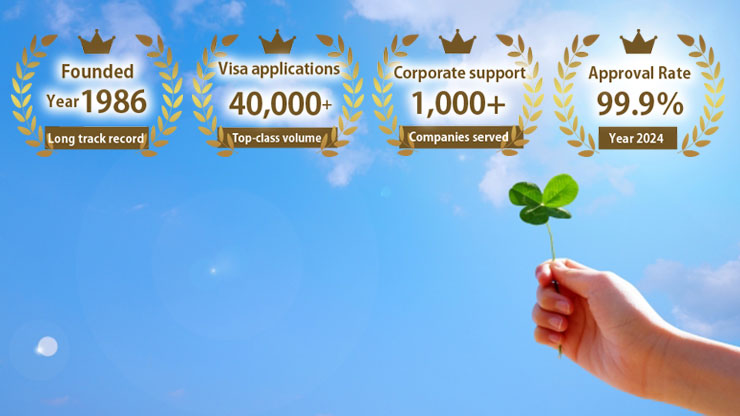
Founded in 1986 — Over 43,000 Visa Cases
We apply long-term screening insight and corporate-level standards to your individual case.
Learn MoreVeteran Immigration Specialists (10+ Years)
Experts who understand screening criteria reduce refusal risks through consulting.
Learn MoreCentralized Headquarters System
No dispersed standards — decisions reflect accumulated experience and current trends.
Learn MoreNationwide Support: Online and email-based management, same quality anywhere in Japan.
Multilingual: Consultations available in English and Chinese.
Clear Progress Tracking: Check application status and required documents online.
Complex Cases Supported: Extensive experience with reapplications after rejection.
Transparent Fees: Clear pricing with minimal additional costs.
Support Even After Rejection: Free reapplication support until approval.
Information Security: Proper data management based on ISO27001 standards.
View All 9 Reasons ACROSEED Is ChosenACROSEED’s Track Record
Client Testimonials
Free Consultation
10. Related Pages Commonly Read with Family Dependent Visa

Japan Dependent Visa Application Guide
A complete guide for bringing a spouse or child to Japan under Dependent status, covering eligibility, financial support, required documents and application forms, the COE process, and processing time.

Family Dependent Visa Renewal: Examination Basics and Key Precautions
For current Dependent Visa holders, this guide explains renewal documents and examination points, including changes in the sponsor’s income, employment, family size, and a child’s age or circumstances.
Dependent Visa Refusal and Reapplication Guide
If a Dependent Visa or COE application was refused, review the refusal reasons, financial-support evidence, family relationship, and inconsistencies in the previous filing before preparing a stronger reapplication.

Permanent Residency from a Dependent Visa
A guide for Dependent Visa holders considering Permanent Residency, including how the principal family member’s status, residence history, household finances, public obligations, and simultaneous family applications may affect eligibility.
More Detailed Guides for Dependent Visa Holders
Dependent Visa Japan for International Students | Spouse, Requirements & Documents
Japan Dependent Visa Eligibility | Spouse, Children & Financial Support
Can You Work Remotely in Japan on a Dependent Visa? Overseas Employer Rules
Change Dependent Visa to Work Visa in Japan | Requirements & Documents
Dependent Visa Japan: Divorce, Address Change & Required Notifications
Dependent Visa Japan: Full-Time Work After High School | Change of Status

ACROSEED Immigration Lawyer's Office
Representative Administrative Scrivener
Makoto Sano
1998 Graduated from Aoyamagakuin University
2001 Registered as an administrative scrivener
He has Over 20 years of experience as an international administrative scrivener, specializing in foreign employment consulting and residence procedures for foreign residents in Japan.
Click here to see information about his business achievements
Click here to see books he has authored
ACROSEED Immigration Lawyer's Office has supported immigration and residence procedures since 1986. Consultation is available by phone, email, online meeting, or in person.