Who Is Eligible for a Dependent Visa in Japan? Spouse, Children & Financial Support
Last Updated: | Reviewed by: ACROSEED Immigration Lawyer's Office
Quick answer: A Japan Dependent Visa is generally for a legally married spouse or child who is financially supported by a foreign resident holding an eligible status of residence in Japan. Parents, siblings, unmarried partners and fiancés are not covered by the ordinary Dependent status.
Eligibility also depends on the sponsor's status and the reality of financial support. There is no single published minimum income or savings amount for every case, and special rules apply to Specified Skilled Worker status and students at Japanese-language educational institutions.

- Who Is Eligible for a Japan Dependent Visa?
- Financial Support Requirements: Income and Savings
- Children: Who Qualifies and Is There an Age Limit?
- Can a Dependent Visa Holder Work in Japan?
- Who Is Not Eligible? Parents, Siblings and Unmarried Partners
- Japan Dependent Visa Eligibility FAQ
- How ACROSEED Supports Dependent Visa Applications
- Related Dependent Visa Guides
Conclusion: the ordinary Dependent status is for the spouse or child of a foreign resident who holds an eligible status of residence and financially supports that family member. The first questions are therefore: (1) does the sponsor hold an eligible status, and (2) is the applicant legally the sponsor's spouse or child?
1. Who Is Eligible for a Japan Dependent Visa?
A Japan Dependent Visa—officially the “Dependent” status of residence—is designed for the day-to-day activities of a financially supported spouse or child of a qualifying foreign resident.
Eligible family members are, in principle:
- a legally married spouse (husband or wife); and
- a child, including a biological child, adopted child, or legally acknowledged child.
The sponsor must hold a status of residence that allows Dependent family sponsorship. Examples include:
- Engineer/Specialist in Humanities/International Services, Business Manager, Highly Skilled Professional, Intra-company Transferee, Nursing Care, Skilled Labor, Specified Skilled Worker (ii) and other eligible work statuses;
- Professor, Artist, Religious Activities, Journalist, Researcher, Instructor, Medical Services, Entertainer, Legal/Accounting Services and other eligible statuses; and
- Student and Cultural Activities, subject to the applicable rules.
Specified Skilled Worker: family accompaniment under Dependent status is permitted for Specified Skilled Worker (ii), while it is generally not permitted for Specified Skilled Worker (i). In limited humanitarian situations, a spouse or child already living in Japan may be permitted to change to Designated Activities instead.
Japanese-language-school exception: if the sponsor is a student enrolled at a Japanese-language educational institution, the Immigration Services Agency states that family members cannot be brought to Japan under Dependent status, regardless of the type of Japanese-language school. See our Dependent Visa guide for international students for more detail.
2. Financial Support Requirements: Income, Savings and Actual Dependency
Being a spouse or child does not automatically guarantee Dependent status. The sponsor must have both the intention and the practical financial ability to support the family member in Japan.
Immigration examines the case individually using evidence such as:
- the sponsor's employment, income and employment history;
- savings, scholarships and other financial resources available for living expenses; and
- where relevant, documents showing the actual support arrangement, such as prior remittances.
There is no single published minimum annual income, monthly income or bank-balance amount that applies to every Dependent Visa case. The household size, living situation and overall ability to support the spouse or child are assessed together.
For a spouse, the application should reflect a genuine married life in which the couple lives together and supports one another. For a child, the child must actually be living as a dependent receiving care and support from the sponsor.
3. Children on a Dependent Visa: Who Qualifies and Is There an Age Limit?
The category of “child” may include more than many applicants expect:
- a child born within marriage;
- an adopted child; and
- a child born outside marriage who has been legally acknowledged.
The Immigration Services Agency states that there is no specific age limit for a child as long as the child is in fact being financially supported. Reaching adulthood does not automatically make a child ineligible.
However, Dependent status is still based on the child being genuinely supported. Where the child is older, the applicant may need to explain the actual dependency through factors such as age, education, living arrangements and financial circumstances.
4. Can a Dependent Visa Holder Work in Japan?
A Dependent Visa is intended for a family member who is being financially supported. It is not a full-time work status.
If a spouse or child intends to live independently through full-time work, another work-authorized status may be more appropriate.
A Dependent-status holder may work part-time after obtaining Permission to Engage in Activity Other Than That Permitted under the Status of Residence Previously Granted. Under comprehensive permission, work is generally limited to 28 hours per week, and the work must not interfere with the person's principal activities under Dependent status.
5. Who Is Not Eligible? Parents, Siblings and Unmarried Partners
The term “family visa” can be misleading. The ordinary Japan Dependent Visa does not cover every family member.
The following are generally not eligible under Dependent status:
- the sponsor's parents;
- the sponsor's brothers or sisters;
- a common-law or unmarried partner; and
- a fiancé or fiancée.
Other statuses may apply depending on the situation. For example, a Highly Skilled Professional or the spouse of a Highly Skilled Professional may, under a separate Designated Activities scheme, be able to have a parent stay in Japan to care for a child under age 7 or provide support during pregnancy when all statutory conditions are met. This is not a Dependent Visa.
Do not confuse Dependent status with other spouse or family statuses
- Spouse of a Japanese national → “Spouse or Child of Japanese National”
- Spouse or certain children of a Permanent Resident → “Spouse or Child of Permanent Resident” or another appropriate status
- Short family visits → Temporary Visitor / visiting relatives, where applicable
The correct status depends on who the family member is and why they are coming to Japan. “Dependent Visa,” “spouse visa,” and “family visa” are not interchangeable legal categories.
6. Japan Dependent Visa Eligibility FAQ
In principle, the status is for a spouse or child who is financially supported by a foreign resident holding an eligible status of residence in Japan. The spouse must be legally married to the sponsor, and the child may include a biological child, adopted child, or legally acknowledged child.
The Immigration Services Agency does not publish one universal minimum annual income or bank-balance amount for every Dependent application. Immigration examines whether the sponsor can realistically and continuously support the spouse or child, using evidence such as income, savings, scholarships, and other financial circumstances.
The Immigration Services Agency states that there is no specific age limit as long as the child is in fact being financially supported. Reaching adulthood does not automatically make a child ineligible, but the application must still show a genuine dependent relationship.
No, not under the ordinary Dependent status. Parents, siblings, unmarried or common-law partners, and fiances are not included. A parent of a Highly Skilled Professional may qualify under a separate Designated Activities scheme when specific conditions are met, but that is not a Dependent Visa.
Specified Skilled Worker (ii) allows eligible family members to accompany the worker under Dependent status, while Specified Skilled Worker (i) does not generally allow family accompaniment. In limited humanitarian situations, a spouse or child already living in Japan may be permitted to change to Designated Activities.
No. The Immigration Services Agency states that a student enrolled at a Japanese-language educational institution is not eligible to bring family members to Japan under Dependent status, regardless of the type of Japanese-language school.
7. How ACROSEED Supports Dependent Visa Eligibility and Applications
When an international student wants to bring a spouse or child to Japan, ACROSEED Immigration Lawyer's Office first checks whether the sponsor is eligible for Dependent sponsorship and whether any exception, including the Japanese-language-institution rule, applies.
We then review the family relationship documents and organize how financial support should be explained using the available bank balance, scholarship, remittance, enrollment and lawful income records. Where the facts require additional explanation, we consider what supplementary evidence should be submitted with the Certificate of Eligibility application.
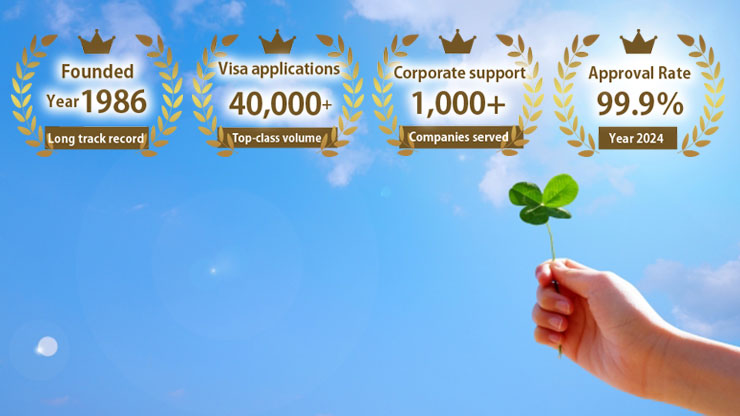
Founded in 1986 — Over 43,000 Visa Cases
We apply long-term screening insight and corporate-level standards to your individual case.
Learn MoreVeteran Immigration Specialists (10+ Years)
Experts who understand screening criteria reduce refusal risks through consulting.
Learn MoreCentralized Headquarters System
No dispersed standards — decisions reflect accumulated experience and current trends.
Learn MoreNationwide Support: Online and email-based management, same quality anywhere in Japan.
Multilingual: Consultations available in English and Chinese.
Clear Progress Tracking: Check application status and required documents online.
Complex Cases Supported: Extensive experience with reapplications after rejection.
Transparent Fees: Clear pricing with minimal additional costs.
Support Even After Rejection: Free reapplication support until approval.
Information Security: Proper data management based on ISO27001 standards.
View All 9 Reasons ACROSEED Is ChosenACROSEED’s Track Record
Client Testimonials
Free Consultation
8. Related Pages Commonly Read with Family Dependent Visa
Japan Dependent Visa Application Guide
A complete guide for bringing a spouse or child to Japan under Dependent status, covering eligibility, financial support, required documents and application forms, the COE process, and processing time.

Family Dependent Visa Renewal: Examination Basics and Key Precautions
For current Dependent Visa holders, this guide explains renewal documents and examination points, including changes in the sponsor’s income, employment, family size, and a child’s age or circumstances.
Dependent Visa Refusal and Reapplication Guide
If a Dependent Visa or COE application was refused, review the refusal reasons, financial-support evidence, family relationship, and inconsistencies in the previous filing before preparing a stronger reapplication.

Permanent Residency from a Dependent Visa
A guide for Dependent Visa holders considering Permanent Residency, including how the principal family member’s status, residence history, household finances, public obligations, and simultaneous family applications may affect eligibility.
More Detailed Guides for Dependent Visa Holders
Dependent Visa Japan for International Students | Spouse, Requirements & Documents
Japan Dependent Visa Eligibility | Spouse, Children & Financial Support
Can You Work Remotely in Japan on a Dependent Visa? Overseas Employer Rules
Change Dependent Visa to Work Visa in Japan | Requirements & Documents
Dependent Visa Japan: Divorce, Address Change & Required Notifications
Dependent Visa Japan: Full-Time Work After High School | Change of Status

ACROSEED Immigration Lawyer's Office
Representative Administrative Scrivener
Makoto Sano
1998 Graduated from Aoyamagakuin University
2001 Registered as an administrative scrivener
He has Over 20 years of experience as an international administrative scrivener, specializing in foreign employment consulting and residence procedures for foreign residents in Japan.
Click here to see information about his business achievements
Click here to see books he has authored
ACROSEED Immigration Lawyer's Office has supported immigration and residence procedures since 1986. Consultation is available by phone, email, online meeting, or in person.