Changing from a Dependent Visa to a Work Visa in Japan|Full-Time Employment Rules
Last Updated: | Reviewed by: ACROSEED Immigration Lawyer's Office
Yes, a Dependent Visa holder in Japan can change to a work-authorized status of residence. However, a full-time job offer alone is not enough; your job duties, education or work experience, and other requirements must fit the status you are applying for.
Until the change is approved, you must remain within the activities permitted under your current Dependent status and any Permission to Engage in Activity Other Than That Permitted.

Yes. A change from Dependent status to a work-authorized status is possible if you meet the requirements of the new status. Being hired as a full-time or permanent employee does not by itself make you eligible.
If you have comprehensive permission to work outside Dependent status, the general limit is 28 hours per week. You must not switch to work outside your current permitted scope simply because a Change of Status application has been filed.
- Can You Change a Dependent Visa to a Work Visa in Japan?
- Which Work Visas Can a Dependent Visa Holder Change To?
- Requirements for Engineer/Specialist in Humanities/International Services
- Cases That May Qualify — and Cases That Need Careful Review
- Documents Required to Change from Dependent to a Work Visa
- When Should You Apply for the Change of Status?
- Common Reasons a Change to a Work Visa May Be Refused
- Dependent Children Starting Work After High School
- Dependent Visa to Work Visa FAQ
- How ACROSEED Supports Change of Status Applications
- Related Guides for Dependent Visa Holders
1. Can You Change a Dependent Visa to a Work Visa in Japan?
Yes. A person currently living in Japan under Dependent status may apply to change to a status of residence that authorizes the work they plan to do. Japan's Immigration Services Agency provides a Change of Status of Residence procedure for a foreign national who changes the purpose of stay and intends to engage in activities covered by a different status.
Depending on the employer and actual duties, possible statuses include Engineer/Specialist in Humanities/International Services, Researcher, Instructor, Medical Services, or Specified Skilled Worker. The correct status is determined by what you will actually do, not simply by whether your employment contract says “full-time” or “permanent employee.”
Can you stay on a Dependent Visa and work full-time?
The label used for the employment contract is not the only issue. However, comprehensive Permission to Engage in Activity Other Than That Permitted for a Dependent is generally limited to 28 hours per week. If ordinary full-time employment would exceed the scope of your current permission, you need an appropriate work-authorized status before starting that work.
A job offer does not automatically qualify you for a work visa
A job offer or employment contract is an important part of the application, but approval is not automatic. You must meet the activity, education or experience, remuneration and other requirements of the status you are applying for, and both you and the employer must provide the required supporting documents.
2. Which Work Visas Can a Dependent Visa Holder Change To?
“Work visa” is a general English expression, not the name of one single Japanese status of residence. The correct status depends on the actual job. Common options considered when changing from Dependent status include:
- Engineer/Specialist in Humanities/International Services: IT engineering, design, accounting, planning, marketing, translation/interpretation, overseas business and other qualifying professional work
- Researcher: research activities at qualifying public or private organizations
- Instructor: qualifying educational activities at schools and similar institutions
- Medical Services: regulated medical professions such as doctors, dentists and nurses
- Specified Skilled Worker: work in designated industrial fields after meeting the applicable skills, Japanese-language and other requirements
Depending on the job, other statuses such as Highly Skilled Professional, Business Manager, Nursing Care, or Skilled Labor may also be relevant. The correct approach is to identify the status from the proposed duties rather than choosing a visa name first and trying to fit the job into it.
3. Requirements for Engineer/Specialist in Humanities/International Services
For Dependent Visa holders moving into professional employment, one of the most common target statuses is Engineer/Specialist in Humanities/International Services. It covers qualifying work under a contract with a public or private organization in Japan that requires specialized knowledge in the natural sciences or humanities, or work based on ideas and sensitivity rooted in a foreign culture.
The actual job duties must fall within the status
Immigration examines what you will actually do after joining the employer, not only the job title. Typical examples can include IT engineering, design, accounting, planning, marketing, translation and interpretation. If the position is centered on simple repetitive work or on-site manual tasks, it may not fit this status.
You must meet the education or work-experience requirement
For work requiring specialized knowledge in the natural sciences or humanities, the criteria generally include completing a relevant university course, completing an eligible specialized course at a Japanese vocational school, or having at least 10 years of relevant practical experience. In certain IT fields, designated information-processing examinations or qualifications may provide an exception.
Your education or experience must relate to the proposed work
The assessment is not based only on the name of your university or faculty. Coursework, the program completed, previous work experience and the detailed duties of the new job are considered together. Even where the degree title and job title look different, the actual academic content or experience may show a relevant connection.
Salary must be at least equivalent to a comparable Japanese worker
For this status, the remuneration must be equal to or greater than the remuneration a Japanese national would receive for comparable work. A lower salary cannot be justified simply because the employee is a foreign national.
The employer and business are also examined
Depending on the employer category and circumstances, Immigration reviews materials concerning the business, the need for the employment and the employer's financial or operational situation. Newly established companies and Category 3 or 4 organizations may need additional documentation.
For applications filed on or after April 15, 2026, the Immigration Services Agency changed some document requirements for Category 3 and 4 organizations under Engineer/Specialist in Humanities/International Services. Always use the latest official checklist when filing.
4. Cases That May Qualify — and Cases That Need Careful Review
Eligibility is not decided simply by whether you have a university degree or whether the employer offers a permanent position. Your proposed duties, education or experience, and the rules for the target status must be assessed together.
| Situation | General approach | Main points to check |
|---|---|---|
| University graduate + professional job related to studies | Engineer/Humanities may be a natural option | Detailed duties, coursework, salary |
| University graduate + job in a different field | Individual review needed | Coursework or experience related to the duties |
| Current part-time employer offers a full-time job | Depends on the new duties | Whether the full-time role itself qualifies |
| Education requirement is not met | Check other qualifying routes or statuses | Relevant experience, qualifications, Specified Skilled Worker, etc. |
| Job is mainly simple or manual work | Engineer/Humanities may be difficult | Actual duties and whether another status applies |
Do not rely on “I graduated from university” or “I was hired full-time” alone. Confirm the actual post-hire duties before filing the Change of Status application.
5. Documents Required to Change from Dependent to a Work Visa
The documents vary by target status, employer category, employment arrangement and your education or work history. For a change to Engineer/Specialist in Humanities/International Services, documents commonly include the following.
Main documents prepared by the applicant
- Application for Change of Status of Residence
- Photograph meeting the current official specifications
- Passport and residence card
- Resume or curriculum vitae
- University graduation certificate, evidence of an eligible vocational-school qualification, or documents proving relevant work experience, as applicable
Main documents prepared by the employer
- Employment contract, written notice of working conditions, or similar evidence showing duties and remuneration
- Documents explaining the employer's business
- Corporate registration, financial statements or other documents required for the employer's category
- Additional documents required for Category 3 or 4 organizations, where applicable
The standard checklist may not be enough in every case
If the submitted documents do not clearly show how your education or experience relates to the job, Immigration may require further explanation. Depending on the case, it may be useful to submit a detailed job description, academic transcripts or course information, or evidence supporting previous professional experience.
6. When Should You Apply for the Change of Status?
Once the new employment and duties are sufficiently concrete and the reason for changing status has arisen, prepare the required documents and apply without unnecessary delay. The Immigration Services Agency states that an application for Change of Status may be filed from the time the reason for the change arises until before the current period of stay expires.
Start preparing after the job offer and duties are confirmed
Once the employment conditions, detailed duties and planned start date are set, review your academic and work-history documents together with the employer's documents. If the planned start date is close, allow time for immigration examination.
Do not switch to full-time work before approval
Filing the application does not itself authorize the activities under the new status. Until approval, you must stay within your current Dependent status and any Permission to Engage in Activity Other Than That Permitted. Even with comprehensive permission, the general limit is 28 hours per week.
If your current period of stay is close to expiring, check early
If you receive a job offer shortly before your current expiration date, review the correct application and required documents promptly. A Change of Status application must be filed before the current period of stay expires.
7. Common Reasons a Change to a Work Visa May Be Refused
The Immigration Services Agency does not publish a simple list saying that every Dependent-to-work-status application with a particular fact will be refused. However, approval can be difficult if the application does not establish that the requirements of the target status are met.
- The actual duties do not fall within the activities permitted by the target status.
- The relationship between the applicant's education or experience and the proposed duties is not sufficiently explained.
- The employment conditions or remuneration do not meet the applicable criteria.
- The employer's business or the reason for hiring is not sufficiently documented.
- Required documents are missing, or the application and supporting evidence are inconsistent.
- There are problems in the applicant's prior residence or work history, such as repeatedly working beyond the permitted scope of outside-status activity.
Official guidance for Engineer/Specialist in Humanities/International Services also indicates that habitual work exceeding the 28-hour-per-week limit in violation of outside-status permission can be a negative factor in a change-of-status examination. Check the fit between the job and your qualifications before employment begins.
8. Dependent Children Starting Work After High School: A Separate Route May Apply
For a child who came to Japan as a Dependent with a parent and plans to work after graduating from high school in Japan, there is a separate Immigration Services Agency framework from the ordinary professional-work route described above.
Even when the person does not meet the normal academic requirements for Engineer/Specialist in Humanities/International Services, a change to Long-Term Resident or Designated Activities may be available if the applicable conditions are met, such as the required schooling in Japan, residence history and a job or job offer.
This page focuses on the general route from Dependent status to a work-authorized status. For the high-school-graduate framework, see the dedicated guide below.
9. Dependent Visa to Work Visa FAQ
Yes. You can apply for a Change of Status of Residence if you meet the requirements of the work-authorized status that matches your actual job duties. A job offer or full-time contract alone does not guarantee approval.
Employment type alone is not decisive, but comprehensive Permission to Engage in Activity Other Than That Permitted for a Dependent is generally limited to 28 hours per week. If your planned work exceeds the permitted scope, you should change to an appropriate work-authorized status before starting that work.
Possibly, if the full-time job itself meets the requirements of the target status of residence. Immigration examines the actual duties after the change, not simply the fact that you previously worked for the same employer part-time.
The relationship between your education or experience and the proposed job is important, but it is not decided only by the name of your degree or major. Coursework, completed program, work experience and the detailed job duties are considered together.
Not if the full-time work exceeds the activities currently permitted under Dependent status and any Permission to Engage in Activity Other Than That Permitted. Until the change is approved, you must remain within your current authorized activities. Comprehensive permission for a Dependent is generally limited to 28 hours per week.
10. How ACROSEED Supports Change of Status Applications
For a Dependent-to-work-status application, the key issue is not simply completing the form. Before filing, you should confirm that your academic or professional background and the actual duties after hiring fit the target status of residence.
ACROSEED Immigration Lawyer's Office reviews your current status, education and major, work history, proposed duties and employment conditions to identify the appropriate status of residence. For an Engineer/Specialist in Humanities/International Services application, we also review the relationship between your background and the job, the employer-side documents and whether supplementary explanations are advisable.
- I want to know whether my education or experience is sufficient for Engineer/Specialist in Humanities/International Services.
- I want to confirm whether the duties in my job offer are covered by a work-authorized status.
- I do not know what documents my employer needs to prepare.
- I am concerned that my past part-time work while on Dependent status may affect the application.
It is safer to check immigration eligibility before or around the time the employment contract is finalized rather than discovering a problem after the planned start date. If you are considering a change from a Dependent Visa to a work visa, please contact us.
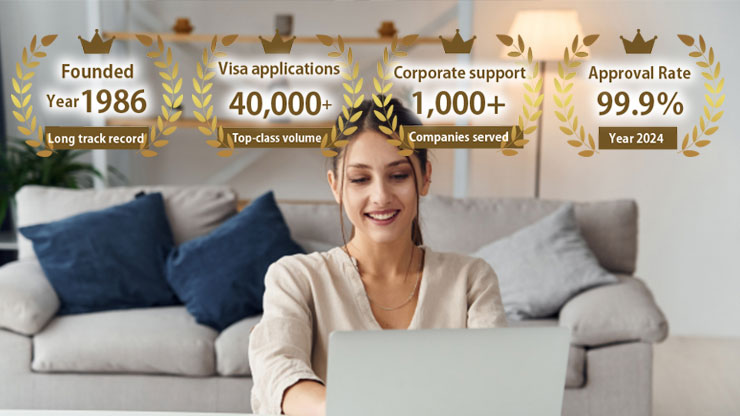
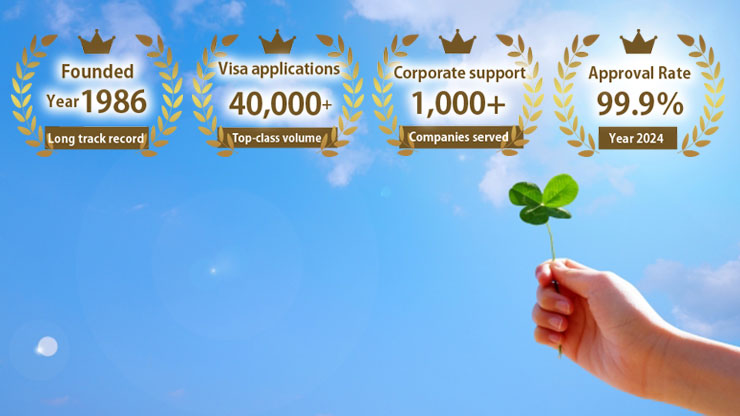
Founded in 1986 — Over 43,000 Visa Cases
We apply long-term screening insight and corporate-level standards to your individual case.
Learn MoreVeteran Immigration Specialists (10+ Years)
Experts who understand screening criteria reduce refusal risks through consulting.
Learn MoreCentralized Headquarters System
No dispersed standards — decisions reflect accumulated experience and current trends.
Learn MoreNationwide Support: Online and email-based management, same quality anywhere in Japan.
Multilingual: Consultations available in English and Chinese.
Clear Progress Tracking: Check application status and required documents online.
Complex Cases Supported: Extensive experience with reapplications after rejection.
Transparent Fees: Clear pricing with minimal additional costs.
Support Even After Rejection: Free reapplication support until approval.
Information Security: Proper data management based on ISO27001 standards.
View All 9 Reasons ACROSEED Is ChosenACROSEED’s Track Record
Client Testimonials
Free Consultation
11. Related Pages Commonly Read with Family Dependent Visa

Japan Dependent Visa Application Guide
A complete guide for bringing a spouse or child to Japan under Dependent status, covering eligibility, financial support, required documents and application forms, the COE process, and processing time.
Family Dependent Visa Renewal: Examination Basics and Key Precautions
For current Dependent Visa holders, this guide explains renewal documents and examination points, including changes in the sponsor’s income, employment, family size, and a child’s age or circumstances.
Dependent Visa Refusal and Reapplication Guide
If a Dependent Visa or COE application was refused, review the refusal reasons, financial-support evidence, family relationship, and inconsistencies in the previous filing before preparing a stronger reapplication.

Permanent Residency from a Dependent Visa
A guide for Dependent Visa holders considering Permanent Residency, including how the principal family member’s status, residence history, household finances, public obligations, and simultaneous family applications may affect eligibility.
More Detailed Guides for Dependent Visa Holders
Dependent Visa Japan for International Students | Spouse, Requirements & Documents
Japan Dependent Visa Eligibility | Spouse, Children & Financial Support
Can You Work Remotely in Japan on a Dependent Visa? Overseas Employer Rules
Change Dependent Visa to Work Visa in Japan | Requirements & Documents
Dependent Visa Japan: Divorce, Address Change & Required Notifications
Dependent Visa Japan: Full-Time Work After High School | Change of Status

ACROSEED Immigration Lawyer's Office
Representative Administrative Scrivener
Makoto Sano
1998 Graduated from Aoyamagakuin University
2001 Registered as an administrative scrivener
He has Over 20 years of experience as an international administrative scrivener, specializing in foreign employment consulting and residence procedures for foreign residents in Japan.
Click here to see information about his business achievements
Click here to see books he has authored
ACROSEED Immigration Lawyer's Office has supported immigration and residence procedures since 1986. Consultation is available by phone, email, online meeting, or in person.