Dependent Visa Japan: Required Notifications After Divorce, Moving or Family Changes
Last Updated: | Reviewed by: ACROSEED Immigration Lawyer's Office
The notifications required for a Dependent Visa holder in Japan depend on whether the person is residing as a spouse or a child, and on what changed. A spouse on Dependent status generally must notify the Immigration Services Agency within 14 days after divorce or the death of the spouse. Moving to a new address and changes to residence-card details are handled under separate notification procedures.

Different events require different notifications. In particular, a person residing under Dependent status as a spouse must submit a notification concerning the spouse within 14 days after divorce or the spouse's death.
A move is reported through the municipality as a change of place of residence. Changes to your name, date of birth, sex, or nationality/region are reported as changes to residence-card information. A child on Dependent status and a sponsor's job change are not handled under the same spouse-notification procedure.
- What Notifications Are Required for a Dependent Visa Holder in Japan?
- Divorce on a Dependent Visa: Notify Immigration Within 14 Days
- Death of a Spouse: The Same 14-Day Notification Rule
- Do Children on Dependent Status Need the Spouse Notification?
- Moving in Japan: Report Your New Address Within 14 Days
- Changes to Name, Nationality or Other Residence Card Details
- What If the Sponsor Changes Jobs, Resigns or Becomes Unemployed?
- How to File a Spouse Notification: Online, by Mail or In Person
- What If You Miss the 14-Day Deadline?
- Dependent Visa Notification FAQ
- How ACROSEED Helps With Dependent Visa Changes
- Related Guides for Dependent Visa Holders
1. What Notifications Are Required for a Dependent Visa Holder in Japan?
The required procedure depends on the event. The main notifications that can affect a Dependent Visa holder are summarized below.
| What changed? | Main procedure | Deadline | Where to file |
|---|---|---|---|
| Divorce from spouse | Notification concerning spouse | Within 14 days | Immigration Services Agency |
| Death of spouse | Notification concerning spouse | Within 14 days | Immigration Services Agency |
| Change of address | Notification of new place of residence | Within 14 days of moving | Municipality of the new address |
| Change of name, date of birth, sex, or nationality/region | Change of residence-card details | Within 14 days | Regional immigration office |
| Child on Dependent status | Not subject to the spouse notification merely because the parents divorce or one parent dies | — | — |
| Sponsor changes jobs or resigns | Not an affiliated-organization notification by the Dependent Visa holder | — | Check any effect on future residence procedures separately |
The Immigration Services Agency distinguishes the spouse notification, the place-of-residence notification, changes to residence-card information, and notifications concerning an affiliated or contracting organization. Dependent status itself is not one of the statuses subject to the affiliated-organization notification.
2. Divorce on a Dependent Visa: Notify Immigration Within 14 Days
If you are residing in Japan under Dependent status as a spouse and you divorce, you must notify the Immigration Services Agency within 14 days from the date of divorce.
Filing the notification does not automatically cancel your status on the spot
The spouse notification reports the fact of divorce to Immigration. Filing it does not, by itself, make your status of residence disappear immediately on the day the notification is submitted.
However, Dependent status is based on day-to-day activities as a spouse or child who is financially supported by a qualifying foreign resident. After divorce, you should promptly review whether another status of residence is needed for your continued stay in Japan.
If you want to remain in Japan after divorce
If you will work, an appropriate work-authorized status may be relevant. Other options depend on your individual circumstances. The 14-day notification requirement and the question of which status you should hold next are separate issues.
3. Death of a Spouse: The Same 14-Day Notification Rule
A person residing under Dependent status as a spouse must also notify the Immigration Services Agency within 14 days after the spouse dies.
The person who files is the mid- to long-term resident holding Dependent status as the spouse. If you intend to continue living in Japan after the spouse's death, separately review whether a change of status or another residence procedure is required.
4. Do Children on Dependent Status Need the Spouse Notification?
No. A child residing under Dependent status is not required to file the spouse notification merely because the parents divorce or one parent dies.
The spouse notification applies to a person residing under Dependent status as a spouse. It is not a blanket notification that every Dependent Visa holder must file when a family relationship changes.
If the person providing support is no longer able to do so, however, the child's underlying Dependent-status circumstances may change. That is a separate residence-status issue.
5. Moving in Japan: Report Your New Address Within 14 Days
A mid- to long-term resident, including a Dependent Visa holder, who changes address must report the new place of residence within 14 days after moving there.
Where to report the new address
The procedure is completed at the municipal office for the new address. Present your residence card when filing the move-in or address-change procedure.
If the whole family moves
If several mid- to long-term resident family members move together, each person's required place-of-residence information must be updated. Follow the municipality's instructions for the household's resident-registration procedures.
6. Changes to Name, Nationality or Other Residence Card Details
If your name, date of birth, sex, or nationality/region changes, you must notify the immigration authorities within 14 days from the date of the change.
This is different from an address change. Changes to non-address residence-card details are generally handled by the regional immigration office having jurisdiction over your place of residence.
If divorce or marriage also changes your name, you may need both the spouse-related notification and the residence-card-details procedure because they are separate notifications.
7. What If the Sponsor Changes Jobs, Resigns or Becomes Unemployed?
A sponsor's job change or resignation does not, by itself, create an affiliated-organization notification obligation for the person holding Dependent status. Dependent status is not one of the statuses listed for the affiliated-organization or contracting-organization notification.
If the sponsor changes employers
If the sponsor personally holds a status such as Engineer/Specialist in Humanities/International Services or Student, the sponsor may have a separate notification obligation concerning their own employer or school. That does not mean the Dependent Visa holder files the same notification.
If the sponsor resigns or loses the job
Because Dependent status assumes financial support from the sponsor, a substantial change in the sponsor's employment or financial situation can become relevant in a future extension of period of stay or another residence procedure. Whether an immediate notification is required and whether the change affects future eligibility are separate questions.
8. How to File a Spouse Notification: Online, by Mail or In Person
The notification concerning a spouse can be filed online, by mail, or at a regional immigration office.
Online filing
The Immigration Services Agency's electronic notification system can be used for this procedure. User registration is required before using the online system.
Filing by mail
You may submit the prescribed notification form by mail. Follow the Immigration Services Agency's instructions and include a copy of your residence card with the mailed notification.
Filing at an immigration office
You may also file at a regional immigration office. The spouse notification does not uniformly require documentary proof such as a certificate of acceptance of a divorce notification to be attached, although Immigration may confirm facts when necessary in an individual case.
9. What If You Miss the 14-Day Deadline?
If you discover that the 14-day deadline has passed, file the required notification promptly rather than leaving the matter unreported.
The Immigration Services Agency explains that failure to make a required notification, or making a false notification, is subject to penalty provisions. Compliance with notification duties may also be considered in later residence procedures.
Missing the deadline is not a reason to avoid filing altogether. If there was a reason for the delay, organize the facts and complete the required procedure as soon as possible.
10. Dependent Visa Notification FAQ
A Dependent Visa holder who is residing in Japan as a spouse must notify the Immigration Services Agency within 14 days after divorce or the death of the spouse. A change of address must be reported to the municipality of the new address within 14 days. Changes to name, date of birth, sex, or nationality/region must also be reported within 14 days.
If you hold Dependent status as a spouse and divorce, you must submit a notification concerning your spouse to the Immigration Services Agency within 14 days from the date of divorce.
No. The notification concerning a spouse applies to a person residing under Dependent status as a spouse. A child holding Dependent status is not required to file that notification merely because the parents divorce or one parent dies.
Dependent status itself is not one of the statuses subject to the notification of an affiliated or contracting organization. Therefore, the Dependent Visa holder does not file that notification merely because the sponsor changes jobs. However, a significant change in the sponsor's ability to provide support may matter in a future extension or other residence procedure.
A mid- to long-term resident who changes address must report the new place of residence to the municipality of the new address within 14 days after moving there and present the residence card when completing the procedure.
If you discover that the 14-day deadline has passed, you should file the required notification promptly rather than leave it unreported. Failure to make a required notification or making a false notification may be subject to penalties and can be considered in later residence procedures.
11. How ACROSEED Helps With Dependent Visa Changes
When divorce, the death of a spouse, unemployment or another family change affects a Dependent Visa holder, the key issue is often not only which notification must be filed, but whether the current status can still be maintained or whether a Change of Status is needed.
ACROSEED Immigration Lawyer's Office reviews the current status of residence, family relationship, financial support situation and any planned employment, then identifies the required notifications and the next residence procedure.
- You divorced or your spouse died and you want to remain in Japan.
- Your sponsor resigned or lost the job and you are concerned about your next extension.
- You found full-time employment and need to change from Dependent status to a work-authorized status.
- You missed a 14-day notification deadline.
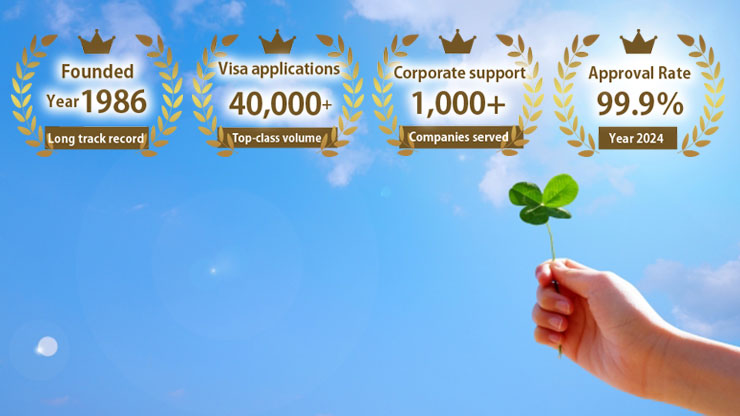
Founded in 1986 — Over 43,000 Visa Cases
We apply long-term screening insight and corporate-level standards to your individual case.
Learn MoreVeteran Immigration Specialists (10+ Years)
Experts who understand screening criteria reduce refusal risks through consulting.
Learn MoreCentralized Headquarters System
No dispersed standards — decisions reflect accumulated experience and current trends.
Learn MoreNationwide Support: Online and email-based management, same quality anywhere in Japan.
Multilingual: Consultations available in English and Chinese.
Clear Progress Tracking: Check application status and required documents online.
Complex Cases Supported: Extensive experience with reapplications after rejection.
Transparent Fees: Clear pricing with minimal additional costs.
Support Even After Rejection: Free reapplication support until approval.
Information Security: Proper data management based on ISO27001 standards.
View All 9 Reasons ACROSEED Is ChosenACROSEED’s Track Record
Client Testimonials
Free Consultation
12. Related Pages Commonly Read with Family Dependent Visa

Japan Dependent Visa Application Guide
A complete guide for bringing a spouse or child to Japan under Dependent status, covering eligibility, financial support, required documents and application forms, the COE process, and processing time.

Family Dependent Visa Renewal: Examination Basics and Key Precautions
For current Dependent Visa holders, this guide explains renewal documents and examination points, including changes in the sponsor’s income, employment, family size, and a child’s age or circumstances.
Dependent Visa Refusal and Reapplication Guide
If a Dependent Visa or COE application was refused, review the refusal reasons, financial-support evidence, family relationship, and inconsistencies in the previous filing before preparing a stronger reapplication.

Permanent Residency from a Dependent Visa
A guide for Dependent Visa holders considering Permanent Residency, including how the principal family member’s status, residence history, household finances, public obligations, and simultaneous family applications may affect eligibility.
More Detailed Guides for Dependent Visa Holders
Dependent Visa Japan for International Students | Spouse, Requirements & Documents
Japan Dependent Visa Eligibility | Spouse, Children & Financial Support
Can You Work Remotely in Japan on a Dependent Visa? Overseas Employer Rules
Change Dependent Visa to Work Visa in Japan | Requirements & Documents
Dependent Visa Japan: Divorce, Address Change & Required Notifications
Dependent Visa Japan: Full-Time Work After High School | Change of Status

ACROSEED Immigration Lawyer's Office
Representative Administrative Scrivener
Makoto Sano
1998 Graduated from Aoyamagakuin University
2001 Registered as an administrative scrivener
He has Over 20 years of experience as an international administrative scrivener, specializing in foreign employment consulting and residence procedures for foreign residents in Japan.
Click here to see information about his business achievements
Click here to see books he has authored
ACROSEED Immigration Lawyer's Office has supported immigration and residence procedures since 1986. Consultation is available by phone, email, online meeting, or in person.