Can I Bring My Adult Child to Japan? Long-Term Resident Visa Age Limit
Last Updated: | Reviewed by: Makoto Sano, Immigration Lawyer (registered in 2001)
Parents living in Japan often ask whether they can bring a foreign-national son or daughter to Japan after the child turns 18. The key point is that the relevant Long-Term Resident category is for a minor and unmarried biological child. Under the current age of majority, “minor” means under 18.

- Can You Bring an Adult Child to Japan as a Long-Term Resident?
- Who Qualifies as a Minor, Unmarried Biological Child?
- COE Issued at 17: What If the Child Turns 18 Before Entry?
- Turning 18 After Already Obtaining Long-Term Resident Status
- Support from ACROSEED Immigration Lawyer's Office
- Related Long-Term Resident and Visa Guides
A foreign child who is already 18 or older cannot newly enter Japan under the Long-Term Resident category for a minor and unmarried biological child. For a new entry under this category, the child must still be under 18 at the time of entry. If the child is 18 or older, another status of residence must be considered according to the activity the child will actually pursue in Japan, such as study or qualifying employment.
1. Can You Bring an Adult Child to Japan as a Long-Term Resident?
Not under the Long-Term Resident category for a minor and unmarried biological child if the child is already 18 or older at the time of new entry.
This category applies to a minor and unmarried biological child who will live while being supported by a parent or other qualifying supporter with the applicable status of residence. Under the current age of majority, the child must be under 18.
If the child is already 18 or older, the issue is not simply that Immigration may consider the need for parental support to be weaker. The child no longer satisfies the category's requirement of being a minor, so this category cannot be used for a new entry.
2. Who Qualifies as a Minor, Unmarried Biological Child?
When a foreign resident in Japan wishes to bring a biological child from a previous relationship or marriage, Long-Term Resident status may be considered if the child is under 18, unmarried, and within the applicable support and family-status category.
The requirements must be checked according to the specific category. The important point for this page is that both minority and unmarried status matter. Being the biological child of a parent living in Japan does not by itself create a general residence status after the child becomes an adult.
For the detailed procedure for bringing a minor and unmarried biological child from overseas, see the Long-Term Resident Visa for a Minor, Unmarried Biological Child.
3. COE Issued at 17: What If the Child Turns 18 Before Entry?
The child must enter Japan by the day before the 18th birthday
For a new entry under this category, Immigration guidance requires the child to enter Japan by the day before the 18th birthday.
Therefore, even if a Certificate of Eligibility (COE) was issued while the child was still 17, the child cannot enter Japan under the minor-and-unmarried-biological-child Long-Term Resident category if the child is already 18 at the time of entry.
The relevant age is therefore not only the child's age when the COE is issued. For this category, whether the child is still under 18 when actually entering Japan is critical.
4. Turning 18 After Already Obtaining Long-Term Resident Status
The age rule explained above concerns new entry under this particular minor-and-unmarried-child category.
If a person already holds Long-Term Resident status and returns to Japan using valid re-entry permission or special re-entry permission, the person does not lose the status merely because the person has turned 18.
This is different from trying to use the minor-and-unmarried-child category for the first entry after the child has already become an adult.
5. What Other Visa Options Can an Adult Child Consider?
For an adult child aged 18 or older, there is no general Japanese status of residence available simply because the person is the adult child of a parent living in Japan. Instead, you must examine what the child will actually do in Japan.
1. Student Status for Further Education
If the child genuinely plans to study at a Japanese-language school, vocational school, university or other eligible educational institution, Student status may be a representative option.
However, Student status is not an automatic substitute for the Long-Term Resident category. It should be considered only when the person has a genuine intention to study and satisfies the applicable requirements, including the school, financial support and Japanese-language ability.
2. Work-Related Status for Employment
If the adult child already has relevant education or work experience, receives an offer from a company in Japan, and the proposed duties meet the requirements of an applicable work-related status of residence, a work status may be considered according to the person's background and job duties.
This is not automatic. The person's education, work history and actual job duties must meet the requirements of the specific work status being considered.
A person may also study in Japan first and later consider changing to a work-authorized status after graduation if the requirements at that time are satisfied. This is not an automatic “step-up” route; the person must independently qualify for the status corresponding to the future activity.
3. Japanese-Language School Rules From the October 2026 Intake
For applicants considering study at a Japanese-language educational institution, new operational rules for confirming Japanese-language ability apply from the October 2026 intake.
Under the Japanese master page, relying only on a record of 150 hours or more of Japanese-language study is no longer sufficient by itself. Confirmation through evidence of an applicable examination or an interview or other assessment by the educational institution is required under the new operation.
Because the detailed requirements depend on the school and the application timing, applicants should confirm the latest requirements directly with the school they plan to attend before filing.
6. Adult Child Visa Japan: Frequently Asked Questions
Not under the Long-Term Resident category for a minor and unmarried biological child. For a new entry under this category, the child must be under 18 and unmarried and must meet the applicable support and family-status requirements. If the child is already 18 or older at the time of entry, this category cannot be used for a new entry.
The child must enter Japan by the day before the 18th birthday to use this minor-and-unmarried-child Long-Term Resident category. Even if a Certificate of Eligibility was issued while the child was 17, the child cannot enter under this category if the child is already 18 at the time of entry.
Not simply because the child turns 18. The age rule described on this page concerns a new entry under the minor-and-unmarried-biological-child category. A person who already holds Long-Term Resident status and returns to Japan with valid re-entry permission or special re-entry permission does not lose that status solely because the person has turned 18.
There is no general status of residence available solely because the person is the adult child of a parent living in Japan. The appropriate status depends on what the person will do in Japan. Student status may be considered for genuine study at an eligible school, while a work-related status may be considered if the person's education, work experience and proposed job meet the requirements.
No. Student status is not an automatic substitute for the Long-Term Resident category. It may be considered only when the person genuinely intends to study and satisfies the requirements relating to the school, financial support, Japanese-language ability and other applicable conditions.
7. Support from ACROSEED Immigration Lawyer's Office
When a foreign child is already 18 or older, ACROSEED Immigration Lawyer's Office first confirms that the person cannot newly enter under the minor and unmarried biological-child Long-Term Resident category, and then examines whether another status of residence fits the activity the person actually intends to pursue in Japan.
Before filing, we organize the child's age, educational background, work experience, current study or employment situation, and intended activity in Japan. We then consider whether Student status or an appropriate work-related status may apply and what documents and procedures are required.
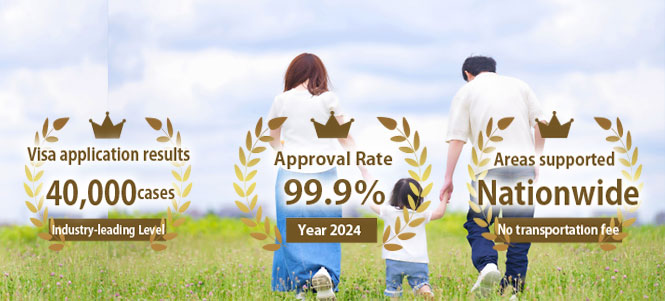
Founded in 1986 — Over 40,000 Visa Cases
Long-term immigration experience is applied to each applicant's circumstances.
Learn MoreImmigration Specialists with 10+ Years of Experience
Experienced specialists review the available residence-status options and supporting evidence.
Learn More99.9% Approval Rate (2024)
If we assess that approval is extremely unlikely, we explain that before filing.
Learn MoreNationwide Support: Online and email-based case management.
Multilingual: Consultations available in English and Chinese.
Clear Progress Tracking: Check application status and required documents online.
Complex Cases Supported: Experience with reapplications and cases requiring careful review.
Transparent Fees: Clear pricing with minimal unexpected additional costs.
Support Even After Rejection: Free reapplication support in accordance with service terms.
Information Security: Personal information managed under ISO27001-based operations.
View All 9 Reasons ACROSEED Is ChosenACROSEED's Track Record
Client Testimonials
Free Consultation
8. Related Pages Often Read Together with Long-Term Resident Applications
Guide to Applying for Permanent Residency from Long-Term Resident Status
A guide for Long-Term Resident Visa holders who wish to obtain Permanent Residency. Explains requirements such as years of stay, income criteria, financial independence, tax payment, and social insurance, as well as key points to avoid denial. Includes a free self-check tool.

How to Obtain a Long-Term Resident Visa after Divorce from a Japanese Spouse
Explains the requirements for a Long-Term Resident Visa after divorce (financial stability, settlement in Japan, raising a biological child, etc.) and important points to note. Also covers official approval/denial cases and the latest screening periods.
Long-Term Resident Visa for Raising a Japanese Child
Specialists explain Long-Term Resident Visas for those raising a Japanese child: eligibility requirements, required documents, change/extension procedures, key screening points, and the path from Long-Term Resident to Permanent Residency.
Long-Term Resident Visa for Bringing a Minor, Unmarried Biological Child from Overseas
A detailed explanation by specialists of the Long-Term Resident Visa procedures when a minor, unmarried biological child is to be supported in Japan by a Permanent Resident, Long-Term Resident, or Spouse of Japanese National.
Complete Guide to Long-Term Resident Visas for Nikkei Applicants
An administrative scrivener explains the conditions, procedures, and required documents for Nikkei 2nd, 3rd, and 4th generation applicants to obtain a Long-Term Resident Visa in Japan.
More Detailed Information on Long-Term Resident Visa Applications
Long-Term Resident vs. Permanent Resident in Japan | Key Differences
Adopted Child Visa Japan | Ordinary vs Special Adoption & Long-Term Resident
Japan Visa After Divorce With a Japanese Child | Custody & Long-Term Resident
Can I Bring My Adult Child to Japan? | Long-Term Resident Visa Age Limit
Dependent Visa Japan: Full-Time Work After High School | Change of Status
Long-Term Resident Visa Denied in Japan? Reasons & Reapplication
Long-Term Resident Visa Renewal in Japan | Documents, Requirements & Fees
Long-Term Resident Visa Japan: Unemployed or Low Income?
Change from Temporary Visitor to Long-Term Resident in Japan?

ACROSEED Immigration Lawyer's Office
Representative Immigration Lawyer (Administrative Scrivener)
Makoto Sano
Graduated from Aoyama Gakuin University in 1998
Registered as an Administrative Scrivener in 2001
He has over 20 years of experience in immigration law and administrative procedures in Japan, specializing in employment-related immigration matters and residence procedures for foreign nationals.
ACROSEED Immigration Lawyer's Office has supported immigration and residence procedures since 1986. Consultation is available by phone, email, online meeting, or at our office. English and Chinese support is available.