How to Change Student Visa to Work Visa in Japan (Engineer/Specialist in Humanities/International Services)
Last updated:

Summary|Change Student → Engineer/Specialist/International Services
- The key is linkage between degree/major and job duties + substance of the host company + salary equal to or above Japanese peers
- Graduation certificates are usually issued in Feb–Mar: apply in Dec–Jan with an expected graduation certificate → add official certificate when issued
- Screening is usually 1–2 months. For April start, having application ready by Dec–Jan is safest
- What is the Engineer/Specialist in Humanities/International Services Work Visa in Japan?
- Change of Status for International Students: Student → Work Visa in Japan (Engineer/Humanities/International)
- Q&A about the Engineer/Humanities/International Visa
- Required Documents
- Refusal Cases & Countermeasures
- Changing from Student to Work Visa in Japan – Steps & Timeline
- Google Customer Reviews
- Why Choose ACROSEED
- Fees
- Related Pages Often Viewed Together with “Change from Student Visa to Engineer / Humanities / International Services”
1. What is the Engineer/Specialist in Humanities/International Services Work Visa in Japan?
The status of residence “Engineer/Specialist in Humanities/International Services” is a work visa for foreign nationals who will engage in duties requiring specialized expertise under an employment contract with a public or private organization in Japan. When an international student gets a job, they typically change status from “Student” to “Engineer/Specialist in Humanities/International Services.”
1. Eligibility Requirements
- Academic background or work experience: Your major at university/junior college/vocational college (e.g., “senmonshi”) or equivalent experience, and you can explain the linkage to your job duties.
- Professional nature of duties: Not simple labor; requires knowledge in natural sciences or humanities, or sensitivity based on foreign culture, at a certain professional level.
- Salary & conditions: In principle, equal to or higher than Japanese peers (substantiated by pay regulations and offer letter, etc.).
- Substance of host organization: The actual and ongoing nature of the business, organization, and office can be verified by materials.
- Contract relationship: Usually employment; for dispatch/outsourcing, you must prove the legality of the actual work arrangement.
If your activities fit another status (e.g., “Professor,” “Artist,” “Journalist,” “Business Manager,” “Legal/Accounting,” “Medical,” “Researcher,” “Instructor,” “Intra-company Transferee,” “Entertainer,” etc.), consider that status instead.
Simple labor is not covered. Sales/clerical light work does not fall within this status.
Even as a freelancer/sole proprietor, if you carefully prove the legality of the contracts/work style and the professional nature with detailed documentation, you can obtain this status.
For details about obtaining status as a freelancer/sole proprietor, see the page below.

How can foreign nationals obtain a visa as freelancers?
A thorough comparison of statuses to work in Japan as a freelancer (sole proprietor): Engineer/Humanities/International (contracting allowed), Business Manager (start-up), and Highly Skilled Professional—differences, requirements, flow, and common refusal cases.
2. How to View Applicable Occupations
This status broadly covers the following three categories. When applying, show concrete linkage between your department/daily tasks and your academic background/experience.
A. Engineer (Natural sciences)
Duties requiring knowledge in natural sciences such as science, engineering, IT, agriculture, and health.
- IT/Information: Software development, web/app engineer, data analytics, infrastructure operations, QA/test design
- Engineering: Mechanical/electrical/electronic design, quality assurance, product development, R&D support, technical sales (requires technical knowledge)
- Science: Lab support and analysis in bio/chem, process optimization, etc.
B. Humanities (Humanities/social sciences)
Duties requiring knowledge in humanities such as law, economics, business, sociology, linguistics, and psychology.
- Planning/Management: Corporate/Business planning, marketing, research & analysis, HR/Accounting (with specialization)
- Trade/Logistics: Trade operations, procurement, supply chain management
- Sales/Consulting: B2B sales (specialized proposals), consulting (note: legal/tax may fit another status)
C. International Services (Sensitivity based on foreign culture)
Duties requiring thinking/sensitivity based on foreign culture—i.e., non-ordinary sensibilities rooted in cultures unfamiliar to most Japanese.
To qualify, the role must require a professional level of ability grounded in the society/history/traditions of the foreign culture.
- Language/Communication: Translation/interpretation, language instruction (some school types may fit “Instructor”)
- Planning/PR: Overseas PR/marketing, international liaison, cross-border EC operations
- Design: Fashion/interior/product design leveraging foreign cultural sensibilities
3. Difference between “Humanities” and “International Services”
“Humanities/International Services” actually consists of two sub-categories. “Humanities” covers duties requiring knowledge in humanities fields, such as a university graduate working in trade operations.
“International Services” covers duties requiring thinking/sensitivity based on foreign culture and does not always require a university degree. Without a relevant degree (or if the major is unrelated), 10+ years of work experience is required, including overseas experience.
Note that the approval criteria differ between the two, so even within the same umbrella status, you must decide which sub-category applies and prepare documents accordingly.
| Category | Best for | Key points | Cautions |
|---|---|---|---|
| Humanities |
Roles leveraging humanities knowledge (law/econ/business/sociology/linguistics, etc.) e.g., corporate planning/market research, trade ops, procurement/SCM, specialized B2B sales, consulting |
|
Mostly-routine clerical/sales roles are ineligible. Roles like CPA/attorney may fit Legal/Accounting, school teachers may fit Instructor. |
| International Services |
Roles anchored in thinking/sensitivity based on foreign culture. e.g., translation/interpretation, overseas PR, international liaison, cross-border EC, culturally-rooted design |
|
Language skill alone is insufficient; cultural background use must be core to the job. Language teachers at schools may fit Instructor; overseas duties by transfer may fit Intra-company Transferee. |
4. Notes for Renewal
Renewals can be tricky. In this status, you may be assigned to trade/purchasing roles and spend much of the year overseas.
If your days physically in Japan are extremely low, immigration may question the necessity of granting a status to reside in Japan, which can cause issues at renewal.
Renewal screening confirms the continuity of your employment/residence (specialized duties, salary, social insurance enrollment, notifications for address/organization changes, etc.).
Even with long business trips, maintain materials that show your life base in Japan and actual work performance.
Please tell us the industry and job type of your prospective employer, and your academic major. We will assess whether you are eligible to obtain a work visa. (Job placement services are not available.)
English / Chinese support available.
Contact us by email 03-6905-6371
2. Change of Status for International Students: Student → Work Visa in Japan (Engineer/Humanities/International)
If you will work in Japan after graduation, you must change status from “Student” to “Engineer/Specialist in Humanities/International Services.” Screening does not just switch the label; it verifies the linkage between what you studied and what you will do, as well as the substance of the hiring company and proper employment conditions.
Screening focuses on the four points below. Organize them thoroughly and keep your narrative consistent across all documents to raise your approval chance.
- Academic background/experience: University/junior college/vocational (“senmonshi”, etc.). Make the linkage between major and duties explicit. If not aligned, supplement with experience (e.g., 10+ years).
- Specialization & relevance of duties: Use a job description and company workflow to explain how your knowledge is applied to tasks.
- Salary level: Equal to or higher than Japanese peers (backed by pay regulations and offer). Quantify the basis.
- Company substance: Explain the real business (activities/organization/revenue/contracts/office). Provide registry, office photos, website, etc.
“Linkage between education and duties” is crucial. For example, a business major joining trade or marketing is natural; unrelated simple labor/retail roles are outside this status.
Employers must also meet certain criteria—e.g., finances, staffing, social insurance/tax compliance—demonstrating a stable business foundation. You will often submit company materials, so coordinate closely with HR.
Quick Checklist for Students Changing Status
- Offer letter (with draft employment contract) obtained
- Graduation (or expected) certificate & transcript ready
- Job description clearly states specialization and relevance
- Company profile ready (business, org chart, office, website, etc.)
- Decide filing timing by counting back from your start date
Average processing is about 1–2 months. Many companies hire in April; applications often start in December. Immigration offices get crowded around year-end—start early.
ACROSEED offers a dedicated free consultation for international students on changing from Student to Engineer/Humanities/International. English/Chinese available. We can start right after you receive an offer.
We tailor advice to your case (linkage, document structure, info sharing with your employer). Please feel free to contact us.
3. Q&A about the Engineer/Humanities/International Visa
Q. Can I apply while still enrolled?
A. Yes. You can start after receiving an offer and with an expected graduation certificate. After graduation, count back from your start date and apply early.
Q. Is change from Student possible for vocational school graduates?
A. If you can explain linkage between your program and duties and the conditions are proper, it’s possible. We also confirm qualifications such as “senmonshi.”
Q. What salary level is required?
A. In principle, equal to or higher than Japanese peers. Show evidence via pay regulations/job postings/salary tables.
Q. Common pitfalls leading to refusal
A. Weak education–duty linkage, weak company substance, insufficient salary evidence, abstract documentation. These improve with concrete materials.
Please tell us the industry and job type of your prospective employer, and your academic major. We will assess whether you are eligible to obtain a work visa. (Job placement services are not available.)
English / Chinese support available.
Contact us by email 03-6905-6371
4. Required Documents
1. Generally Required
Requirements change frequently due to legal revisions—always check the Immigration Services Agency website for the latest.
If you engage us, we start from the official list and tailor a document set that we believe will maximize approval for your case.
2. For Students|Key Points when Changing Student → Engineer/Humanities/International
When changing from Student to Engineer/Humanities/International, beyond the standard forms, evidence to prove the linkage between studies and duties and the substance of the host company is crucial. Timing and concreteness drive approval.
Main documents & tips
- Graduation (or expected) certificate & transcript: Many schools issue in Feb–Mar. Apply in Dec–Jan with “expected graduation,” then add official certificate. Use transcript to back your major.
- Resume (with summary of program/research): Map major → department → daily tasks line by line.
- Offer letter/employment contract (draft OK): State duties/salary/start date. Describe how duties involve specialized judgment.
- Job description: List task × knowledge × deliverable. Visualize with workflows/dashboards.
- Company profile: Registry, org chart, office photos, website, contracts. For new firms, reinforce with business plan/quotes/order records.
- Salary evidence: Pay regulations/salary tables/job postings to numerically prove parity with Japanese peers (grade/range/title).
- ID items: Residence Card, certificate of residence, photo (4×3cm), passport. Update residence record if address changes.
Notes for preparation
- Confirm graduation certificate timing: Schools differ; count back to set your filing date.
- Avoid abstract linkage: Connect major and duties concretely via “task × knowledge.”
- Reinforce company substance via multiple formats: Registry, office photos, contracts, etc.
- Quantify salary basis: Show grade, range, and title clearly.
Many students miss deadlines because graduation certificates/offers are late.
For an April start, December–January filing is ideal. ACROSEED coordinates among school, employer, and immigration to keep documents and timing on track.
5. Refusal Cases & Countermeasures
If you submit a set of documents without helping the officer fully grasp “professional nature of duties” and “linkage to your education”, change from Student to this status may be refused. Reasons often boil down to “insufficient explanation” or “lack of evidence.”
Below are common refusal patterns and actionable fixes. Do more than tick boxes—explain logically why it is reasonable for this student to perform this role.
Common refusal patterns & background
- ① Weak linkage between major and duties
e.g., economics major in general clerical work; language major in retail sales.
→ Officer cannot see how your knowledge applies to actual duties, leading to refusal. - ② Ambiguous company activities
e.g., newly established, unclear revenue/business.
→ They suspect the absence of professional-level duties. - ③ Insufficient salary/contract evidence
e.g., no clear salary level, vague duties in contract, missing pay regulations.
→ Cannot judge “parity with Japanese peers.” - ④ Bad timing or document errors
e.g., filing before the school can issue graduation certificate; filing too late to meet start date.
→ Risk that result won’t arrive by start date; may trigger “unauthorized activity” issues.
Concrete countermeasures
- Visualize linkage:
Diagram major → department → daily tasks to show which knowledge applies to which duty.
e.g., “Business (major)” → “Marketing Dept.” → “Market analysis & campaign planning” - Clarify salary evidence:
Cite pay regulations/salary tables/job postings; specify title/grade/amount.
Quantifying “parity with Japanese peers” smooths screening. - Prove business substance:
Submit office photos, registry, brochures, website, client list—show credibility.
New/small firms: add business plans and contracts. - Count back from start date:
Subtract typical screening time (usually 1–2 months) and prepare to file right after certificate issuance.
For April starts, aim to finish prep by December–January.
These measures help the officer understand the reasonableness of hiring you in a professional role in Japan, significantly lowering refusal risk.
ACROSEED can analyze past refusals and support reapplication materials.
For a pre-check to raise your approval chance, please contact us below.
Please tell us the industry and job type of your prospective employer, and your academic major. We will assess whether you are eligible to obtain a work visa. (Job placement services are not available.)
English / Chinese support available.
Contact us by email 03-6905-6371
6. Changing from Student to Work Visa in Japan – Steps & Timeline
You cannot work on a “Student” status after graduation. Once you have an employer, you must apply for Change of Status to the work status “Engineer/Specialist in Humanities/International Services.”
Below is the standard flow at ACROSEED.
From offer to approval, allow about 3–4 months. During the busy Jan–Mar period, early preparation can determine success.
1. Flow from Student to Engineer/Humanities/International
-
1
- Free consultation (pre-diagnosis)
- By phone/email/online (Skype, Zoom, LINE, WeChat) or at our office.
A specialist assesses linkage (major ↔ duties), company substance, salary level, and explains your approval outlook.
We also advise on timing (e.g., “When should we file?” “Will we make it without the official graduation certificate yet?”).
-
2
- Engagement & contract
- Once engaged, we sign an agreement and start after payment.
We share a document list and design collaboration among the school, employer, and you.
-
3
- Prepare & review documents
- Leveraging 40,000+ cases, we structure documents for the highest approval likelihood.
We compile the job description, relevance diagram, company profile, etc., in a reviewer-friendly way.
After completion, you confirm contents and sign for filing.
-
4
- Filing with Immigration
- Our scrivener files on your behalf.
Screening usually takes about 1–2 months. Year-end and March are crowded—file early.
If additional documents are requested, we handle all communication.
-
5
- Approval & endorsement
- Results are sent to ACROSEED. After approval, we endorse your Residence Card (sticker) and complete issuance of the work status.
In the unlikely event of refusal, we analyze reasons and reapply at no additional fee.
-
6
- Return passport & Residence Card
- We return your endorsed passport and new Residence Card—work authorized under “Engineer/Specialist in Humanities/International Services.”
Pay special attention to the timing of the graduation certificate. Many universities/vocational schools issue the official certificate in February–mid-March. Therefore, apply in December–January with an “expected graduation” certificate and submit the official certificate later upon request.
Delays during this window can mean you won’t make an April start. Share the timeline early among your school, employer, and yourself.
ACROSEED provides end-to-end support from post-offer free consultation to approval. We also handle specific cases (vocational/junior college/foreign university graduates).
2. Processing Time
Processing time is published monthly. Check the latest averages below.
7.Google Customer Reviews
8. Why choose ACROSEED
- Why clients choose ACROSEED
- Founded in 1986; industry-leading 40,000+ visa filings
- 99.9% approval rate; trusted by many clients
- No travel expenses; flat fees nationwide
- Extensive track record in complex/re-application after refusal cases
- No add-on fees; transparent pricing
- Free re-application until approval if refused
- Support available in Japanese, English, and Chinese
Founded in 1986, with 40,000+ visa applications

ACROSEED was founded in 1986. Since 1990—the first year administrative scriveners were allowed to handle immigration under the law—we have specialized in immigration work. Our total filings exceed 40,000 (as of March 2025).
We currently handle 3,000–4,000 visa filings annually, visiting immigration twice a week to stay current on examinations and legal changes.
By choosing ACROSEED, you get services based on the latest examination trends and the industry’s deepest practical experience.
99.9% approval rate—peace of mind backed by clients’ trust
Since opening in 1986, ACROSEED has always prioritized trustworthy services. At the free consultation stage, if approval seems unlikely, we explain this and decline the engagement.
As a result, we have maintained an approval rate of 99%+ (including re-applications) since opening.
However, for cases with a viable chance where clients wish to proceed, we will make a maximum effort together.
Our attentive, tailored service has earned broad support from clients.
No travel fees—flat rates nationwide

Our office is in Nagatacho, Chiyoda-ku, Tokyo, but we handle immigration cases nationwide at flat rates with no travel expenses.
For distant clients, we offer online consultations via Skype or Zoom so you can speak face-to-face with your consultant just like an in-person visit.
Strong results in difficult and re-application cases
We have many approvals for cases repeatedly refused by clients on their own or by other law firms.
ACROSEED’s track record is unparalleled, and we are often referred the most difficult cases from around the country—operating like a “general hospital” for the industry.
Don’t give up—consult us even for seemingly difficult cases.
No add-on fees—transparent pricing

Our service fees are only those listed on our website.
We do not add fees due to client circumstances such as frequent travel or prior refusals.
We provide a transparent pricing system for your peace of mind.
Free re-application until approval if refused

If a case filed by ACROSEED is unfortunately refused, we will re-apply free of charge as long as there remains a possibility of approval.
While some competitors offer “full refunds if refused,” we believe refunds do not solve the client’s problem
.
Accepting a case casually and leaving a refusal record in your filing history can make approval much harder later.
Clients who choose ACROSEED from among many firms deserve our stance of “getting the fastest approval possible—and if refused, supporting relentlessly until approval.”
9. Fees (excl. tax)
No surcharges based on your conditions.
Nationwide service at the same fee schedule—even for distant clients.
We accept Visa and MasterCard.

| [Special Student Price] Change from Student Visa to Work Visa |
¥80,000 |
|---|---|
| [Reapplication after Rejection] Change from Student Visa to Work Visa |
¥150,000 |
10. Related Pages Often Viewed Together with “Change from Student Visa to Engineer / Humanities / International Services”
For Students
[For Students] Guide to Changing from Student Visa to Work Visa (2025 Edition)
[For Students] Guide to Changing from Student Visa to Engineer / Humanities / International Services (2025 Edition)
[For Students] Guide to Changing from Student Visa to Highly Skilled Professional (2025 Edition)
[For Students] Guide to Changing from Student Visa to Designated Activities (No.46) (2025 Edition)
For HR Managers / Employers
[For HR Managers] Visa and Procedure Guide for Hiring International Graduates (April 2026 Entry)
[For HR Managers] Guide to Obtaining the Engineer / Specialist in Humanities / International Services Visa
[For HR Managers] Applying for the “Highly Skilled Professional” Visa for Foreign Employees
[For HR Managers] Application for “Designated Activities (Notice No.46)” Visa
Administrative Scrivener Corporation ACROSEED
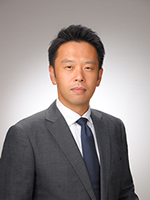
Managing Partner: Makoto Sano
Japan Federation of Administrative Scriveners Associations (Reg. No. 01080685)
Tokyo Administrative Scriveners Association (Member No. 4568)
Founded in 1986
Now in our 39th year specializing in foreign nationals’ legal affairs across two generations.
Registered Administrative Scrivener in 2001
23 years as an international administrative scrivener.
Appointed to the Tokyo Association’s International Division in 2023
Contributing to the development and training of administrative scriveners.
[Track record]
ACROSEED’s legal services are chosen by over 1,000 corporations including listed/global companies. We also have many engagements as lecturers/authors on foreign employment.
Since opening our practice in 1986, we have been involved in consulting on visa applications for foreigners for nearly 40 years as an immigration lawyer.
Telephone consultation, email consultation, online consultation, and consultation at our office are available.