Japan Naturalization Application (Japanese Citizenship Acquisition) Support|Requirements, Procedures, and Documents [2025 Updated]
Last updated:
The naturalization route differs depending on your situation.
Select the relevant residence status from the 7 pages below to check the required years of residence, key review points, and important notes for your case.
This page explains the review approach, required documents, and key precautions that are common to all naturalization routes.
▼ Scroll down to check the latest policy and system updates.
The government is currently reviewing its overall immigration and nationality policies, ahead of the “Comprehensive Policy Measures for Foreign Nationals” expected in January 2026. One key focus being discussed is the revision of the naturalization residence requirement. Experts indicate that the current “5 years or more” rule may be tightened, potentially requiring 10 years or more—closer to requirements applied for Permanent Residency.
What does stricter naturalization screening mean? Latest developments & expert commentaryIf you are considering naturalization, early application with professional support is strongly recommended.
Contact us by email 03-6905-6371- What is Naturalization? Basic Points on Acquiring Japanese Citizenship
- Requirements for Japan Naturalization Application
- Naturalization Application Procedures (From Initial Consultation to Renunciation of Original Nationality)
- List of Required Documents and How to Obtain Them
- Key Points Reviewed During Naturalization Examination
- How to Write a Statement of Reasons (Tips for Approval)
- Frequently Asked Questions (FAQ)
- Google Customer Reviews
- ACROSEED Immigration Lawyer’s Office Naturalization Support Services
1. What is Japan Naturalization Application? Key Points for Acquiring Japanese Citizenship

Naturalization is the official procedure for foreign nationals to acquire Japanese citizenship by applying to the Minister of Justice through the Legal Affairs Bureau.
Unlike visa renewal or permanent residency applications, naturalization leads to obtaining “Japanese nationality” itself, and therefore, the examination is conducted carefully and strictly.
1. Who Can Apply for Japan Naturalization?
Not every foreign resident is automatically eligible for naturalization. Several legal conditions based on the Nationality Act must be met. Generally, applicants who meet the following criteria may apply:
- Continuous residence in Japan for at least 5 years (Residence Requirement)
Certain periods such as study abroad or technical training may not be counted, so caution is required. - Stable income and living base (Financial Requirement)
The household must be financially supported either by the applicant or their spouse. - Good moral conduct (Character Requirement)
Tax payment status, social insurance participation, and traffic violation history are reviewed. - Being an adult (Capacity Requirement)
In principle, applicants must be at least 20 years old (the Nationality Act still uses the 20-year-old standard). - Basic Japanese language ability (Language Requirement)
Reading and writing ability equivalent to the 3rd-grade level of Japanese elementary school is required.
These criteria are assessed comprehensively. Even if one requirement is not perfectly met, approval may still be granted if other factors are favorable.
2. Key Differences Between Permanent Residency and Naturalization
Many people believe that permanent residency and naturalization are similar systems. However, their objectives, review processes, and resulting legal status are quite different.
Permanent residency is a system to obtain a more stable residence status, whereas naturalization is a process of changing one’s nationality to Japanese. It fundamentally changes your legal identity, including your passport, obligations, and voting rights.
Therefore, the review scope for naturalization is broader than for permanent residency. It carefully examines not only the applicant but also family composition and living conditions. The following table clearly summarizes the major differences.
| Category | Permanent Residency | Naturalization (Japanese Citizenship) |
|---|---|---|
| Status | Foreign national | Japanese national |
| Passport | Home country’s passport | Japanese passport |
| Residence Card | Required | Not required |
| Period of Stay | Unlimited (no renewal needed) | Not applicable |
| Voting Rights | None | Available |
| Obligations | Residence management obligations | Obligations as a Japanese citizen (family register, etc.) |
| Examination Strictness | Moderate | High (includes review of conduct and family background) |
As shown above, permanent residency stabilizes your residence status, while naturalization is a major legal process that changes your identity to a Japanese citizen. It is important to understand these distinctions to make the right decision for your situation.
3. Screening Period and Difficulty Level
Japan naturalization applications take significantly longer to process than other visa types.
Although more difficult than permanent residency, many applicants are approved if they prepare carefully. The key is to understand the requirements accurately and prepare thorough documentation.
The typical timeframe from application to approval is as follows:
Approximate Screening Timeline
- Document preparation: 2–6 months
(Collecting and translating documents, preparing company papers, writing the reason statement, etc.) - Examination period after submission: 8–12 months (average around 10 months)
Includes interviews by the Legal Affairs Bureau and verifications with the local office or employer. - Total estimated period: 10–18 months
Reasons for Long Processing Time
The Japan naturalization examination often takes longer because granting Japanese nationality is a highly significant legal decision. The review covers a wide range of factors, including family composition, dependents, employment status, living history, and tax records.
In some cases, the Legal Affairs Bureau may request additional documents multiple times if clarification is needed. Collecting foreign documents or company-issued papers may further extend the process.
Moreover, the review period depends on how busy the regional Legal Affairs Bureau is. In large cities or peak periods such as spring (March–April) and autumn (September–October), the process may take longer than usual.
2. Requirements for Japan Naturalization Application

To apply for naturalization in Japan, you must satisfy multiple conditions set out in the Nationality Act. These are not pass/fail items applied mechanically; instead, authorities make a comprehensive assessment based on your overall situation.
Below are the six key requirements that are especially important for a Japan naturalization application.
1. Residence Requirement (Continuous Stay of 5+ Years)
The foundation of a naturalization application is having “a continuous address in Japan for at least five years.” Here, “address” refers not only to a resident record but also to the actual, continuous living situation in Japan.
- Continuous residence and daily life in Japan for 5+ years
- Certain periods may not count depending on your status (e.g., study abroad, technical intern training)
- Extended stays abroad may break continuity (e.g., one trip of 90+ days, or 150+ days in total within a year)
- Assessment is based on real circumstances, including family composition and housing stability
2. Capacity Requirement (Being an Adult)
In principle, applicants must be adults (20 years or older) with the capacity to make legal decisions.
Applicants who are minors may, in some cases, apply together with a parent who is naturalizing.
3. Good Conduct Requirement (Taxes, Social Insurance, Traffic Violations, etc.)
Good conduct is a major focus of the review. Authorities check whether you comply with laws and social rules, examining day-to-day records in detail.
- Taxes: Status of resident/所得 taxes payment (arrears or delays are a serious negative)
- Social insurance: Enrollment and payment history for pension and health insurance
- Traffic violations: Any offenses and their frequency
- Public benefits: Whether you are receiving livelihood assistance, etc.
- For business owners: Payment status for corporate tax, consumption tax, etc.
Unpaid taxes or pension/insurance premiums often lead to denial. Expect checks of roughly the past five years.
4. Financial Stability Requirement (Stable Income & Ability to Sustain Household)
Reviewers assess whether you can continue living stably in Japan. Not only income amount but also work history, length of service, and dependents are considered comprehensively.
- Stable income (full-time employment is common; contract workers and self-employed are also possible)
- Household can be sustained by the income of the applicant or spouse
- Very short job tenure may be unfavorable (explain frequent job changes clearly)
- Family composition and housing costs are reviewed for overall sustainability
As a rough reference, for households with 1–2 dependents, an annual income around 3 million JPY is often cited, but the necessary level varies by region and family size.
5. Treatment of Multiple Nationalities (Japan Does Not Permit Dual Nationality Under the Nationality Act)
Under Japan’s Nationality Act, dual nationality is not permitted in principle. For naturalization approval, you must show a willingness to renounce your original nationality.
- After approval, complete renunciation procedures according to your country’s laws
- Some countries make renunciation difficult—confirm required documents and timelines in advance
- If renunciation takes time, authorities may confirm your progress and efforts
6. Japanese Language Requirement (Reading & Writing at 3rd-Grade Elementary Level)
Applicants need Japanese ability sufficient for daily life. A common reference is reading, writing, and conversation at about the 3rd-grade elementary level.
- Reading and writing hiragana and katakana
- Understanding and writing basic kanji (e.g., name, address)
- Reading and composing short passages (simple primary school level)
- Handling simple Q&A during the Legal Affairs Bureau interview
Formal certification is not mandatory, but proficiency around JLPT N3–N2 is reassuring.
3. Japan Naturalization Application Procedure (From Initial Consultation to Renunciation of Original Nationality)
1. Steps in the Japan Naturalization Application Process
The Japan naturalization application process begins with a preliminary consultation at the Legal Affairs Bureau, followed by the collection of required documents, preparation of a statement of reason, submission, investigation, and interview — proceeding carefully in stages until approval. The specific order and required documents may vary depending on the local Legal Affairs Bureau and individual circumstances.
Unlike ordinary visa procedures, a naturalization application must be submitted to the Legal Affairs Bureau that has jurisdiction over the applicant’s residence. The applicant must personally visit and submit the application; proxy filing is not permitted.
1. Preliminary Consultation at the Legal Affairs Bureau
Book an appointment with the Nationality Division of the nearest Legal Affairs Bureau to confirm eligibility, required documents, and methods of obtaining them. Bringing materials showing your current residence history, tax payment, family composition, and employment situation will make subsequent steps smoother.
2. Collecting Required Documents
In addition to Japanese documents (resident record, tax/tax payment certificates, pension record, employment and salary certificates, lease contract, etc.), you must collect documents from your home country (birth certificate, marriage certificate, family relationship records, etc.). These must be translated into Japanese, and the issuing authority, processing time, and need for authentication vary by country — early preparation is essential.
3. Preparing the Statement of Reason for Naturalization
This document describes your life in Japan, family, work, community involvement, and future plans. It must be supported by evidence of good conduct, tax payment, and financial stability, and be logically written in Japanese without contradictions to objective records.
4. Submitting the Naturalization Application Documents
Submit the complete set of forms (application, resume, family relationship chart, etc.) along with attachments and the statement of reason to the Legal Affairs Bureau. If there are deficiencies or questions, supplementary documents may be requested. The date of acceptance marks the start of the examination.
5. Investigation by Local Authorities and Employer
The Legal Affairs Bureau may contact municipal offices, tax authorities, or the applicant’s workplace to verify tax payment, social insurance status, employment, and residence.
Certificates through your employer (job details, income, working conditions) and materials proving your actual living situation may be requested.
6. Interview at the Legal Affairs Bureau
The applicant (and sometimes the spouse) will attend an interview. Officials will confirm the application details, evaluate Japanese communication ability, and ask about finances, lifestyle, and future outlook. Additional documentation may be requested after the interview.
7. Notification of Approval and Japanese Citizenship Procedures
Once approved, your name is published in the Official Gazette (Kanpō), confirming acquisition of Japanese nationality. You must then complete procedures for creating a family register, updating your resident record, returning your residence card, and applying for a Japanese passport. If your country requires renunciation of citizenship, follow your country’s process accordingly.
2. Important Notes on Renunciation of Original Nationality (After Naturalization Approval)
After acquiring Japanese nationality through the Official Gazette notice, you must begin renunciation procedures according to your home country’s laws.
Immediately after approval, dual nationality may exist temporarily — this is considered a transitional state. You should apply for renunciation promptly and obtain a certificate of loss of nationality to keep on record. Submit it to the Legal Affairs Bureau or municipality when requested.
-
1
- Confirm Requirements
- Check the website or contact the embassy/consulate or home country authority for required documents, fees, processing time, and whether translation or authentication (notarization/Apostille) is needed.
-
2
- Prepare Documents
- Gather materials such as the Official Gazette notice, ID, birth/marriage certificates, and your new Japanese family register. Organize them according to submission format.
-
3
- Submit Renunciation Application
- Apply at your embassy/consulate if accepted there, or directly to your home country’s competent authority. Confirm whether postal or online submission is allowed.
-
4
- Receive and Submit Certificate
- After receiving the certificate of nationality loss, prepare both the original and Japanese translation, and submit them to the requested authority (Legal Affairs Bureau or municipality). Keep copies for your records.
The renunciation process should be carried out promptly after approval. Depending on the country, it may take several months to over a year. Early action prevents unnecessary delays. Some embassies and home offices operate by appointment or mail only, so confirm procedures well in advance.
If the process is delayed or immediate renunciation is impossible, keep all evidence of your efforts, such as inquiry records with the embassy or consulate, application receipts, payment slips, and email correspondence. These may serve as proof of due effort and can be shown if the Legal Affairs Bureau or municipality requests confirmation later.
4. List of Required Documents for Japan Naturalization Application and How to Obtain Them
For a Japan naturalization application, many documents are required to comprehensively verify the applicant’s identity, income, family composition, and living situation. Documents are divided into those “obtained in Japan” and those “obtained from the home country,” and the issuing authority, processing time, and translation requirements differ.
Below are the main documents and how to obtain them.
1. Documents Related to the Individual
These verify the applicant’s identity, income, and living situation. Most can be obtained from the city/ward office, tax office, or pension office.
| Document Name | Main Issuing Authority | Notes & Tips |
|---|---|---|
| Resident Record (with registered domicile & family relationship) | City/Ward Office counter / Certificate-issuing kiosk | Sometimes required for all members of the same household. May be obtainable at convenience stores with My Number Card (varies by municipality). |
| Residence Card (both sides copy) | Copy by the applicant (original issued by Immigration Services Agency) | Confirm validity, status, and period of stay. Color copy of both sides. |
| Passport (copy of all pages) | Copy by the applicant (issued by embassy/consulate or home authority) | Include all pages with entry/exit stamps and visa pages. Check remaining validity. |
| Taxation (Income) Certificate (Resident Tax) | City/Ward Office – Tax Division | You may be asked for multiple years, not only the latest. If you moved, obtain from previous municipality as well. |
| Tax Payment Certificate (Income Tax: No.1/No.2, etc.) | National Tax Office | There are several types; explain your purpose at the counter. e-Tax issuance may be available. |
| Withholding Slip & Payslips (recent months) | Employer (HR/General Affairs) | Submit annual withholding slip and recent payslips to substantiate income. |
| Pension Enrollment Record | Pension Office / Nenkin Net | Confirm type (National/Employees’) and payment status. Organize any unpaid/exempt periods. |
| Health Insurance Card | Insurer (Kyokai Kenpo / Health Insurance Association / National Health Insurance = municipality) | Provide a readable copy showing insurer name and ID numbers. |
| Bank Account Statements | Each bank (branch/online banking) | Output a period that shows actual living conditions (salary deposits, rent payments). Show account holder name and number. |
| Lease Contract & Housing Documents | Property Manager / Landlord | Prepare the lease copy, renewal contracts, and payment records (bank statements) together. |
2. Documents Related to Employer/Company
To verify stable income, employer-issued certificates are required. The required documents differ for employees, self-employed persons, and company owners.
| Document Name | Main Issuing Authority | Notes & Tips |
|---|---|---|
| Employment Certificate | Employer (HR/General Affairs) | Issued by current employer. Includes employment period, position, and employment type. |
| Job Description Certificate | Employer (Supervisor or HR) | Explains actual job duties. Also used to check relevance to visa categories such as Engineer/Specialist in Humanities/International Services. |
| Salary Certificate or Withholding Slip | Employer (HR/Accounting) | Shows annual total compensation and deductions. Recent or multiple fiscal years may be required. |
| Company Registry Certificate | Legal Affairs Bureau | Verifies corporate registration: trade name, address, representative, capital, etc. Online issuance may be available. |
| Copy of Financial Statements (if required) | Employer (Accounting/Representative) | For self-employed/company officers, attach to show business condition (sales, net profit). |
| Copy of Employment Contract | Employer (HR) | Confirms term, duties, and compensation. Also submit renewal contracts and notices of changes. |
3. Documents Related to Family
To verify dependents, cohabiting family, and marital status, family-related documents are required. Even if applying alone, information on family members is always requested.
| Document Name | Main Issuing Authority | Notes & Tips |
|---|---|---|
| Resident Records of All Family Members | City/Ward Office | Obtain records listing names, relationships, nationality, and residence status. May be required for all cohabiting family members. |
| Marriage Acceptance Certificate or Marriage Certificate | City/Ward Office (married in Japan) / Home country notary or embassy (married abroad) | Official proof of marriage. If married abroad, attach Japanese translation and required authentication. |
| Divorce Acceptance Certificate (if applicable) | City/Ward Office (divorce in Japan) / Home country notary or embassy (divorce abroad) | Proof that the divorce was accepted. For foreign divorces, translation and notarization/Apostille may be required. |
| Children’s Birth Certificates & School Enrollment Certificates | Birth: City/Ward Office / Hospital / Home country notary Enrollment: School (kindergarten/elementary/junior high/high school) |
Birth certificates verify the child’s name, DOB, and parent-child relationship. School certificates show the family’s living base. |
| Evidence of Cohabitation/Dependent Relationship | City/Ward Office / Employer / Bank, etc. | Combine documents such as dependent allowance certificates, remittance records, lease contracts, and utility bills to substantiate actual living and support conditions. |
4. Documents to Obtain from the Home Country
To verify civil status in the home country, you must submit a birth certificate, marriage certificate, and family relationship certificate, etc. Issuing authorities, procedures, and authentication (notarization/Apostille) vary greatly by country.
| Document Name | Main Issuing Authority | Notes & Tips |
|---|---|---|
| Birth Certificate | Home country registry/municipality/notary / Embassy or consulate in Japan | Official document proving applicant’s DOB, parents’ names, and birthplace. Submit with Japanese translation and notarization/Apostille. |
| Marriage Certificate (or Certificate of Single Status) | Home country marriage registry/notary / Embassy or consulate in Japan | Proves marital status. If issued in a foreign language, attach Japanese translation + required authentication. |
| Family Relationship Certificate | Home country registry/civil affairs bureau/notary / Embassy or consulate in Japan | Proves composition of family members (parents, spouse, children). Names vary by country (e.g., “family register,” “household register”). |
| Nationality Certificate from the Passport-Issuing Country (if required) | Home country Ministry of Foreign Affairs / Embassy/Consulate | Document proving current nationality. May be requested to confirm status before/after renunciation. |
| Evidence Related to Renunciation of Former Nationality | Home country embassy/consulate / Ministry of Interior/Justice, etc. | Application receipt, acceptance certificate, inquiry records, etc. If renunciation is prolonged or impossible, use as evidence of renunciation efforts. |
5. Key Points Emphasized in the Japan Naturalization Examination

In the naturalization review, authorities make a comprehensive judgment rather than focusing on a single factor, assessing whether the applicant can “live stably as a Japanese citizen” and “faithfully fulfill public obligations.” Below are the main points that are particularly important, along with related evidence to prepare.
1. Status of Tax Payment and Social Insurance
Proper enrollment and payment of taxes, pension, and health insurance is one of the most critical items. Arrears, non-enrollment, or long-term nonpayment/late payment are major negatives. Records for not only the latest year but also several past years are checked.
- Taxes: Resident tax/income tax taxation & payment certificates (by year). If there were delays, prepare proof of payment completion and a written explanation.
- Pension: Type (Employees’/National) and contribution history; organize records of exemption/deferment if any.
- Health insurance: Enrollment status and payment for Kyokai Kenpo/Health Insurance Association/National Health Insurance.
- Self-employed/company owners: Filing and payment status for consumption tax, corporate tax, withholding income tax, etc.
Common issues: Pension gaps during job changes or unemployment; delayed switch to National Health Insurance after leaving a dependent plan; errors in final tax returns. Review records early and remedy deficiencies with supporting documents.
2. Stability of Income
The review considers whether you can live in Japan stably over the long term. Not only income amount but also employment type, length of service, and continuity of duties are emphasized.
- Basic evidence: Withholding slips, recent payslips, employment certificate, employment contract, bank statements.
- What is evaluated: Tenure, any recent decrease in income, number of job changes and reasonable reasons, continuity of side/self-employed income.
- Self-employed/executives: Consistency of financial statements, tax returns, and business plans; trends in sales and gross profit; tax payment status.
If income has temporarily decreased, substantiate recovery prospects or compensation (offer letters, expected contract renewal, objective proof of secondary income).
3. Family Composition and Dependents
The status of cohabiting family and dependents indicates the stability of life and scope of responsibility. Marital status (marriage/divorce/separation/acknowledgment of paternity) must be consistent between proof and the application.
- Cohabitation/dependents: Resident records (with relationships), remittance records proving support, school enrollment certificates, etc.
- Marital relationship: Acceptance/registration certificates for marriage/divorce; for separation, a statement of reasons and details of living expense sharing.
- Relatives abroad: Family relationship certificates, remittance records, frequency of contact, and other documents showing actual conditions.
Discrepancies between records and reality (e.g., resident record shows cohabitation but actually living apart) may raise questions. Ensure consistency with objective documents.
4. Traffic Violations and Police Records
The presence and frequency of violations are used as indicators of compliance with laws. Even minor violations, if repeated, can be negative.
- Whether there were violations, number, timing, and details (speeding, signals, parking, etc.).
- Status of paying fines/penalties and related receipts.
- Whether there were past incidents/accidents (if any, provide a written account and prevention measures).
If recent violations have accumulated, consider adjusting the timing of submission to first build a period with no violations.
5. Workplace HR and Labor Management (Employment Contract & Salary)
As the basis of income, proper employment contracts, actual work conditions, and salary payment records are reviewed. If social insurance coverage or labor management is improper, it may affect the evaluation of income stability.
- Employment contract: Clarify term, renewal conditions, job description, scheduled working hours, and wages.
- Salary records: Payment method/date and whether there were delays; verify with bank statements showing salary deposits.
- Social insurance & labor: Enrollment, withholding, working hours, paid leave, and allowances administration.
- Company materials: Employment certificate, job description, company registry certificate, and financial statements if needed.
If you are on dispatch/contract work with short renewals, bolster stability with objective evidence of continuity (renewal notices, long-term project contracts, etc.).
6. How to Write the Statement of Reason for Naturalization (Tips to Improve Approval Chances)
The statement of reason for naturalization is an important document submitted to the Legal Affairs Bureau explaining why you wish to obtain Japanese nationality and how you have been living in Japanese society. More than format, reviewers value consistency, specificity, and fact-based explanations. The quality of this statement significantly influences the examiner’s impression.
1. What the Legal Affairs Bureau Emphasizes
Examiners look not for abstract wishes but for evidence of your actual life in Japan and your ties to society. A clear explanation of the following points makes your statement easy to understand.
- Stability of life in Japan (employment history, income, housing stability)
- Degree of integration into Japanese society (community activities, role at work, family’s base of life)
- Understanding of Japanese culture and values (courtesy, compliance with laws, relationships with the community)
- Future outlook (career in Japan, children’s education, intention to live long-term)
- Objective reasons for choosing Japan rather than simply comparing with your home country
These points must be organized without contradiction to your application forms and supporting evidence. If there have been job changes, moves, or changes in family composition, explain them naturally in the statement for better understanding.
2. Expressions to Avoid
Certain wording in a statement of reason can cause misunderstandings. Avoid the following:
- Criticism of your home country or politics (a purely negative motive can be seen as inappropriate)
- Vague statements: e.g., “because I like Japan,” “to realize my dreams,” without concrete grounds
- Embellishment contrary to facts: overstatement of lifestyle or work history can create contradictions and hurt your case
- Short-term instrumental motives: e.g., obtaining nationality just for permanent residence or overseas travel
- Intent to avoid obligations: e.g., draft exemption or tax avoidance in your home country is highly negative
The key is to present positive and objective motives. Build your reasons around your accumulated life in Japan to make them persuasive.
3. How to Describe Your Work History, Family Background, and Life in Japan
The core of the statement is “how you have lived in Japan.” Include the following items and organize them chronologically for readability.
How to Write About Work History
- List post-arrival work history in order (company, duties, period)
- Briefly explain reasons for job changes and emphasize stability/continuity of your current position
- Describe your role and achievements at work
- Add your future career plans and willingness to contribute to the local community
How to Write About Family Background
- Describe the situation of spouse, children, and cohabiting family concretely
- Show that your family’s base of life is in Japan
- Include education policy for children and how you blend cultures at home
- If family members live apart, explain reasons and how you stay in contact
How to Write About Life in Japan
- Years of residence, ties with the local area, and relationships at school/work
- History of learning Japanese, current proficiency, and continued efforts
- Hobbies, community activities, volunteer work — concrete points of connection with Japanese society
- Your values in daily life, cultural understanding, and plans for living in Japan going forward
Overall, the statement of reason should convey a fact-based life story. Rather than emotional expressions, carefully summarize your actual lifestyle, efforts, and future outlook to make your statement clearer and more convincing to examiners.
7. Q&A on Japan Naturalization Application
In principle, you cannot. Under Japan’s Nationality Act, dual citizenship is not allowed. After naturalization approval, you are expected to proceed with the renunciation of your original nationality.
However, in some countries, renunciation procedures may take a long time or cannot be completed immediately. In such cases, the authorities will check your efforts and progress toward renunciation. Before applying, always confirm with your home country’s embassy/consulate or government authority about the renunciation process, required documents, and estimated time.
The application is possible, but it becomes more difficult to prove the stability of your livelihood.
If you are unemployed or between jobs, you should provide objective evidence to supplement your stability, such as:
- Offer letter or employment contract in progress
- Proof that a spouse or family member’s income supports household expenses
- Savings balance and income plan
- Explanation for recent resignation
Yes. Generally, spouses and minor children can apply together (as accompanying family members). However, you must prove the validity of your marital and family relationships and provide supporting documents for each family member, including foreign-issued certificates if applicable.
If simultaneous application is difficult, you can also proceed in stages — first the principal applicant, then the family.
First, check whether reissuance is possible through your country’s registry office, vital records bureau, notary, or embassy/consulate. If reissuance is impossible, depending on your country and case, you may submit alternative documents such as a notarized declaration, sworn affidavit, church/hospital record, school enrollment record, or court judgment.
For submission in Japan, a Japanese translation is required, and in some cases, notarization or apostille is also necessary. Always explain in writing how you obtained or why you couldn’t obtain the original document, and attach as much objective evidence as possible.
In addition to confirming your application details, questions often cover personal history, employment, income, tax payment, pension/health insurance status, family relationships, and Japanese language ability.
Interviewers may also ask about daily life topics (residence, commute, neighborhood, leisure), future plans, and how you engage with your local community.
Consistency between your answers and the contents of your application forms, statement of reason, and supporting documents is very important. Be sure to bring all originals required in the interview notice (ID, residence card, passport, etc.).
9. Naturalization Application Support Service
1. Service Overview

Applying for naturalization (Japanese nationality) is a highly specialized legal procedure that requires accurate organization and consistency of numerous documents — including identity records, foreign certificates, tax and pension documents, social insurance, employment history, and family support records.
At ACROSEED, we provide three customized support plans to assist with document collection, preparation of application forms, and drafting of the statement of reason for naturalization, tailored to each client’s situation.
This service is ideal for those who feel: “The documents are too complicated,” “I don’t know how to write the statement of reason,” or “I’m worried about communicating with the Legal Affairs Bureau.”
Who This Service Is For
- Foreign residents who have lived in Japan for over 5 years and are considering naturalization (Japanese nationality).
- Those holding work, family, or spouse visas and wish to continue living in Japan long-term.
- Applicants needing assistance with organizing matters such as tax, pension, insurance, employment changes, or separation.
- Those uncertain about how to obtain or translate documents from their home country.
- Applicants who want expert support from the first consultation through the completion of their statement of reason.
2. Three Support Plans
ACROSEED offers three levels of support depending on your needs and the complexity of your case.
① Document Preparation Support (Document-only Plan)
This is the simplest plan. We assist in organizing and preparing all documents required for naturalization and help you draft your statement of reason. This plan does not include attendance at the Legal Affairs Bureau.
- Guidance on required documents and collection methods
- Preparation of application forms
- Assistance with drafting the statement of reason
- Interview guidance
*Applicants attend the interview themselves, but we provide advice on expected questions and model answers.
② Document Preparation + Administrative Lawyer Accompaniment
In addition to document preparation, an ACROSEED administrative lawyer will accompany you to the Legal Affairs Bureau for pre-consultation and application submission, assisting with explanations and procedures. This plan is ideal for those worried about Japanese communication or submission steps.
- All services from Plan ①
- Accompaniment for pre-consultation at the Legal Affairs Bureau
- Accompaniment for application submission at the Legal Affairs Bureau
*Applicants attend the interview themselves, but we provide advice on expected questions and model answers.
③ Simplified Naturalization Support (for partial exemption cases)
This plan specializes in “simplified naturalization” cases (e.g., children of Japanese nationals or permanent residents). In addition to document preparation, our administrative lawyer provides full procedural support at the Legal Affairs Bureau.
- All services from Plans ① and ②
- Assistance specific to simplified naturalization requirements
- Optimization and enhancement of documents based on your circumstances
*Applicants attend the interview themselves, but we provide advice on expected questions and model answers.
Services Not Included
The following are not included in our support plans:
- Attendance during the official interview (the applicant must attend personally)
- Free re-application after a rejection
- Obtaining foreign documents on behalf of the client (we can advise on how to obtain them)
3. Why choose ACROSEED
- Why clients choose ACROSEED
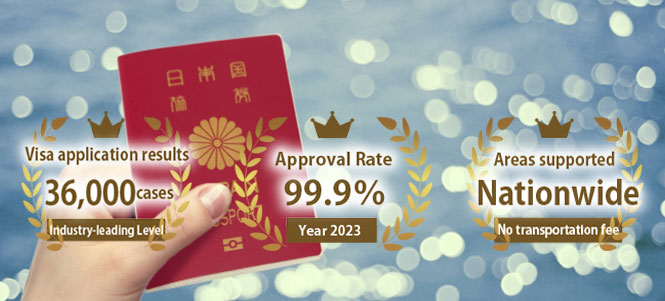
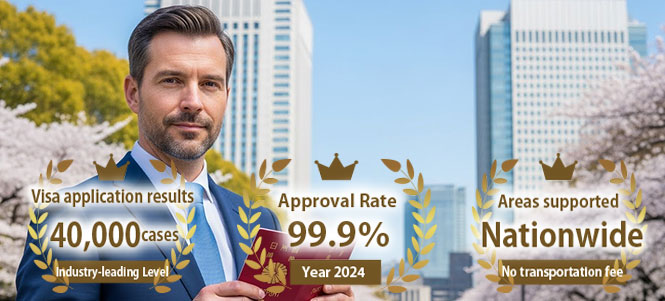
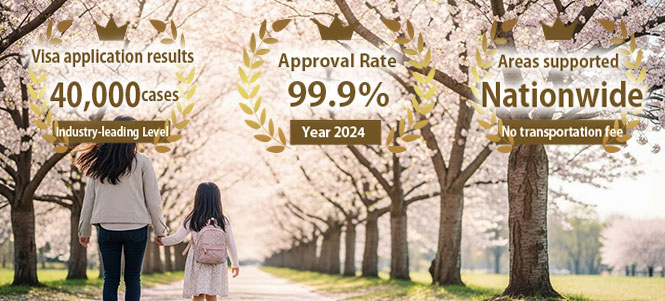
- Founded in 1986; industry-leading 40,000+ visa filings
- 99.9% approval rate; trusted by many clients
- No travel expenses; flat fees nationwide
- Extensive track record in complex/re-application after refusal cases
- No add-on fees; transparent pricing
- Free re-application until approval if refused
- Support available in Japanese, English, and Chinese
Founded in 1986, with 40,000+ visa applications

ACROSEED was founded in 1986. Since 1990—the first year administrative scriveners were allowed to handle immigration under the law—we have specialized in immigration work. Our total filings exceed 40,000 (as of March 2025).
We currently handle 3,000–4,000 visa filings annually, visiting immigration twice a week to stay current on examinations and legal changes.
By choosing ACROSEED, you get services based on the latest examination trends and the industry’s deepest practical experience.
99.9% approval rate—peace of mind backed by clients’ trust
Since opening in 1986, ACROSEED has always prioritized trustworthy services. At the free consultation stage, if approval seems unlikely, we explain this and decline the engagement.
As a result, we have maintained an approval rate of 99%+ (including re-applications) since opening.
However, for cases with a viable chance where clients wish to proceed, we will make a maximum effort together.
Our attentive, tailored service has earned broad support from clients.
No travel fees—flat rates nationwide

Our office is in Nagatacho, Chiyoda-ku, Tokyo, but we handle immigration cases nationwide at flat rates with no travel expenses.
For distant clients, we offer online consultations via Skype or Zoom so you can speak face-to-face with your consultant just like an in-person visit.
Strong results in difficult and re-application cases
We have many approvals for cases repeatedly refused by clients on their own or by other law firms.
ACROSEED’s track record is unparalleled, and we are often referred the most difficult cases from around the country—operating like a “general hospital” for the industry.
Don’t give up—consult us even for seemingly difficult cases.
No add-on fees—transparent pricing

Our service fees are only those listed on our website.
We do not add fees due to client circumstances such as frequent travel or prior refusals.
We provide a transparent pricing system for your peace of mind.
Free re-application until approval if refused

If a case filed by ACROSEED is unfortunately refused, we will re-apply free of charge as long as there remains a possibility of approval.
While some competitors offer “full refunds if refused,” we believe refunds do not solve the client’s problem
.
Accepting a case casually and leaving a refusal record in your filing history can make approval much harder later.
Clients who choose ACROSEED from among many firms deserve our stance of “getting the fastest approval possible—and if refused, supporting relentlessly until approval.”
4. Naturalization Application Support Fees (Excluding Tax)
We also offer accompaniment for pre-consultation at the Legal Affairs Bureau: ¥20,000 per session (excluding tax). If you later request ACROSEED’s full service, the same amount will be deducted from your total contract fee.
・Payment by Visa or MasterCard is also accepted.

1. Document Preparation Only
| Salaried Employee | ¥150,000 |
|---|---|
| Business Owner / Self-Employed | ¥200,000 |
| Additional Family Member (per person) | ¥50,000 |
2. Document Preparation + Accompaniment to Legal Affairs Bureau
Standard Naturalization
| Salaried Employee | ¥180,000 |
|---|---|
| Business Owner / Self-Employed | ¥250,000 |
| Additional Family Member (per person) | ¥60,000 |
Simplified Naturalization
| Salaried Employee | ¥120,000 |
|---|---|
| Business Owner / Self-Employed | ¥150,000 |
| Additional Family Member (per person) | ¥50,000 |
10.Related Pages Often Read Together with Naturalization Applications

[2025 Edition] Japan Naturalization Guide | Requirements, Documents & Application Process
A clear and comprehensive guide covering the latest 2025 requirements, required documents, key review points, application flow, and interview preparation. Also explains nationality renunciation considerations, FAQs, and three service plans.

Naturalization Guide for Spouses of Japanese Nationals
Naturalization through marriage generally requires 3+ years of marriage history and 1+ year of residence in Japan (as a rule). Learn key review points such as the “genuineness of marriage,” “financial stability,” and “Japanese language ability,” plus how cases with children are assessed and common refusal patterns.

Naturalization from a Work Visa (Engineer/Specialist in Humanities/International Services)
Detailed explanation for foreign employees: requirements, required years, income standards, and how changing jobs affects screening. Covers differences based on employment style and tax status, the latest trends in review timelines, and practical strategies to avoid refusal.
Naturalization Guide for Highly Skilled Professional (HSP) Visa Holders
For applicants considering naturalization from HSP (Type 1 / Type 2). Explains situations where screening may be relatively favorable, and factors that require extra caution (e.g., research-track roles, job stability, and continuity of activities).

Naturalization Guide for Business Manager Visa Holders
Experts explain common stumbling points for business owners: business stability, tax compliance, executive compensation design, and social insurance handling. Includes review tendencies reflected from 2025 onward.

Naturalization Guide for Permanent Residents
The final step for permanent residents to become Japanese nationals. Organizes required documents, review timelines, and how decisions differ by family structure, plus preparation to avoid refusal and a clear comparison of “Permanent Residence vs Naturalization.”
Naturalization Guide for Long-Term Resident Visa Holders
For Long-Term Residents (spouse-based long-term, child of a Japanese national, stepchild, Nikkei-related statuses, etc.). Explains key requirements, documents, what examiners focus on, and Japanese language expectations by typical case type.

Naturalization Guide for Special Permanent Residents
Covers background of the制度, screening characteristics, how to write the reason statement for naturalization, and important notes about nationality choices within the family—tailored for Special Permanent Residents.
More In-Depth Questions About Japan Naturalization
Naturalization vs Permanent Residence in Japan: A Complete Comparison (2025)
Can You Apply for Naturalization with Less Than 3 Years of Work? Latest Standards & Approval Points
Naturalization and Time Outside Japan: Guidelines for “5+ Continuous Years” and Key Cautions
Naturalization Required Documents List: 2025 Latest Checklist by Case Type
Naturalization Requirements (7 Conditions): Expert Guide to Obtaining Japanese Nationality
My child has dual nationality (Japan & the U.S.). Are any procedures required?
Should You Hire an Administrative Scrivener for Naturalization? Benefits, Fees, and How to Choose
Income Requirements for Naturalization: How Much Is Needed and How “Ability to Support a Living” Is Judged
Traffic Violations & Minor Offenses in Naturalization: Do Parking Tickets or Criminal Records Matter?
Required Japanese Level for Naturalization: Speaking, Reading/Writing, and Interview Benchmarks
Are Taxes, Insurance, and Pension Critical for Naturalization? Does Non-Payment Lead to Refusal?
Renunciation of Prior Nationality: Country-by-Country Guidance (China, Korea, U.S., and More)
Residence Years & Time Abroad for Naturalization: 5-Year / 3-Year Rules and Key Judgment Points
Reasons for Naturalization Refusal: Common “Rejected at Intake” Cases and Timing to Reapply

Administrative Scrivener Corporation ACROSEED
Managing Partner: Makoto Sano
Japan Federation of Administrative Scriveners Associations (Reg. No. 01080685)
Tokyo Administrative Scriveners Association (Member No. 4568)
Founded in 1986
Now in our 39th year specializing in foreign nationals’ legal affairs across two generations.
Registered Administrative Scrivener in 2001
23 years as an international administrative scrivener.
Appointed to the Tokyo Association’s International Division in 2023
Contributing to the development and training of administrative scriveners.
[Track record]
ACROSEED’s legal services are chosen by over 1,000 corporations including listed/global companies. We also have many engagements as lecturers/authors on foreign employment.
Since opening our practice in 1986, we have been involved in consulting on visa applications for foreigners for nearly 40 years as an immigration lawyer.
Telephone consultation, email consultation, online consultation, and consultation at our office are available.