Permanent Residency (PR) via Highly Skilled Professional Points
Last updated:

This page is intended for those applying for Permanent Residency (PR) from a Highly Skilled Professional (HSP) visa, as well as those currently residing in Japan on a standard work visa who are considering applying for Permanent Residency using the Highly Skilled Professional points system.
If you are considering obtaining a Highly Skilled Professional (HSP) visa itself, please refer to the pages below, which explain the eligibility requirements, points calculation, and the overall application process.

▼ Scroll down to continue reading about applying for Permanent Residency through the Highly Skilled Professional points system.
The government has reportedly approved a bill to revise the upper limits for fees related to change/renewal of status of residence and permanent residence applications. However, this does not mean the permanent residence application fee has been fixed at a flat ¥300,000 immediately. Future legal amendments, Cabinet Orders, and official operational announcements should be monitored.
If you are considering applying for permanent residence, it is important to review your current residence status, income, tax payments, pension record, and years of residence in Japan, and confirm whether you can begin preparing early.
Immigration renewal fees to rise to JPY 30,000–40,000 / Permanent residency above JPY 100,000 — Impact on companies and foreign nationals [2025–2027]If you are considering applying for Permanent Residency, we strongly recommend submitting your application early with professional support.
Contact us by email +81-3-6905-6371- Applying for Permanent Residency through HSP Points
- How to Calculate Highly Skilled Professional Points
- Other Benefits of the HSP System
- Documents Required for PR Application
- Q&A: HSP Points and PR Application
- Process & Review Period for HSP / PR Application
- Our PR and HSP Visa Support Services
- Popular Pages Related to Permanent Residency Applications
This page explains how to obtain Permanent Residency (PR) through the Highly Skilled Professional Points System — including category-specific point calculation, automatic score tools, and eligibility diagnostics.
- HSP (i)(a) Research / Education — Automatic Points Calculator
- HSP (i)(b) Technical / Specialized Fields — Automatic Points Calculator
- HSP (i)(c) Business Management — Automatic Points Calculator
Also try our Permanent Residency (PR) Eligibility Self-Check Tool to ensure you meet the general PR requirements (good conduct, stable income, tax and social insurance compliance, etc.).
1. Applying for Permanent Residency via Highly Skilled Professional Points
“Highly Skilled Professionals” are foreign nationals with advanced expertise who are expected to contribute to Japan’s academic research and economic development.
If you meet the requirements on the Immigration Services Agency’s official “Points Calculation Table” and your total reaches at least 70 points, you will be recognized as a Highly Skilled Professional.
There are multiple benefits under the HSP system. Among them, the relaxed conditions for Permanent Residency (PR) — shortening the required stay in Japan from 10 years to as little as 1 year — is particularly impactful. Many applicants aim to use Highly Skilled Professional Points to obtain PR faster.
① For those recognized as Highly Skilled Professionals with 70 points or more, the required period of stay for a PR application is shortened from 5 years to 3 years.
② For those recognized as especially highly skilled (with 80 points or more), the required period of stay for PR is drastically shortened from 5 years to just 1 year — often called the “Japanese Green Card for Highly Skilled Professionals.”
In other words, even if you currently hold a regular work status (e.g., Engineer/Specialist in Humanities/International Services or Business Manager), if you meet the Highly Skilled Professional Points criteria, you can apply for Permanent Residency under the HSP relaxation without first changing to the HSP status.
The system has been in place since April 2017. At ACROSEED, more clients have used the Highly Skilled Professional Points system to obtain a PR visa from an Engineer/Specialist in Humanities/International Services (work visa) after about one year of residence.
If you are considering PR through the standard 10-year residence route, please see the page below.
PR Application from Work Visa in Japan
Comprehensive guide for obtaining permanent residency from a work visa in Japan.
Explanatory videos for applying for permanent residence
Yasmine Chang from Acroseed goes over the various types of residence statuses available for foreigners in Japan, and goes in-depth into the methods and risks associated with trying to obtain a status.
How to obtain permanent residency in Japan by 3 common methods. Living and working in Japan for years, having a child or spouse, or the Highly Skilled Professional (HSP) point system in Japan.
2. How to Calculate Highly Skilled Professional Points
To be recognized as Highly Skilled, you must score at least 70 points on the official “Points Calculation Table” published by the Immigration Services Agency.
The “Points Calculation Table” evaluates applicants under the “HSP (i)” categories (a–c) based on the following items:
1. Academic background
2. Professional career
3. Annual income
4. Age
5. Japanese language proficiency
6. National qualifications
7. Graduation from designated institutions
8. Engagement in designated industries, etc.
Follow the steps below to see whether you meet the PR requirements via Highly Skilled Professional Points.
↓
2. Check your score with the automatic points calculator
↓
3. Use the PR Eligibility Self-Check to confirm you meet PR requirements
1. Identify Your HSP Category
Foreign nationals in Japan who qualify as Highly Skilled Professionals fall into the following three categories.
Confirm your category before calculating points.
In simple terms, (a) covers researchers and specialized educators, (b) covers white-collar professionals in private companies, and (c) covers corporate managers and executives.
1. Advanced Academic Research Activities — “HSP (i)(a)”
Applies to research, research guidance, education, and business management conducted alongside such activities.
2. Advanced Specialized/Technical Activities — “HSP (i)(b)”
Applies to work requiring knowledge/skills in natural sciences or humanities, and business management conducted alongside such activities.
3. Advanced Business Management Activities — “HSP (i)(c)”
Applies to engagement in the management or administration of trade or other businesses.
Because “HSP (i)(c)” presumes Business Manager–type activities, substance of management and financial soundness are especially important.
Following the legal revisions effective October 16, 2025 for Business Manager visas, reviews for PR applications and status renewals have become stricter. Requirements such as invested capital of JPY 30 million or more, at least one full-time employee, and Japanese language proficiency (around B2) are also expected for “HSP (i)(c).”
You may also be asked to submit an evaluation report from management professionals (SME consultants, CPAs, tax accountants, etc.).
If you plan to obtain HSP (i)(c) with PR in mind, it is essential to prepare your business substance, employment, and tax compliance early.
For the latest cautions, see the link below.
2. Automatic Calculation of Highly Skilled Professional Points
After confirming whether you fall under HSP (i)(a)/(b)/(c), calculate your score using the Points Table.
1. HSP (i)(a) — Advanced Academic Research (e.g., researchers, specialized educators)
2. HSP (i)(b) — Advanced Specialized/Technical (commonly Engineer/Specialist in Humanities/International Services)
3. HSP (i)(c) — Advanced Business Management (commonly Business Manager)
Reference: Official Points Calculation Table (Immigration Services Agency)
3. PR Eligibility Self-Check

Before applying for PR, first confirm that you meet the general PR requirements.
This test quickly checks whether you currently meet PR conditions from the perspectives of years of residence, conduct, income, tax, social insurance, and family composition.
All questions are Yes/No, and the results page highlights items that may need improvement. It is also useful if you aim to meet the shortened PR pathway through Highly Skilled Professional Points (70 points → 3 years / 80 points → 1 year).
Start with the button below to try the PR Eligibility Self-Check.
3. Benefits Beyond PR Requirement Relaxation under Highly Skilled Professional Points
Foreign nationals recognized as Highly Skilled Professionals receive major advantages that differ from ordinary work statuses.
-
Key Benefits for Highly Skilled Professionals
- Broader scope of permitted activities (types of work)
- Guaranteed 5-year residence period
- Ability to apply for Permanent Residency (PR) much sooner
- Expanded work opportunities for your spouse in Japan
- Permission to bring parents for childcare/maternity support under conditions
- Eligibility to employ a foreign domestic helper under conditions
- Expedited processing for visa/residence applications
Broader scope of permitted activities
Ordinary work statuses restrict you to activities tied to that single status. Under the Highly Skilled Professional Points system, combinations such as conducting research while running a company that leverages your expertise can be permitted.Guaranteed 5-year residence period
While ordinary work statuses may be issued for 1 or 3 years, Highly Skilled Professionals are granted the maximum 5-year period.Apply for Permanent Residency (PR) sooner
Typically, PR requires 10 years of residence in Japan. With Highly Skilled Professional Points, you can apply after 3 years (70 points) or just 1 year (80 points).Expanded work opportunities for your spouse
With ordinary work statuses, a spouse must qualify and change to an appropriate work status to be employed. As the spouse of a Highly Skilled Professional, it is possible to work in white-collar positions even if they do not independently qualify for a standard work status.Bringing your parents to Japan
Generally, Japan does not provide a status specifically for inviting foreign parents. However, if the Highly Skilled Professional (or spouse) is raising a child under 7 years old (including adopted children), or if the spouse is pregnant, or the HSP herself/himself is pregnant, and care/housework/other necessary assistance is needed, the parents (including adoptive parents) of the HSP or spouse may be allowed to enter and stay in Japan.If certain conditions are met, you may live long-term in Japan together with your parents.
・Living together with the parent(s)
・Limited to the parent(s) of either the HSP or the spouse
Employing a domestic helper
Bringing a domestic helper from overseas to Japan used to be limited to certain people such as company executives, diplomats, or attorneys. With Highly Skilled Professional status, you may employ a foreign domestic helper if you meet specified conditions.・Household annual income of JPY 10 million or more
・Up to one helper
・Pay the helper at least JPY 200,000 per month
・The helper must depart Japan together with the family upon exit, etc. (other conditions apply)
Preferential/expedited processing for applications
Applications by Highly Skilled Professionals are prioritized and may be processed in about 5–10 days. Ordinary work status applications often take around 30–60 days.
Family-related Advantages (Highly Skilled Professionals)
- Spouse’s employment options: Under “Designated Activities (Spouse of HSP),” full-time employment can be permitted (subject to application details and approval).
- Parents’ accompaniment: Allowed if requirements are met, such as raising a child under 7 or maternity/pregnancy care.
- Foreign domestic helper: One helper may be permitted under household income and other conditions.
4. Documents Required for PR Application by Highly Skilled Foreign Professionals
Because required documents may change due to legal revisions, always confirm the latest information on the Immigration Services Agency website.
If you engage our services, we will prepare a set of documents tailored to your situation—based on the official list—designed to maximize the likelihood of approval.
1. If you have 80+ points at the time of applying for PR
2. If you have 70+ points at the time of applying for PR (other than the cases in 1)
3. Documents for changing your status to Highly Skilled Professional
5. Q&A on Highly Skilled Professional Points and Permanent Residency (PR)
Q. Once I reach 70/80 points, when can I apply for Permanent Residency?
Guidelines are as follows.
・If you have maintained 70+ points for the most recent 3 years and still have 70+ points at filing ⇒ you may apply for PR after 3 years of residence.
・If you have maintained 80+ points for the most recent 1 year and still have 80+ points at filing ⇒ you may apply for PR after 1 year of residence.
Both are “special measures via Highly Skilled Professional Points,” and you must also satisfy the general PR guidelines such as good conduct (no violations), stable and independent livelihood (steady income), and proper public obligations (tax, pension, and health insurance payments).
Q. Can I apply for PR via points without changing my status to “Highly Skilled Professional”?
Yes. Even if you remain under Engineer/Specialist in Humanities/International Services or Business Manager, you may apply for PR under the relaxation measures as long as you meet the points conditions (continuous 70/80 points).
When filing, you will substantiate that you met the requirements at filing and retroactively for 1 year (80-point track) or 3 years (70-point track) with points sheets, employment/income certificates, qualification proofs, and other reasonable evidence.
Q. Are there preferential measures for family (spouse/parents)?
Yes. The Highly Skilled Professional Points framework includes family-related advantages. For example:
・Spouse employment: Under Designated Activities (Spouse of HSP), full-time employment can be permitted with fewer restrictions on job type.
・Parents’ accompaniment: Possible when the purpose is raising a child under 7 or pregnancy/maternity care (e.g., household income guideline: JPY 8 million+, cohabitation and other conditions apply).
・Domestic helper: If conditions such as household income are met, one helper may be accompanied (minimum pay and other requirements apply).
Details vary by case, so it is important to design evidence around your purpose, income thresholds, and cohabitation conditions.
Q. Where can I confirm the latest processing times?
The Immigration Services Agency’s monthly “Processing Times” page publishes updates.
Because PR (Permanent Residency) tends to take longer than other procedures, we recommend a filing plan that leaves buffer before your current status expiry (and renewing in parallel if needed).
6. Process & Review Period for Obtaining the HSP Visa / Permanent Residency
1. Typical process toward HSP visa and PR using the Points System
When you use the Highly Skilled Professional Points System to obtain a status and aim for PR, the general flow is as follows.
First, a free consultation to assess your HSP points (education, income, career, Japanese ability, etc.) and to confirm which status is feasible now and the outlook toward PR. After contract and payment, our immigration specialists prepare application forms and supporting evidence.
When applying, in addition to meeting 70/80 points, authorities examine residence record, tax/social insurance compliance, employer stability, and family composition holistically.
At ACROSEED, we provide end-to-end support from obtaining the Highly Skilled Professional status to applying for PR. Depending on your case, we may recommend a “step-by-step route” (obtain HSP first, then apply for PR after 1 or 3 years) or a “direct PR route” (apply for PR directly by leveraging HSP points if you already meet requirements).
We stay current with operational practices and screening trends, and file with the optimal document structure combining point evidence, employer letters, and tax certificates.
-
1
- Free Consultation
- We assess your Highly Skilled Professional Points and explain the outlook to PR. Available by phone, email, online (Zoom/Skype/Line/WeChat), or in-person.
-
2
- Engagement
- You formally request “HSP status acquisition” or “PR application using Highly Skilled Professional Points.” After signing and payment, preparation begins.
-
3
- Document Preparation
- We draft the strongest set based on past screening patterns—points sheets, employer certificates, income proofs—then proceed to filing after signature checks.
-
4
- Submission to Immigration
- ACROSEED’s legal professionals submit as your agent; your personal visit is not required.
-
5
- Review & Decision
- As a guideline: about 1–2 months for HSP applications; about 4–8 months for PR. We receive the result and complete the visa stamping after approval.
-
6
- Passport Return
- We return your passport after stamping for HSP or PR, completing all procedures.
2. Review periods for HSP and PR applications
Processing times are published with monthly updates. Check the latest averages below.
7. Our Representation Services for HSP and PR Applications
1. Service Overview

This service supports obtaining the status of “Highly Skilled Professional” or “Permanent Resident” from the Immigration Services Agency.
We maximize your chance of approval and help you obtain HSP or PR smoothly.
We handle the following cases:
・Apply for PR using Highly Skilled Professional Points from Engineer/Specialist in Humanities/International Services
・Apply for PR after holding HSP
For PR applications via the standard 10-year route, see the page below:
PR Application from Work Visa in Japan
Comprehensive guide for obtaining permanent residency from a work visa in Japan.
2. What’s Included
- Proposal and preparation of the document set with the highest likelihood of approval
- Submission to Immigration and visa stamping procedures upon approval
- Obtaining re-entry permission at the same time (upon request)
- Status checks during review and handling additional document requests
- Free re-application if not approved
3. Advantages of Choosing ACROSEED
When applying for Permanent Residence through the Highly Skilled Professional Points System, meeting the required number of points alone is not sufficient. Immigration authorities examine whether the applicant’s employment history, income, and living situation in Japan demonstrate long-term stability and lawful, continuous residence.
At ACROSEED, we go beyond point calculations and structure each application around a clear and well-supported permanent residence narrative, presenting objective evidence that shows the applicant has established a stable life in Japan appropriate for permanent residence.
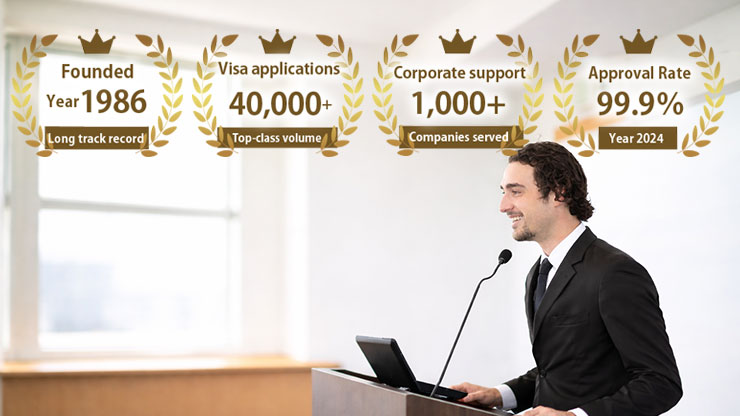
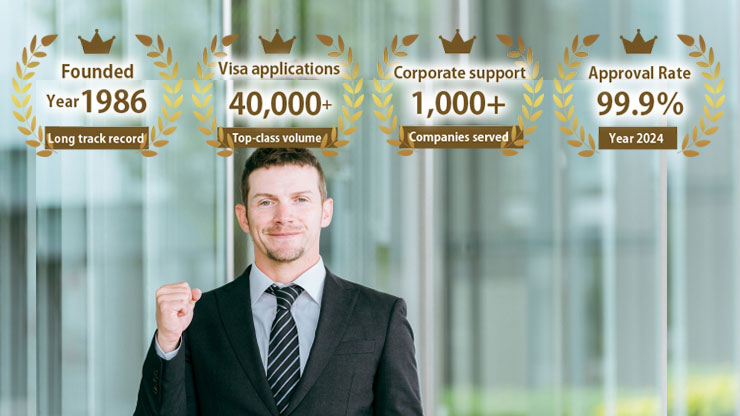
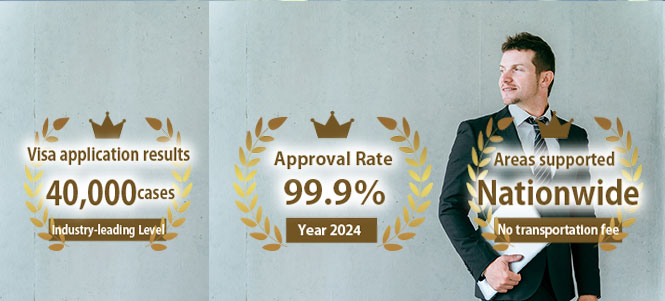
Founded in 1986 — Over 40,000 Visa Cases
We apply long-term screening insight and corporate-level standards to your individual case.
Learn MoreVeteran Immigration Specialists (10+ Years)
Experts who understand screening criteria reduce refusal risks through consulting.
Learn MoreCentralized Headquarters System
No dispersed standards — decisions reflect accumulated experience and current trends.
Learn MoreMultinational Staff Offering Practical Multilingual Support
Not interpreters — but practitioners who understand visa evaluation points in English/Chinese.
Learn MoreOnline Progress Management System
Real-time status, document tracking, and uploads reduce inquiry stress.
Learn More99.9% Approval Rate (2024)
We decline applications when approval prospects are extremely low — honesty first.
Learn MoreTraining + Compliance (ISO27001)
Quality and information security are systemized for long-term client trust.
Learn MoreFree Consultation to Assess Possibility & Challenges
We clarify approval prospects, risks, and preparation priorities.
Learn MoreFlat Nationwide Pricing — Fully Transparent
Same standards anywhere in Japan. No hidden charges or mid-process fee increases.
Learn More▼Learn more about the 9 reasons ACROSEED is chosen
View ACROSEED’s Track Record
View Client Testimonials and Approved Case Studies
4. Ratings and Reviews on Google
ACROSEED has received high evaluations from many clients regarding the quality of our services, regardless of visa type or nationality.
5. Fees for Highly Skilled Professional Visa / PR Application (Excluding Tax)
・No additional or hidden fees will be charged regardless of your individual circumstances.
・ACROSEED’s services are available nationwide. Even clients living outside the Tokyo area can request our services at the same price.
・Payment by Visa or MasterCard is also accepted.

| Change from “Engineer / Specialist in Humanities / International Services” to Highly Skilled Professional (HSP) |
JPY 100,000 |
|---|---|
| Permanent Residency (PR) application for those meeting HSP points under “Engineer / Specialist in Humanities / International Services” |
JPY 130,000 |
8. Popular Pages Related to Permanent Residency Applications
Japan Permanent Residency Application Guide
A comprehensive overview of permanent residency applications in Japan: key requirements (income, years of stay, taxes / pension compliance), typical patterns by status of residence, and how to respond to refusals.
Permanent Residency Guide from a Work Visa
An up-to-date guide for those who aim to obtain permanent residency in Japan from a work visa. Includes a self-check tool for work-visa holders on PR requirements.
Obtaining a PR Visa via Highly Skilled Professional Points
A service for those who wish to obtain a Highly Skilled Professional visa or permanent residency in Japan using the Highly Skilled Professional points system.

Permanent Residency Guide for Spouses of Japanese Nationals
For applicants moving from a spouse visa to permanent residency, this guide explains requirements, documents, and common refusal cases, with a PR self-check tool for spouse visa holders.

Permanent Residency Requirements Self-Check Tool
A 30-second self-diagnosis tool to check whether you meet Japan’s permanent residency requirements: Highly Skilled 70/80 points, work visa, spouse visa, and Long-Term Resident.

Reapplication Guide After Permanent Residency Refusal
What to do if your PR application is refused and how to prepare for reapplication.
Tell me more about the detailed conditions for a permanent residency (PR) application in Japan
Naturalization vs. Permanent Residency: A Complete Comparison【2026 Updated Guide】
Is an annual income of 3 million yen really necessary for permanent residency?【Stricter for work visas, more flexible for family-based statuses】
【2026 Edition】Days Abroad and Permanent Residency Application: How many days are acceptable? Criteria, cautions, and countermeasures
Permanent Residency and Unpaid Taxes / Pension / Health Insurance: Impact, required documents, and strategies
Permanent residency applications and traffic violations: Will fines, blue tickets, or red tickets lead to refusal?
The scope of a guarantor’s responsibility in a permanent residency application
【From Dependent to Permanent Residency】2026 Edition: Requirements, simultaneous applications with family, and key cautions
【2025/10 Amendment Ready】Key points for obtaining permanent residency from a Business Manager visa
【2026 Edition】Permanent residency from a Long-Term Resident status: income, years of stay, and settlement

ACROSEED Immigration Lawyer's Office
Representative Administrative Scrivener
Makoto Sano
1998 Graduated from Aoyamagakuin University
2001 Registered as an administrative scrivener
He has Over 20 years of experience as an international administrative scrivener, specializing in foreign employment consulting and residence procedures for foreign residents in Japan.
Click here to see information about his business achievements
Click here to see books he has authored
Since opening our practice in 1986, we have been involved in consulting on visa applications for foreigners for nearly 40 years as an immigration lawyer.
Telephone consultation, email consultation, online consultation, and consultation at our office are available.