Japan Permanent Residency Application Guide|Requirements, Procedures, and Status-Based Approval Explained
Last updated:
The route for applying for permanent residence varies depending on each individual’s situation. Select the relevant residence status from the five pages below to check the required years of residence, key review points, and important notes for your specific case.
This page explains the review approach, required documents, and key precautions that are common to all permanent residence application routes.
▼ Scroll down to check the latest policy and system updates.
The government has reportedly approved a bill to revise the upper limits for fees related to change/renewal of status of residence and permanent residence applications. However, this does not mean the permanent residence application fee has been fixed at a flat ¥300,000 immediately. Future legal amendments, Cabinet Orders, and official operational announcements should be monitored.
If you are considering applying for permanent residence, it is important to review your current residence status, income, tax payments, pension record, and years of residence in Japan, and confirm whether you can begin preparing early.
Immigration renewal fees to rise to JPY 30,000–40,000 / Permanent residency above JPY 100,000 — Impact on companies and foreign nationals [2025–2027]If you are considering applying for Permanent Residency, we strongly recommend submitting your application early with professional support.
Contact us by email +81-3-6905-6371- What is Permanent Residency in Japan?
- Requirements for Japan Permanent Residency Application
- Permanent Residency Application Patterns by Visa Type
- Cases of Rejection and How to Reapply
- Cases Where Permanent Residency May Be Revoked
- Required Documents and Processing Time
- Permanent Residency Application Q&A
- Approved Case Studies for Obtaining Permanent Residence
- ACROSEED Immigration Lawyer's Office Services for Permanent Residency Application
- Related Articles Often Read with This Guide
1. What Is Permanent Residency in Japan? – Key Features and Overview

Permanent residency is the final stage of residence status for foreigners who wish to live in Japan on a long-term and stable basis. Once obtained, there is no longer any restriction on your period of stay, allowing far greater freedom in employment and lifestyle choices.
Below, ACROSEED Immigration Lawyer’s Office explains the main advantages of permanent residency and the distinctive features of Japan’s system.
1. Four Major Benefits of Obtaining Japan Permanent Residency
“Permanent residency” means the right for a foreign national to live in Japan indefinitely. Once granted, it provides significant advantages both in daily life and in employment opportunities. Many foreigners aim to obtain Japan Permanent Residency as a way to ensure long-term stability and security in Japan.
-
[Four Benefits of Japan Permanent Residency]
- 1. No need for visa renewal
- 2. No restrictions on employment
- 3. Easier approval for housing loans and financial screenings
- 4. Advantages for spouse and children’s residence in Japan
1. No Need for Visa Renewal
Once you obtain permanent residency, you no longer need to renew your visa every one, three, or five years. According to Japan’s Ministry of Justice, permanent residency is defined as “indefinite.” Therefore, you can live without the anxiety of waiting for each renewal result or wondering how long your next stay period will be.
However, note that your residence card must still be renewed once every seven years.
2. No Restrictions on Employment
Holders of Japan Permanent Residency are free from employment restrictions. Ordinary work visas specify the types of jobs one can engage in, and violating these restrictions can lead to deportation. In contrast, permanent residents can freely choose any occupation, start a business, work as a freelancer, or engage in side jobs.
3. Easier Approval for Housing Loans and Screenings
Because permanent residents are recognized as “long-term residents,” they are often evaluated more favorably when applying for housing loans or credit. (Exact criteria vary by financial institution.)
4. Advantages for Spouse and Children’s Residence
For foreign nationals on ordinary work visas, their spouse and children usually hold “Dependent” status. They need permission from the Immigration Bureau to work part-time, and if the main holder’s visa renewal is denied, the family’s dependent visas are also automatically canceled.
However, if the main family member holds Japan Permanent Residency, their spouse or children can obtain “Spouse or Child of a Permanent Resident” status, which has no employment restriction in principle. In addition, they can also apply for permanent residency themselves after a few years, making it possible for the entire family to live in Japan long-term.
2. Difference Between Permanent Residency and Naturalization
Both permanent residency and naturalization allow long-term residence in Japan, but they differ significantly in purpose and legal status after approval.
Permanent residency allows foreigners to remain in Japan while keeping their original nationality, while naturalization means acquiring Japanese nationality and becoming a Japanese citizen.
Accordingly, the applicable laws, screening process, and rights obtained after approval differ greatly. The table below clearly compares the two systems so you can decide which path—residence stability or full Japanese nationality—is more suitable for you.
| Category | Permanent Residency | Naturalization (Japanese Citizenship) |
|---|---|---|
| Legal Status | Remain a foreign national with “Permanent Resident” status | Become a Japanese citizen |
| Passport | Continue using home country’s passport | Receive a Japanese passport |
| Voting Rights | Not available | Granted |
| Work/Activity Restrictions | None (free employment or self-employment) | None as a citizen |
| Nationality | Retained (dual nationality rules vary by country) | May lose home nationality depending on the country |
| Screening Authority | Immigration Bureau (focused on residence conditions) | Legal Affairs Bureau (strict interview and Japanese proficiency check) |
For a more detailed comparison between Permanent Residency and Naturalization, please refer to the following article:

Permanent Residency vs. Naturalization – Detailed Comparison
Learn the differences in requirements, benefits, and drawbacks between Japan Permanent Residency and Naturalization, explained by professionals at ACROSEED Immigration Lawyer’s Office.
3. Guarantor for Japan Permanent Residency Application
When applying for Japan Permanent Residency, you must have at least one guarantor. Many applicants are unsure about the guarantor’s responsibilities—whether financial liability is involved or what level of commitment is expected.
Who Can Be a Guarantor
- A Japanese national
- A foreigner holding Permanent Resident status
Scope of the Guarantor’s Responsibility
- Assisting the applicant in complying with Japanese laws, paying taxes and social insurance properly, and supporting daily life when needed.
The guarantor system is based on moral support, not legal liability. It shows that the applicant is socially integrated enough to have trustworthy acquaintances in Japan. There is no legal obligation or financial risk to the guarantor.
For more about guarantor eligibility and how to request one, please see the page below:
Guarantor for Japan Permanent Residency Application
Who can become a guarantor, their responsibilities, and how to request their cooperation – 2026 updated guide by ACROSEED Immigration Lawyer’s Office.
Let us know your current visa type, annual income, and tax/social insurance status.
We will guide you to the fastest route to Permanent Residency in Japan.
English and Chinese support available.
Contact Us by Email 03-6905-6371
2. Requirements for Obtaining Japan Permanent Residency

There are various conditions for a Japan Permanent Residency Application, but in principle, if you meet the required years of residence, maintain a financially stable life in Japan, obey the law (no criminal fines or imprisonment), and properly fulfill your public obligations such as paying taxes and social insurance, you can generally qualify for Permanent Residency.
1. Required Years of Residence by Visa Status
In screening for Japan Permanent Residency, the first key factor is which visa status you currently hold. The required number of years you must have lived in Japan varies depending on your status.
Confirming which category you fall into is the first step in a successful Japan Permanent Residency Application.
- Spouse of a Japanese national or Permanent Resident → At least 3 years of genuine marriage, and at least 1 year of continuous residence in Japan
- Long-Term Resident → At least 5 consecutive years of residence in Japan
- Recognized Refugee → At least 5 consecutive years of residence in Japan
- Highly Skilled Professional with 70 points or more → At least 3 consecutive years of residence in Japan
- Highly Skilled Professional with 80 points or more → At least 1 consecutive year of residence in Japan
- Others → At least 10 years of residence in Japan in total, including at least 5 consecutive years under a work or residence-based status
For a detailed explanation of all requirements for Japan Permanent Residency Application, please refer to the Q&A page below:
Complete Guide to the Requirements for Japan Permanent Residency
Experts explain the legal behavior requirement, independent livelihood requirement, and national interest requirement (years of residence, maximum period of stay, and public obligations) for Japan Permanent Residency in an easy-to-understand way.
2. Is an Annual Income of 3 Million Yen Really Required?
For a Japan Permanent Residency Application, you must show that you can “maintain a stable livelihood.” Many people have heard of the standard of “3 million yen or more in annual income,” but in practice this standard is applied differently to work-based visas and status-based visas (such as spouse or long-term resident).
For work-based visas, having an annual income of 3 million yen or more is almost essential. For status-based visas, however, the Immigration Bureau often examines the household income rather than the applicant’s income alone, so the 3-million-yen threshold is not applied as strictly.
In addition, for Japan Permanent Residency Application, income is generally assessed comprehensively, taking into account the number of dependents, total household income, and local living standards.
Therefore, even if your own income is below the commonly cited standard, your application may still be approved if your overall household finances demonstrate sufficient stability.
Detailed income benchmarks and the relationship between income and number of dependents are explained in the page below:
Income Requirements for Japan Permanent Residency – What Does the 3 Million Yen Standard Mean?
ACROSEED Immigration Lawyer’s Office explains how the “3 million yen income standard” is applied differently for work-based and status-based visas, which tax years and documents are examined, how dependents are counted, and the latest ways to prove income.
3. Japan Permanent Residency Application and Unpaid Tax, Pension, or Health Insurance
One of the most critical points in Japan Permanent Residency screening is your payment record for taxes (such as residence tax), pension (Employees’ Pension or National Pension), and health insurance premiums. Even a single late payment may require an explanation, and continuous non-payment can directly lead to rejection.
Questions such as “What if I paid late?” or “What if my employer didn’t enroll me in social insurance?” are very common. For case-by-case explanations of these situations, please see the page below:
Japan Permanent Residency and Unpaid Tax, Pension, or Health Insurance – Impact and Countermeasures
Unpaid or late payment of taxes, pension, and health insurance premiums is now one of the most important factors in Japan Permanent Residency screening. This article explains how such issues affect your application and what countermeasures are available.
4. Japan Permanent Residency Application and Days Spent Outside Japan
In a Japan Permanent Residency Application, the Immigration Bureau also reviews how many days you have been outside Japan – your number of days abroad. If you have been outside Japan for more than about 100 days in a year, or have had long overseas stays for business trips, nursing care, or childbirth, you may need to submit additional documents to prove that your real life base is in Japan.
How days abroad are counted and which situations may be accepted as exceptions are explained in more detail here:
Japan Permanent Residency and Days Spent Abroad – How Much Overseas Travel Is Acceptable?
Frequent overseas business trips, long stays abroad for childbirth or parental care… This article summarizes the key points to watch out for when applying for Japan Permanent Residency.
5. Japan Permanent Residency Application and Traffic Violations
Minor traffic violations do not immediately cause rejection. However, repeated offenses or serious violations can affect the evaluation of your conduct and lifestyle. In Japan Permanent Residency screening, it is extremely important that you are seen as someone who follows the rules of society, and you must report any violation history accurately.
For details on how different types of violations (such as fines or tickets) may affect your application and how to report them, please see the page below:
Japan Permanent Residency and Traffic Violations – Do Fines or Tickets Lead to Rejection?
This article explains how traffic violations are treated in Japan Permanent Residency screening, the difference between administrative and criminal penalties, and which types of violations may influence the result.
6. Free Online Check – Do You Meet the Requirements for Japan Permanent Residency Application?

If you are considering a Japan Permanent Residency Application, the first step is to confirm whether you meet the “general requirements for Permanent Residency approval.”
With this online test, you can easily check whether you currently satisfy the conditions for Japan Permanent Residency based on years of residence, conduct, income, tax record, social insurance, and family structure.
All questions can be answered simply with “Yes / No,” and on the result page you will see which points still need improvement.
Please click the button below to try our Japan Permanent Residency Requirement Check Tool.
Tell us your current visa status, annual income, tax payment, and social insurance situation, and we will propose the fastest route to obtaining Japan Permanent Residency.
Support available in English and Chinese.
Contact Us by Email 03-6905-6371
3. Japan Permanent Residency Application Patterns by Visa Status

For a Japan Permanent Residency Application, the required documents, how the case is reviewed, and what needs to be proven will differ depending on your current visa status and family situation.
Below are six major patterns. Please start reading from the category that best matches your own situation.
1. Applying for Permanent Residency from a Work Visa (Engineer / Specialist in Humanities / International Services, etc.)
This is the most common pattern. As a basic rule for Japan Permanent Residency Application from a work visa, you must have lived in Japan for more than 10 years in total, including at least 5 consecutive years under a work-related status.
The key points are continuous employment, stable income, and proper payment of taxes and social insurance.
Even if you have changed jobs, your application can still be successful if you can explain the continuity of your career and the stability of your income.
For details on requirements, required documents, and how to avoid refusal when applying for Permanent Residency from a work visa, please refer to the page below. There is also a self-check tool for work-visa holders considering Japan Permanent Residency Application.

Guide to Applying for Permanent Residency from a Work Visa
A latest guide for those aiming to obtain Japan Permanent Residency (PR) from a work visa. Includes a self-diagnosis tool for checking Permanent Residency requirements for work-visa holders.
2. Applying for Permanent Residency Using Highly Skilled Professional (HSP) Points
Highly Skilled Professionals can use the HSP points system to obtain Permanent Residency in a shorter period. In addition, those with Engineer / Specialist in Humanities / International Services or other work visas may also enjoy preferential residence requirements for Japan Permanent Residency Application if they score 70 points or more under the HSP system. Specifically, 70 points or more requires at least 3 consecutive years of residence, and 80 points or more requires at least 1 consecutive year. Besides the points, immigration will also examine the usual Permanent Residency factors of conduct, livelihood, and public obligations.
First, please use the automatic points calculation tool to check your HSP score.
On the page below, you will find the automatic points calculation tool and a self-check tool for Highly Skilled Professionals considering Japan Permanent Residency Application.

Obtaining Japan Permanent Residency through HSP Points
Shorten your path to Japan Permanent Residency using HSP points. Explains the conditions of 70 points for 3 years and 80 points for 1 year, required documents, the automatic points calculation tool, and a self-check tool for Highly Skilled Professionals.
3. Applying for Permanent Residency from a Business Manager Visa
Due to the reform in October 2025, the requirements for the Business Manager visa have been significantly tightened, including a minimum capital of 30 million yen, at least one full-time employee, and Japanese proficiency at about B2 (JLPT N2). For Japan Permanent Residency Application from a Business Manager visa, you must both meet these new requirements and have lived in Japan for more than 10 years in total, including at least 5 years under a work-related status.
For the latest information on applying for Permanent Residency from a Business Manager visa, please see the page below. It also includes a new-requirement check tool for Business Manager visas.

[Revised from October 2025] Guide to Applying for Permanent Residency from a Business Manager Visa
Administrative lawyers explain the required conditions after the 2025/10/16 reform (1 full-time employee, 30 million yen capital, Japanese N2 level, management experience, and a business plan with professional evaluation), along with the basic requirements for Japan Permanent Residency Application. Includes a new-requirement check tool for Business Manager visas.
4. Applying for Permanent Residency as a Spouse of a Japanese National or Permanent Resident
For spouses of Japanese nationals or Permanent Residents, the key requirements for Japan Permanent Residency Application are at least 3 years of genuine, ongoing marriage and at least 1 consecutive year of residence in Japan. Screening focuses mainly on the actual marital relationship and stability of household income.
For the latest information on applying for Permanent Residency as a spouse of a Japanese national or Permanent Resident, please refer to the page below. It also includes a self-check tool for spouses considering Japan Permanent Residency Application.

Permanent Residency Application Guide for Spouses of Japanese Nationals
A guide for those applying for Japan Permanent Residency from a Spouse of Japanese National visa. Explains requirements, documents, and common refusal cases, plus a self-check tool for spouses.
5. Applying for Permanent Residency from a Long-Term Resident Visa
For Long-Term Residents, the basic requirement is at least 5 consecutive years of residence in Japan. (For those with “divorced long-term resident” status, the period as a spouse of a Japanese national can also be counted.)
Although there are no work restrictions, Japan Permanent Residency screening places great emphasis on stability of life and integration into the local community.
For the latest information on applying for Permanent Residency from a Long-Term Resident visa, please refer to the page below. A self-check tool for Long-Term Residents considering Japan Permanent Residency Application is also available.
Guide to Applying for Permanent Residency from a Long-Term Resident Visa
A guide for those who wish to obtain Japan Permanent Residency (PR) from a Long-Term Resident visa. Includes a self-check tool for Long-Term Residents to confirm their Permanent Residency requirements.
6. Applying for Permanent Residency from a Dependent Visa
When applying for Permanent Residency from Dependent status, the main factors are the residence history and income stability of the main breadwinner.
If the main breadwinner applies for Japan Permanent Residency and family members apply at the same time, a spouse under Dependent status can also apply together if there has been a genuine marital relationship for at least 3 years and at least 1 consecutive year of residence in Japan.
Children may generally apply together if they have resided in Japan continuously for at least 1 year.
For the latest information on applying for Permanent Residency from a Dependent visa, please see the page below.
Guide to Applying for Permanent Residency from a Dependent Visa
For those aiming to obtain Japan Permanent Residency (Permanent Resident status) from a Dependent visa. Explains when family members can apply together and the main screening criteria in detail.
4. Cases Where Japan Permanent Residency Application Is Refused and How to Reapply

1. Approval Rate of Japan Permanent Residency Applications Based on Immigration Data
According to statistics published by the Ministry of Justice, the approval rate for Japan Permanent Residency Applications is roughly around 50–60%.
This shows that simply preparing the documents listed on the Immigration Bureau’s website and submitting them is often not enough to obtain Japan Permanent Residency.
Conversely, it also means that if you carefully check whether you meet the requirements before applying, and provide appropriate evidence and explanations for any points that may raise questions, you can significantly increase your chances of approval.
2. Common Reasons Why Japan Permanent Residency Applications Are Refused
So, in what kind of situations are Japan Permanent Residency Applications likely to be refused? Below we summarize some typical risk factors.
1. Public Obligations Are Not Properly Fulfilled
One of the most important points in Permanent Residency screening is the payment status of public obligations such as taxes, public pension, and health insurance premiums.
Not only unpaid amounts, but even a single instance of delayed payment can result in stricter screening and make approval more difficult.
For salaried employees, problems are less likely because payments are usually deducted from salary. However, it is not uncommon for payments to be interrupted during job changes due to missed procedures.
Freelancers, sole proprietors, and business owners must handle their own tax and insurance payments, so it is essential to check carefully for any unpaid or late payments in the past.
2. Frequent Overseas Travel
In a Japan Permanent Residency Application, the number of days you have been outside Japan (days spent abroad) is also an important screening factor.
If you frequently travel abroad for business, have long stays overseas for childbirth or caring for family, and your total annual days abroad exceed around 100 days, special attention is required. If the number of days outside Japan is too high, it becomes harder for the authorities to recognize that your real life base is in Japan.
3. Insufficient Annual Income
Although the Immigration Bureau has not officially published a specific number, in practice, an annual income of around 3 million yen is generally viewed as the minimum standard for Japan Permanent Residency Application.
For spouse or Long-Term Resident visas, this standard is applied more flexibly. However, for work visas the screening is especially strict, and if even one of the several years of income documents submitted shows an annual income below 3 million yen, it may lead to refusal.
Furthermore, if you have dependents, it is often said that you should have an additional about 700,000 yen in income for each dependent.
4. History of Violations or Criminal Records
If you have received criminal penalties such as imprisonment, suspension of sentence, or fines, obtaining Japan Permanent Residency becomes extremely difficult.
Even in cases of Immigration Act violations or traffic violations, depending on the content and frequency of the offenses, they may affect the screening and result in refusal.
3. Reapplying After a Japan Permanent Residency Application Is Refused
Even if your Japan Permanent Residency Application is refused, your current visa status itself is not affected. If you make proper improvements, you can fully reapply for Permanent Residency.
When you receive a refusal notice, do not just leave it as it is. Visit the Immigration Bureau for an interview to hear the reasons for refusal, then correct the issues pointed out by the examiner and reflect these improvements in your next application.
As for timing, it is generally recommended to wait several months to about one year, until your improvements can be clearly demonstrated, before reapplying.
For more detailed guidance on reapplying after a Japan Permanent Residency Application has been refused, please see the page below:
What If Your Japan Permanent Residency Application Is Refused? – Reapplication Guide
Based on current screening trends and actual refusal reasons, this article explains what you need to do to improve your chances when reapplying for Japan Permanent Residency.
Tell us your current visa status, annual income, tax payment, and social insurance situation, and we will propose the fastest route to obtaining Japan Permanent Residency.
Support available in English and Chinese.
Contact Us by Email 03-6905-6371
5. Cases Where Japan Permanent Residency May Be Revoked
While Permanent Residents enjoy very stable residence in Japan, in certain situations their status can be revoked by the Minister of Justice or, due to procedural issues, the status can lose its effect (deemed expiration).
Typical Cases of Revocation (by the Minister of Justice)
- Obtaining approval through fraud or false statements: false declarations regarding career, income, family relationships, or other important matters
- Serious violations of residence management rules: fraudulent use of residence cards, leaving mandatory notifications unreported for a long time, etc.
- Serious legal violations: criminal conduct and sentencing serious enough to justify deportation
- Lack of real marital relationship: when Permanent Residency was granted based on spouse status but the marriage was not genuine from the beginning, etc.
Typical Cases of Deemed Expiration (Loss of Effect Due to Procedures)
- Expiration of re-entry permit: leaving Japan and allowing a special re-entry permit (normally 1 year) or regular re-entry permit to expire while abroad
- Failure to renew residence card: the residence card must be renewed every 7 years; neglecting this can cause serious problems when leaving or re-entering Japan
6. Required Documents and Processing Time for Japan Permanent Residency Application
1. Required Documents for Japan Permanent Residency Application
Because the list of required documents is frequently updated due to changes in law and procedures, please always check the latest information on the Immigration Services Agency website.
If you ask ACROSEED Immigration Lawyer’s Office to handle your Japan Permanent Residency Application, we will prepare a set of documents tailored to your situation, based on the official list on the Immigration website, in a way that we believe will maximize your chance of approval.
2. Screening Time for Japan Permanent Residency Application
The processing time is updated and published every month. You can check the latest average processing days at the link below:
In screening for Japan Permanent Residency, the most important point is whether you can “maintain a stable livelihood.” However, the commonly mentioned standard of “annual income of 3 million yen or more” is not uniformly applied to all visa types.
For work-based statuses (such as Engineer/Specialist in Humanities/International Services and Highly Skilled Professional), around 3 million yen in annual income tends to be the de facto minimum line. On the other hand, for status-based visas such as spouse or Long-Term Resident, the total household income is examined, so even if the applicant’s own income is under 3 million yen, there may be no problem if stability can be shown by combining the income of a couple or family.
In addition, the income requirement for Japan Permanent Residency Application is judged comprehensively, taking into account factors such as number of dependents, household composition, local cost of living, and income trends in past years. Therefore, it is not as simple as “less than 3 million yen = automatically refused.”
In practice, if you can show that the household’s overall finances are stable, there are cases where approval is granted even when your income is slightly below the commonly cited standard.
These items are indeed one of the most critical points in Permanent Residency screening. Not only unpaid amounts but also past late payments can affect the result. It is essential to pay all outstanding amounts as soon as possible, put your payments in order, and then build up a record of regular payments for a certain period. After that, you must prove your compliance using official certificates. There are cases where Japan Permanent Residency is approved at a later reapplication, after the situation has been corrected.
If you have more than about 100 days per year of long or frequent stays outside Japan, the authorities may question whether your real life base is in Japan, and screening will become stricter. However, if there are legitimate reasons such as business needs, childbirth, or nursing care, it is still possible to apply for Japan Permanent Residency by providing supplementary materials such as detailed timelines and records of your returns to Japan.
Having many job changes in itself does not directly mean a disadvantage for your Japan Permanent Residency Application. However, screening focuses on continuity of your work, stability of your income, and whether there are periods of unemployment. Therefore, being able to clearly explain the reasons for changing jobs, the process, and the consistency of your career is very important.
Especially for work visas, the Immigration Bureau will check whether your duties match the “specialized field” of your status and whether you have been working continuously in the same general field. You should therefore present supporting evidence through documents such as your CV (work history), certificates of employment, and employment contracts.
Also, when changing jobs, notifications to Immigration, procedures for pension, health insurance, and resident tax are often delayed, creating gaps in coverage or payment. Since these public obligations are strictly checked in Japan Permanent Residency screening, please confirm the following points carefully:
- Whether you submitted the “Notification of Contracting Organization” to Immigration within the deadline
- Whether your enrollment in pension and health insurance has not been interrupted between your previous and current employers
- Whether your resident tax has been paid correctly (pay attention to changes in collection method when changing jobs)
- If there was a period with no income, whether you can clearly explain the reason and how you supported your living costs during that time
If there are deficiencies in these procedures, the Immigration Bureau may question your “continuous livelihood” and “fulfillment of public obligations.” Therefore, the more frequently you change jobs, the more important it is to perform a thorough pre-check before submitting a Japan Permanent Residency Application.
Tell us your current visa status, annual income, tax payment, and social insurance situation, and we will propose the fastest route to obtaining Japan Permanent Residency.
Support available in English and Chinese.
Contact Us by Email 03-6905-6371
8. Approved Case Studies for Obtaining Permanent Residence
Obtaining Permanent Residence in Japan is not something that is automatically granted simply by residing in the country for a certain period. Immigration authorities conduct a comprehensive review of factors such as the applicant’s residence history, stability of daily life, and compliance with public obligations.
Here, we introduce real approval cases in which our office provided continuous support, gradually adjusted clients’ residence statuses, and successfully assisted them in obtaining Permanent Residence. Please review these cases while comparing them with your own situation, and use them as a reference for planning your application.
 |
Client (from Google Reviews) |
| [Continuous Support Case] Special Landing Permission → Spouse of Japanese National Visa → Permanent Residence |
|
Client (from Google Reviews) |
| [Continuous Support Case] Temporary Visitor Visa → Work Visa → Spouse Visa → Permanent Residence |
 |
VOL.112 Mr./Ms. R (China) |
| [Continuous Support Case] From Spouse Visa to Long-Term Resident, and then to Permanent Residence |
Click here to see more approved cases for obtaining Permanent Residence
9. Overview of Japan Permanent Residency Support Services
1. Service Overview

At ACROSEED Immigration Lawyer's Office, we visualize all key screening points for Japan Permanent Residency – such as residence history, tax and social insurance record, income, and actual family situation – and fully support your application with the best possible evidentiary strategy tailored to your specific case.
Even if you are not sure where to start, or if your Japan Permanent Residency Application was refused in the past, we can handle everything from current situation analysis to designing a reapplication plan.
Who This Service Is For
- Those residing in Japan with a work visa (Engineer/Specialist in Humanities/International Services, Business Manager, Highly Skilled Professional, etc.) and considering Japan Permanent Residency
- Spouses of Japanese nationals or Permanent Residents, Long-Term Residents, and Dependent visa holders who wish to obtain Japan Permanent Residency through a family-based category
- Those who need to and explain individual circumstances, such as frequent job changes, starting a business, periods in deficit, or long stays outside Japan
- Those who are considering a reapplication after a previous refusal of their Japan Permanent Residency Application
2. What Is Included in Our Service
- Proposal and preparation of the set of documents that will most likely lead to approval
- Filing your Japan Permanent Residency Application with the Immigration Services Agency and handling the visa stamp procedures upon approval
- Simultaneous application for a re-entry permit (for those who request it)
- Checking the status of your case during the screening period and responding to any requests for additional documents
- Free reapplication in case of refusal
3. Advantages of Choosing ACROSEED
A Permanent Residence application is not merely about preparing the required documents. The impression formed by the immigration examiner can vary significantly depending on how individual facts are organized and in what order they are presented, including the applicant’s residence history, income progression, job change history, family composition, and compliance with tax and social insurance obligations.
At ACROSEED, we design the application in advance by determining which documents should serve as the core evidence and how far each point should be explained, and structure them into a clear and consistent application narrative that allows immigration examiners to make accurate and efficient judgments. In particular, in cases where income is close to the required threshold, where there have been multiple job changes, or where the applicant has dependent family members, we comprehensively demonstrate a stable living foundation by taking into account not only annual income, but also savings, living expenses, and actual residential circumstances.
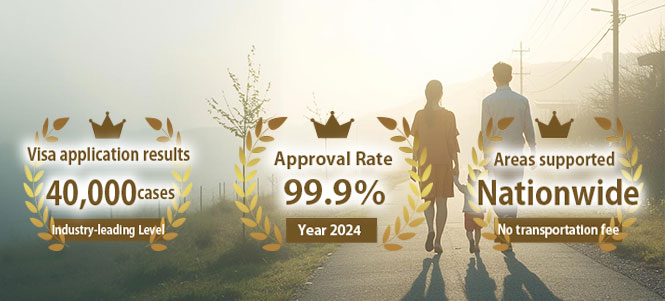
Founded in 1986 — Over 40,000 Visa Cases
We apply long-term screening insight and corporate-level standards to your individual case.
Learn MoreVeteran Immigration Specialists (10+ Years)
Experts who understand screening criteria reduce refusal risks through consulting.
Learn MoreCentralized Headquarters System
No dispersed standards — decisions reflect accumulated experience and current trends.
Learn MoreMultinational Staff Offering Practical Multilingual Support
Not interpreters — but practitioners who understand visa evaluation points in English/Chinese.
Learn MoreOnline Progress Management System
Real-time status, document tracking, and uploads reduce inquiry stress.
Learn More99.9% Approval Rate (2024)
We decline applications when approval prospects are extremely low — honesty first.
Learn MoreTraining + Compliance (ISO27001)
Quality and information security are systemized for long-term client trust.
Learn MoreFree Consultation to Assess Possibility & Challenges
We clarify approval prospects, risks, and preparation priorities.
Learn MoreFlat Nationwide Pricing — Fully Transparent
Same standards anywhere in Japan. No hidden charges or mid-process fee increases.
Learn More▼Learn more about the 9 reasons ACROSEED is chosen
View ACROSEED’s Track Record
View Client Testimonials and Approved Case Studies
4. Ratings and Reviews on Google
ACROSEED has received high evaluations from many clients regarding the quality of our services, regardless of visa type or nationality.
5. Service Fees for Japan Permanent Residency Application Support (Tax Excluded)
・There are absolutely no additional charges based on your individual conditions.
・ACROSEED Immigration Lawyer's Office supports clients all over Japan. Even if you live far from Tokyo, you can use our services at the fees listed below.
・We also accept payment by Visa and MasterCard.

| Obtaining Japan Permanent Residency from a Work Visa | 150,000円 |
|---|---|
| Obtaining Japan Permanent Residency from a Highly Skilled Professional Status | 100,000円 |
| Obtaining Japan Permanent Residency via HSP Points under “Engineer/Specialist in Humanities/International Services” |
130,000円 |
| Obtaining Japan Permanent Residency as a Spouse of a Japanese National or Permanent Resident | 100,000円 |
| Obtaining Japan Permanent Residency from a Long-Term Resident Status | 100,000円 |
10. Popular Pages Related to Permanent Residency Applications
Japan Permanent Residency Application Guide
A comprehensive overview of permanent residency applications in Japan: key requirements (income, years of stay, taxes / pension compliance), typical patterns by status of residence, and how to respond to refusals.
Permanent Residency Guide from a Work Visa
An up-to-date guide for those who aim to obtain permanent residency in Japan from a work visa. Includes a self-check tool for work-visa holders on PR requirements.
Obtaining a PR Visa via Highly Skilled Professional Points
A service for those who wish to obtain a Highly Skilled Professional visa or permanent residency in Japan using the Highly Skilled Professional points system.
Permanent Residency Guide for Spouses of Japanese Nationals
For applicants moving from a spouse visa to permanent residency, this guide explains requirements, documents, and common refusal cases, with a PR self-check tool for spouse visa holders.

Permanent Residency Requirements Self-Check Tool
A 30-second self-diagnosis tool to check whether you meet Japan’s permanent residency requirements: Highly Skilled 70/80 points, work visa, spouse visa, and Long-Term Resident.
Reapplication Guide After Permanent Residency Refusal
What to do if your PR application is refused and how to prepare for reapplication.
Tell me more about the detailed conditions for a permanent residency (PR) application in Japan
Naturalization vs. Permanent Residency: A Complete Comparison【2026 Updated Guide】
Is an annual income of 3 million yen really necessary for permanent residency?【Stricter for work visas, more flexible for family-based statuses】
【2026 Edition】Days Abroad and Permanent Residency Application: How many days are acceptable? Criteria, cautions, and countermeasures
Permanent Residency and Unpaid Taxes / Pension / Health Insurance: Impact, required documents, and strategies
Permanent residency applications and traffic violations: Will fines, blue tickets, or red tickets lead to refusal?
The scope of a guarantor’s responsibility in a permanent residency application
【From Dependent to Permanent Residency】2026 Edition: Requirements, simultaneous applications with family, and key cautions
【2025/10 Amendment Ready】Key points for obtaining permanent residency from a Business Manager visa
【2026 Edition】Permanent residency from a Long-Term Resident status: income, years of stay, and settlement

ACROSEED Immigration Lawyer's Office
Representative Administrative Scrivener
Makoto Sano
1998 Graduated from Aoyamagakuin University
2001 Registered as an administrative scrivener
He has Over 20 years of experience as an international administrative scrivener, specializing in foreign employment consulting and residence procedures for foreign residents in Japan.
Click here to see information about his business achievements
Click here to see books he has authored
Since opening our practice in 1986, we have been involved in consulting on visa applications for foreigners for nearly 40 years as an immigration lawyer.
Telephone consultation, email consultation, online consultation, and consultation at our office are available.