Complete Guide to Japan Permanent Residency Requirements【2025 Update】
Last updated:

Permanent residency (PR visa) allows you to live in Japan without any time limit, and removes restrictions on changing jobs or renewing your visa. It is one of the most advantageous residence statuses in Japan.
However, applications are examined carefully based on three major requirements: good conduct, financial independence, and alignment with Japan’s national interest. The Immigration Bureau reviews your annual income, tax and pension payment records, years of stay, and whether your current status has the longest permitted period of stay.
This page summarizes key points of the permanent residency requirements in Japan according to the latest 2025 guidelines, explained in clear and practical terms by ACROSEED Immigration Lawyer’s Office.
Let’s start by looking at the general eligibility criteria for obtaining permanent residency.
- General Requirements for Permanent Residency
- Cases Where the 10-Year Stay Requirement is Relaxed
- Spouses of Japanese Nationals, Permanent Residents, or Special Permanent Residents
- Long-Term Residents
- Recognized Refugees
- Those with Special Contributions to Japan
- Contributors in Specific Regional Institutions
- Highly Skilled Professionals with 70 Points or More
- Highly Skilled Professionals with 80 Points or More
- FAQ on Japan Permanent Residency Requirements
- Permanent Residence Approval Case Studies
- Summary of the 3 Million Yen Income Requirement for PR
- ACROSEED’s Support System
- Related Pages on Permanent Residency Applications
1. General Requirements for Obtaining Permanent Residency in Japan
The conditions for acquiring a permanent residency visa are clearly outlined in the “Guidelines for Permanent Residence Permission” published by the Immigration Services Agency of Japan. Below is an easy-to-understand summary provided by ACROSEED Immigration Lawyer’s Office.
(1) Good Conduct
Applicants must obey the law and maintain a lifestyle that is not socially reprehensible as a resident of Japan.(2) Financial Independence
Applicants must have sufficient assets or skills to maintain an independent livelihood, without becoming a public burden, and demonstrate the potential for stable living in the future.(3) Contribution to Japan’s National Interest
A. In principle, applicants must have resided continuously in Japan for at least 10 years. Of this period, at least 5 years must be under a work or residence status (excluding “Technical Intern Training” and “Specified Skilled Worker Type 1”).
B. The applicant must have no record of fines or imprisonment and must properly fulfill public obligations such as tax, social insurance, and pension payments.
C. The applicant must currently hold a status of residence with the longest possible period of stay as stipulated in the Immigration Control and Refugee Recognition Act.
D. The applicant must not pose a risk to public health.※ However, if the applicant is a spouse or child of a Japanese national, permanent resident, or special permanent resident, requirements (1) and (2) are not mandatory. Recognized refugees are also exempt from requirement (2).
Source: Guidelines for Permanent Residence Permission (Revised April 21, 2023)
1. Good Conduct
This means earning the trust of your local community in Japan — for example, having no serious legal issues or repeated traffic violations.
For detailed information about how traffic violations affect permanent residency requirements in Japan, please refer to the page below.

Permanent Residency and Traffic Violations
Will fines or traffic tickets affect your PR application? Explained by an immigration lawyer.
2. Financial Independence
This refers to your ability to support your life in Japan — such as having a stable income or sufficient savings.
Financial stability is evaluated on a household basis, including the income of your spouse or family members. While the Immigration Bureau does not set an official minimum, a general benchmark is an annual income of around 3 million yen.
For detailed explanation of the income requirement for permanent residency in Japan, see the following page:
Is 3 Million Yen Really Required for Permanent Residency?
ACROSEED Immigration Lawyer’s Office explains how income affects your PR application.
3. Alignment with Japan’s National Interest
This includes living in Japan for over 10 years (with at least 5 under work or residence status) and fulfilling all public obligations, such as paying taxes and social insurance premiums.
For details on how unpaid taxes, pensions, or health insurance affect permanent residency requirements in Japan, please refer to the following page:
Permanent Residency and Unpaid Taxes / Pension / Health Insurance
Consequences, required documents, and countermeasures explained by experts.
Many applicants ask whether it’s necessary to hold the “longest period of stay” (usually 5 years) before applying for permanent residency in Japan.
In practice, both 3-year and 5-year residence statuses are acceptable for application. When applying as a family, as long as the main applicant has a 3-year or 5-year visa, dependent family members can apply even if their visa is only 1 year.
| Requirement Category | Evaluation Points | Common Deficiencies | Examples of Reinforcement / Countermeasures |
|---|---|---|---|
| Good Conduct | Traffic violations, fines, compliance with law | Repeated minor infractions over multiple years | Show evidence of remorse, preventive measures, and legal compliance |
| Financial Independence | Stable household income or savings (benchmark: 3 million yen/year) | Income slightly below 3 million yen in a single year | Submit multi-year income data, include spouse income, show savings and subsidies |
| National Interest | 10 years stay (5 under work/residence), longest period, public duties | Minor tax/pension delays, not yet holding longest status | Make retroactive payments, submit proof, use exception categories |
We’ll assess your eligibility and suggest strategies to improve your approval chances.
English and Chinese support available.
Contact Us by Email 03-6905-6371
Service Details & Fees (Permanent Residence Application Support)
2. Cases Where the 10-Year Residency Requirement Is Relaxed
As explained above, the general permanent residency requirements in Japan include a stay of at least 10 consecutive years, with 5 years or more under a work or residence status. However, for the categories below, the required years of stay for a permanent residency application are relaxed.
(1) Spouses or children of Japanese nationals, permanent residents, or special permanent residents:
In the case of a spouse, a substantial and continuous marital relationship must have lasted for at least 3 years, and the applicant must have resided in Japan continuously for at least 1 year. In the case of a biological or adopted child, the child must have resided in Japan continuously for at least 1 year.(2) Holders of the “Long-Term Resident” status who have resided continuously in Japan for at least 5 years.
(3) Recognized refugees who have resided continuously in Japan for at least 5 years after being granted refugee status (time spent during the refugee application process is not counted).
(4) Persons who are recognized as having made contributions to Japan in the fields of diplomacy, society, economy, culture, etc., and who have resided in Japan for at least 5 years.
※ For details, please refer to the guideline on “Contribution to Japan”.
(5) Persons who are working at public or private institutions located in areas specified under a regional revitalization plan certified pursuant to Article 5(16) of the Act on Revitalization and Rehabilitation of Local Public Entities, and who are engaged in activities listed under Items 36 or 37 of the Ministry of Justice Notification No. 131 of 1990 (activities contributing to regional revitalization). If such activities are recognized as contributing to Japan, the requirement is at least 3 consecutive years of residence in Japan.
(6) Persons who score 70 points or more under the points calculation system stipulated in the Ministerial Ordinance on Highly Skilled Professionals, and who fall under one of the following categories:
A. Have continuously resided in Japan as a “Highly Skilled Professional” for at least 3 years; or
B. Have continuously resided in Japan for at least 3 years, and are recognized as having scored 70 points or more in the points calculation, based on their situation 3 years prior to the date of the permanent residency application.(7) Persons who score 80 points or more under the same points calculation system and fall under one of the following categories:
A. Have continuously resided in Japan as a “Highly Skilled Professional” for at least 1 year; or
B. Have continuously resided in Japan for at least 1 year, and are recognized as having scored 80 points or more in the points calculation, based on their situation 1 year prior to the date of the permanent residency application.(8) Persons who meet the criteria defined in the Ministerial Ordinance on “Special Highly Skilled Professionals” and fall under one of the following categories:
Source: Guidelines for Permanent Residence Permission (Revised April 21, 2023)
A. Have continuously resided in Japan as a “Special Highly Skilled Professional” for at least 1 year; or
B. Have continuously resided in Japan for at least 1 year, and are recognized as meeting the criteria for “Special Highly Skilled Professionals”, based on their situation 1 year prior to the date of the permanent residency application.
1. Spouses of Japanese Nationals, Permanent Residents, or Special Permanent Residents
If you are the spouse of a Japanese national or permanent resident, you may apply for a permanent residency visa in Japan when both of the following conditions are met:
・You have stayed in Japan continuously for at least 1 year
The 3-year period of substantial marital relationship does not have to be spent entirely in Japan. Time spent living together overseas can also be counted. For example, if you have lived together abroad for more than 2 years and then move to Japan, you may be able to apply for permanent residency after 1 year of residence in Japan.
A “substantial marital relationship” means that there is no reasonable suspicion of a sham or fake marriage.
If you are separated from your spouse or frequently return alone to your home country for extended periods, it may be difficult to meet the permanent residency requirements in Japan.
For the latest information on permanent residency applications from a “Spouse of Japanese National / Permanent Resident” status, please refer to the page below. A self-check tool for spouses to assess whether they meet the PR requirements is also available.
Permanent Residency Guide for Spouses of Japanese Nationals
This guide explains the requirements, documents, and common refusal reasons for those applying for permanent residency from a spouse visa. A self-diagnosis tool for PR eligibility is also available.
2. Long-Term Residents
If you hold a “Long-Term Resident” visa and have resided continuously in Japan for at least 5 years, you may qualify for a permanent residency application.
If you previously held a “Spouse or Child of Japanese National / Permanent Resident” status and later changed to a Long-Term Resident status due to divorce or bereavement, the period under your previous spouse status can also be counted. If the total period of stay under both statuses is 5 years or more, the residency requirement is satisfied.
For the latest information on permanent residency applications from a Long-Term Resident visa, see the guide below, which also includes a PR requirements self-check tool for Long-Term Residents.
Permanent Residency (PR) Guide from a Long-Term Resident Visa
A step-by-step guide for Long-Term Resident visa holders who wish to obtain permanent residency in Japan, including a self-check tool for PR requirements.
3. Recognized Refugees
Recognized refugees may apply for permanent residency if they have lived in Japan for more than 5 years after being granted refugee status. Time spent in Japan while the refugee application was still pending is not counted.
4. Persons Who Have Made Special Contributions to Japan
Applicants who fall under the “Contribution to Japan” guideline and have resided in Japan without problems for at least 5 years may qualify. In practice, this category applies to individuals such as Nobel Prize recipients, People’s Honor Award recipients, or those with an equivalent level of achievement, so it rarely applies to ordinary applicants.
5. Contributors in Specific Regional Institutions
This category covers those working at institutions located in areas covered by a regional revitalization plan under the Regional Revitalization Act, who have resided in Japan for 3 consecutive years or more and are recognized as contributing to regional revitalization. In practice, cases falling under this permanent residency requirement in Japan are considered to be very limited.
6. Highly Skilled Professionals with 70 Points or More
B. Have continuously resided in Japan for at least 3 years, and, based on the situation 3 years before the PR application date, are recognized as having scored 70 points or more under the Highly Skilled Professional points calculation.
The key point here is that you may still fall under this special rule even if your current status of residence is not “Highly Skilled Professional,” as long as you meet the points and residency requirements.
For example, if you currently hold an “Engineer / Specialist in Humanities / International Services” visa and your points calculation shows 70 points or more, and this condition has been met continuously for the past 3 years, you may apply for permanent residency earlier than under the standard 10-year rule.
Compared with the general permanent residency requirements in Japan (10 years of stay and 5 years under a work status), this special rule significantly relaxes the required years of stay.
7. Highly Skilled Professionals with 80 Points or More
B. Have continuously resided in Japan for at least 1 year, and, based on the situation 1 year before the PR application date, are recognized as having scored 80 points or more under the Highly Skilled Professional points calculation.
If your Highly Skilled Professional points are 80 or higher, the residency requirement is further relaxed and you may be able to apply for permanent residency in as little as 1 year.
If you would like to try calculating your Highly Skilled Professional points, please visit the page below. It includes an automatic points calculator you can use before preparing your permanent residency application.

Obtaining a Permanent Residency Visa via Highly Skilled Professional Points
This service is for those who wish to obtain a Highly Skilled Professional visa or permanent residency in Japan using the Highly Skilled Professional points system.
Q&A on Permanent Residency Requirements in Japan
Q1. My current period of stay is “3 years”. Can I still apply for permanent residency in Japan?
Yes, you can. In principle, one of the permanent residency requirements in Japan is that you are staying with the maximum period of stay permitted for your current status. However, the maximum period differs by status: for some it is 3 years, for others 5 years. If 3 years is the maximum period for your current status, it is not a problem.
In addition, when your family members apply at the same time, there is a practice that as long as the main applicant holds a 3-year (or 5-year) period of stay, dependents may have a 1-year period of stay without issue.
Q2. Are periods of “exemption / deferment / student special payment” for pension treated as unpaid and negative for my PR application?
No. Exemption, deferment, and student special payment schemes are considered legally approved treatments, and they are not immediately treated as unpaid. However, because “proper fulfillment of public obligations” is an important part of the permanent residency requirements in Japan, you should be able to explain the period, reason, and your status at that time, and, where possible, make retroactive contributions in a planned way for the portions you can still pay. Examples of supporting documents include: a certificate showing your pension payment history and a memo or plan for retroactive payments.
Q3. I frequently travel abroad for business trips or temporary returns. Does this affect the 10-year residency count?
Short, intermittent trips abroad are generally not a problem. However, long, continuous absences or situations where the Immigration Bureau may doubt whether your actual activities and life base are in Japan can negatively affect your application.
It is helpful to prepare documents that explain the purpose, duration, and frequency of your trips, as well as your employment situation (for example, that your main workplace is in Japan), such as assignment letters, itineraries, and employment contracts / proof of salary paid in Japan. You should also demonstrate the continuity of your life in Japan, including tax payment and social insurance enrollment. Related: Q&A for applicants worried about their residence history
Q4. I have many dependents and my annual income is around 3 million yen. Can I still meet the financial independence requirement?
For work-type statuses (such as Engineer / Specialist in Humanities / International Services, Business Manager, Highly Skilled Professional), an annual income of 3 million yen or more is generally a basic requirement. On top of this, you should expect to add roughly 700,000 yen per dependent as a practical benchmark.
On the other hand, for status categories based on personal relationships (such as Spouse or Child of Japanese National, Long-Term Resident), the financial independence requirement is assessed based on the overall household situation. Therefore, even if your own income is below 3 million yen, it may still be possible to satisfy the permanent residency requirements in Japan depending on household income and assets.
Related: The 3 million yen income benchmark for obtaining permanent residency
Q5. I have traffic violations and minor fines. Will this negatively affect my PR application?
If a minor violation occurred only once and you can clearly show measures to prevent recurrence, it does not automatically mean your application will be refused. However, repeated or malicious violations will be evaluated negatively. It is effective to demonstrate your law-abiding attitude, for example by showing the time that has passed since the violation, attendance at traffic safety courses, or internal company measures and education on compliance.
Related: The impact of traffic violations on permanent residency applications
4. Permanent Residence Approval Case Studies
In this section, we introduce actual approved cases in which applicants successfully obtained Permanent Residence in Japan after holding various residence statuses, such as Spouse of Japanese National, Long-Term Resident, and Work Visas.

|
VOL.112 Mr. R (China) |
| [Ongoing Support Case] From Spouse Visa to Long-Term Resident, and Finally to Permanent Residence |

|
Client (from Google Reviews) |
|
[Ongoing Support Case] Tourist Visa → Work Visa → Spouse Visa → Permanent Residence |
|
|
VOL.80 Mr. Z (China) |
| [Approved Case] Permanent Residence Approved After Rejection Due to Unpaid Taxes |
View More Permanent Residence Approval Cases
Voices from Our Clients on Google Reviews
5. Summary of Permanent Residency Requirements in Japan
The examination for permanent residency (PR visa) is based on a comprehensive assessment of multiple factors, including good conduct, stable income, fulfillment of public obligations, and years of residence. It is not decided only by “how much your income is” or “how many years you have stayed”. The balance among each item is crucial for meeting the permanent residency requirements in Japan.
For example, even if your income temporarily decreased or there was a period when tax or pension payments were delayed, the likelihood of approval can change significantly depending on how you prepare supporting documents and present explanations.
Conversely, when it appears difficult to meet the requirements, you can reduce the risk of refusal by taking a more strategic approach, such as adjusting the timing of your application or changing to a different status of residence before applying for permanent residency.
Additionally, even if you currently hold a “work visa”, if you satisfy the Highly Skilled Professional points criteria of 70 or 80 points, the residency period requirements can be relaxed, and you may be able to apply for permanent residency in Japan earlier.
If you are unsure whether you meet the permanent residency requirements in Japan, it is especially important to consult an expert who understands both the law and practical procedures. We can propose the optimal timing for your application and concrete methods to prove your eligibility.
We will not only check your eligibility but also suggest strategies to improve your approval chances.
Support available in English and Chinese.
Contact us by email 03-6905-6371
Service Details & Fees (Permanent Residence Application Support)
6. ACROSEED’s Support System
A permanent residence application is not approved simply by submitting all required documents.
The Immigration Bureau does not assess the application based solely on whether the required period of residence has been met;
instead, it places importance on
the applicant’s past residence history, stability of life, and the ability to continue residing in Japan on a long-term basis,
conducting a comprehensive review that also includes income level and continuity of employment.
At ACROSEED Immigration Lawyer's Office, from the pre-application stage, we carefully identify the key factors that tend to be emphasized in permanent residence examinations, such as eligibility for reduced residence period requirements, income benchmarks and trends, job change history, family structure, and compliance with tax and social insurance obligations. Even in borderline cases or where certain factors may be viewed unfavorably, we take the background and rationale into account and design an application that clearly and accurately conveys these points to the immigration officer.
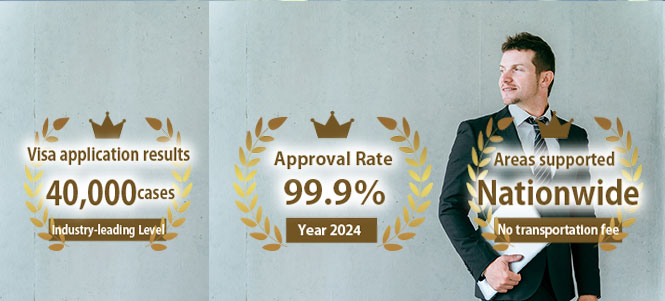
Founded in 1986 — Over 40,000 Visa Cases
We apply long-term screening insight and corporate-level standards to your individual case.
Learn MoreVeteran Immigration Specialists (10+ Years)
Experts who understand screening criteria reduce refusal risks through consulting.
Learn MoreCentralized Headquarters System
No dispersed standards — decisions reflect accumulated experience and current trends.
Learn MoreNationwide Support: Online and email-based management, same quality anywhere in Japan.
Multilingual: Consultations available in English and Chinese.
Clear Progress Tracking: Check application status and required documents online.
Complex Cases Supported: Extensive experience with reapplications after rejection.
Transparent Fees: Clear pricing with minimal additional costs.
Support Even After Rejection: Free reapplication support until approval.
Information Security: Proper data management based on ISO27001 standards.
View All 9 Reasons ACROSEED Is ChosenACROSEED’s Track Record
Client Testimonials
Free Consultation
7. Popular Pages Related to Permanent Residency Applications
Japan Permanent Residency Application Guide
A comprehensive overview of permanent residency applications in Japan: key requirements (income, years of stay, taxes / pension compliance), typical patterns by status of residence, and how to respond to refusals.
Permanent Residency Guide from a Work Visa
An up-to-date guide for those who aim to obtain permanent residency in Japan from a work visa. Includes a self-check tool for work-visa holders on PR requirements.

Obtaining a PR Visa via Highly Skilled Professional Points
A service for those who wish to obtain a Highly Skilled Professional visa or permanent residency in Japan using the Highly Skilled Professional points system.

Permanent Residency Guide for Spouses of Japanese Nationals
For applicants moving from a spouse visa to permanent residency, this guide explains requirements, documents, and common refusal cases, with a PR self-check tool for spouse visa holders.

Permanent Residency Requirements Self-Check Tool
A 30-second self-diagnosis tool to check whether you meet Japan’s permanent residency requirements: Highly Skilled 70/80 points, work visa, spouse visa, and Long-Term Resident.
Reapplication Guide After Permanent Residency Refusal
What to do if your PR application is refused and how to prepare for reapplication.
Tell me more about the detailed conditions for a permanent residency (PR) application in Japan
Naturalization vs. Permanent Residency: A Complete Comparison【2025 Updated Guide】
Is an annual income of 3 million yen really necessary for permanent residency?【Stricter for work visas, more flexible for family-based statuses】
【2025 Edition】Days Abroad and Permanent Residency Application: How many days are acceptable? Criteria, cautions, and countermeasures
Permanent Residency and Unpaid Taxes / Pension / Health Insurance: Impact, required documents, and strategies
Permanent residency applications and traffic violations: Will fines, blue tickets, or red tickets lead to refusal?
The scope of a guarantor’s responsibility in a permanent residency application
【From Dependent to Permanent Residency】2025 Edition: Requirements, simultaneous applications with family, and key cautions
【2025/10 Amendment Ready】Key points for obtaining permanent residency from a Business Manager visa
【2025 Edition】Permanent residency from a Long-Term Resident status: income, years of stay, and settlement

ACROSEED Immigration Lawyer's Office
Representative Administrative Scrivener
Makoto Sano
1998 Graduated from Aoyamagakuin University
2001 Registered as an administrative scrivener
He has Over 20 years of experience as an international administrative scrivener, specializing in foreign employment consulting and residence procedures for foreign residents in Japan.
Click here to see information about his business achievements
Click here to see books he has authored
Google Reviews
Since opening our practice in 1986, we have been involved in consulting on visa applications for foreigners for nearly 40 years as an immigration lawyer.
Telephone consultation, email consultation, online consultation, and consultation at our office are available.