Income Requirements for Permanent Residency in Japan – The 3 Million Yen Standard
Last updated:

When applying for permanent residency in Japan, many people wonder how much annual income is considered sufficient. This section provides a detailed explanation of the income criteria and the meaning of the “3 million yen” benchmark.
【Conclusion】An annual income of 3 million yen is a key guideline for work visa holders.
For family-related visas, household income and assets can offset lower personal income.
- Work-related visas (Engineer/Humanities/International Services, Business Manager, Highly Skilled Professional, etc.):
A stable annual income of 3 million yen or more is generally expected. Lack of consecutive years of income proof can make approval difficult. - Family-related visas (Spouse of Japanese National, Spouse of Permanent Resident, Long-term Resident, etc.):
No fixed income threshold is published. Immigration reviews total household income and assets (savings, home ownership, etc.). Even if personal income is below 3 million yen, approval is still possible. - In both cases, the key is demonstrating stable livelihood with the latest tax and income certificates. The timing of submission and supporting evidence can greatly affect the outcome.
- Income Requirements for Permanent Residency (Based on Immigration Guidelines)
- Documents to Prove Income and Assets for Permanent Residency
- Differences Between Work Visas and Family Visas in Applying the 3 Million Yen Rule
- Permanent Residency Income Requirement Q&A: The 3 Million Yen Rule
- Can I Still Apply If My Income Was Slightly Below 3 Million Yen One Year?
- For Family Visas, How Can I Supplement Income Below 3 Million Yen?
- Can My Dependent’s Part-Time Income Be Counted?
- Which Figure Matters on the Tax Certificate — “Income” or “Gross Payment”?
- What If the Latest Tax Certificate Has Not Yet Been Issued?
- Permanent Residence Approval Case Studies
- Summary of the 3 Million Yen Income Requirement for Permanent Residency
- ACROSEED’s Support System
- Recommended Reading: Related Pages About Permanent Residency
1. Income Requirements for Permanent Residency (According to Immigration Guidelines)
Let’s first look at the conditions related to income when applying for permanent residency in Japan.
The requirements for obtaining a permanent residency visa are listed in the “Guidelines for Permission for Permanent Residence” published by the Immigration Services Agency of Japan (ISA). Below is an excerpt from the official source.
1. Understanding the Income Criteria from the Permanent Residency Guidelines
(1) Good Conduct
The applicant must observe laws and lead a life as a socially responsible resident without being subject to criticism in everyday life.(2) Sufficient Assets or Skills to Maintain an Independent Livelihood
The applicant must not become a public burden in daily life and, based on their assets or skills, is expected to maintain a stable living in the future.(3) Contribution to Japan’s National Interest
A. In principle, the applicant must have continuously resided in Japan for 10 years or more. Within this period, at least five consecutive years must be under a working visa (excluding “Technical Intern Training” and “Specified Skilled Worker (i)” statuses) or a residence visa.
B. The applicant must not have been subject to fines or imprisonment and must have properly fulfilled all public obligations such as tax payments, social and health insurance premiums, and required notifications under the Immigration Control and Refugee Recognition Act.
C. The applicant must currently hold a status of residence with the longest authorized period of stay as defined in Appended Table 2 of the Immigration Control and Refugee Recognition Act Enforcement Regulations.
D. The applicant must not pose any threat to public health.※ However, if the applicant is a spouse or child of a Japanese national, permanent resident, or special permanent resident, conditions (1) and (2) do not apply. Likewise, refugees officially recognized by Japan are exempt from condition (2).
Source: Guidelines for Permission for Permanent Residence (Revised April 21, 2023)
The condition related to annual income is found in section (2) “Sufficient assets or skills to maintain an independent livelihood” — meaning that one must not become a public burden and must be expected to maintain a stable life in the future based on their assets or skills.
2. What Is the “Independent Livelihood Requirement”?
The independent livelihood requirement means that the applicant should not rely on public assistance and that their occupation and assets should indicate the ability to maintain a stable life in the future.
Therefore, applicants who are currently receiving public welfare benefits will generally find it difficult to obtain permanent residency.
However, the requirement does not necessarily have to be met by the applicant alone. If, when viewed as a household unit (including a spouse or dependents), the family is deemed capable of maintaining a stable livelihood, this requirement is considered satisfied.
In addition, the assessment is not based solely on income. If the household possesses certain assets such as savings or real estate, it can also fulfill this requirement.
Tell us about your current income situation — ACROSEED Immigration Lawyer's Office will advise on strategies for your permanent residency application.
Support available in English and Chinese.
Contact Us by Email 03-6905-6371
Service Details & Fees (Permanent Residence Application Support)
2. Documents to Prove Income and Assets for Permanent Residency Applications
In the examination for permanent residency, the Immigration Bureau checks your income and assets using objective documents, mainly to confirm “independent livelihood” (whether you can maintain a stable life in the future).
By combining the following documents, you should submit a set that clearly shows both your latest year’s situation and the continuity and stability of your income (from the beginning of the year through spring, the latest tax certificates may not yet be issued, so it is effective to temporarily supplement with withholding tax certificates and payslips, then submit the updated tax certificate later as an additional document. This is especially important if you are aiming to meet the practical benchmark of around 3 million yen annual income for permanent residency).
1. Documents Related to Income and Assets Usable for Permanent Residency
・Employment (in-service) certificates, employment contracts, and written explanations of actual work duties (as needed)
・Bank balance certificates, property registration documents, and housing loan-related documents (useful as additional proof for family-based visas)
・Household budget records (breakdown of income and expenses) and fixed cost details (rent, utilities, communications, insurance, etc.)
2. Period Covered by Income Examination for Permanent Residency
The number of years of tax certificates required for a permanent residency application varies depending on your status of residence. To confirm that a stable living has continued for a certain period, holders of typical working visas are usually required to submit tax certificates for the most recent 5 years, while family-based visas and Highly Skilled Professional (HSP) statuses benefit from a shorter examination period. By carefully choosing the timing of your application, you may be able to present a more favorable income record in relation to the 3 million yen benchmark, so planning the reference period in line with the system is very important.
Applicants Required to Submit the Most Recent 5 Years
・When the applicant holds a work-related status of residence (such as “Engineer/Specialist in Humanities/International Services” or “Business Manager”)
Applicants Required to Submit the Most Recent 3 Years
・When the applicant holds Highly Skilled Professional or Specified Activities status with a Highly Skilled Professional score of 70 points or more
・When the applicant holds a status other than Highly Skilled Professional, but had 70 points or more in the Highly Skilled Professional point calculation at the time three years prior to filing the permanent residency application
Applicants Required to Submit the Most Recent 1 Year
・When the applicant holds Highly Skilled Professional or Specified Activities status with a Highly Skilled Professional score of 80 points or more
・When the applicant holds a status other than Highly Skilled Professional, but had 80 points or more in the Highly Skilled Professional point calculation at the time one year prior to filing the permanent residency application
3. Important Notes on Resident Tax Taxation Certificates
A resident tax taxation certificate is an official document that shows the amount of resident tax levied in a given year and your amount of income. Because it shows your income, it is used in permanent residency applications not only to confirm your tax payment history but also as a key document to prove your income level.
Resident tax taxation certificates and tax payment certificates are updated every year between mid-May and early June, and the annual income indicated there is for the previous year.
For example, a FY 2024 taxation certificate will show your income for 2023.
Therefore, if you apply for permanent residency between January and May, the newest taxation certificate you can obtain will in practice show income from roughly two years earlier.
In such cases, it is advisable to first submit documents such as withholding tax certificates together with the application, and then, as soon as the latest taxation certificate becomes available, file it as additional evidence to more clearly support your permanent residency income (for example, around the 3 million yen level).
3. Differences in the Treatment of the “3 Million Yen Annual Income” Benchmark Between Work Visas and Family-Based Visas
1. What Does the “3 Million Yen” Standard Mean in Permanent Residency Applications?
It is often said that an annual income of 3 million yen is the minimum requirement for permanent residency in Japan, but this amount is not an officially published criterion by the Immigration Bureau.
However, in practice, when applying for permanent residency from a work-related visa, it is quite difficult to get approval without continuous taxable income exceeding 3 million yen for the past five consecutive years as shown in your resident tax certificates.
If your spouse also holds a work visa, their income can be added to the household total and will positively affect the examination. However, if your spouse stays under a “Dependent” visa, income from part-time jobs through permission for activities outside of status cannot be counted as part of household income.
In addition, for each dependent family member, about 700,000–800,000 yen needs to be added to the income standard, which effectively raises the required threshold. Applicants supporting family members living overseas may face especially strict screening.
| Category | Position of the 3 Million Yen Standard | How It’s Evaluated | Effective Supporting Factors |
|---|---|---|---|
| Work Visas (Engineer/Humanities/International Services, Business Manager, Highly Skilled Professional, etc.) |
A strict practical guideline. Continuous income of 3 million yen or more is required. |
Focuses on stable employment and consistent income. Large fluctuations or gaps between years are negative factors. |
Length of service / employment type / job continuity / expected salary increase / proper tax and insurance payments / job title and expertise explanation |
| Family-Based Visas (Spouse of Japanese National, Spouse of Permanent Resident, Long-Term Resident, etc.) |
Even if personal income is below 3 million yen, it can be compensated by total household income. | Evaluated based on overall household stability (spouse’s income, expenses, housing, regional cost of living). | Spouse’s tax and employment certificates / household budget / rent or mortgage details / savings balance / home ownership / proof of low fixed expenses |
※ “3 million yen” is a practical reference only, not an official or uniform standard.
2. Cases Where Approval Is Possible Even with Income Below 3 Million Yen
As explained above, for those applying for permanent residency from a work-related visa (e.g., Engineer/Humanities/International Services, Business Manager), the 3 million yen benchmark is applied quite strictly in practice.
However, for applicants staying under family-based visas (e.g., Spouse of Japanese National, Spouse of Permanent Resident) or refugee status, the “independent livelihood” requirement does not apply, meaning the spouse’s income can be included in the evaluation.
Therefore, the application is examined based on household income, and even if the applicant personally earns less than 3 million yen, approval is often possible.
In some cases handled by our office, applicants have been approved despite earning less than 3 million yen if they could demonstrate stable living — for example, those who own their home or live in regional areas where living costs and wages are lower than in major cities.
Tell us about your income situation — ACROSEED Immigration Lawyer's Office will guide you through strategies for a successful permanent residency application.
English and Chinese support available.
Contact Us by Email 03-6905-6371
Service Details & Fees (Permanent Residence Application Support)
4. Q&A About the 3 Million Yen Income Requirement for Permanent Residency
Q1. One of the recent years under my work visa was slightly below 3 million yen. Can I still apply for permanent residency?
You can apply for permanent residency, but the risk of denial is high. For work-related visas (Engineer/Humanities/International Services, Business Manager, Highly Skilled Professional, etc.), a “continuous income of around 3 million yen or more for the past 5 years” is treated as a strong practical benchmark, and in many cases it becomes difficult to obtain approval if you fall below this level in even one year.
That said, the Immigration Services Agency does not officially publish any numeric criteria. Examinations are based on a comprehensive assessment of independent livelihood (proper tax and social insurance payments, years of continuous employment, employment type, job continuity, regional living conditions, etc.).
If you have a year below 3 million yen, try to compensate by using withholding tax certificates and payslips to show recent recovery in income, evidence of expected salary increases, and carefully timed submission with additional updated tax certificates, so that your overall profile still supports permanent residency.
Q2. Under a family-based visa my own income is below 3 million yen. What should I add?
Strengthen your application with household income (your spouse’s tax certificates) and assets (savings, home ownership, etc.). It is also effective to submit objective documents showing low fixed living costs or the lower cost of living in regional areas.
Q3. Can part-time income under a Dependent visa be counted in household income?
As a rule, such income is treated as not included in the main calculation.
Income from permission for activities outside status is, by nature, supplementary, subject to time limits, and lacks permanency. Therefore, it is rarely treated on the same level as core income when evaluating independent livelihood. For household income, it is more effective to prove income based on a work-authorized status of residence.
Q4. On the tax certificate, which figure is used for screening: “Income” or “Total Payment”?
The assessment is based on the “Income” column (taxable income). “Total payment” is the amount before deductions and does not accurately reflect actual living conditions or appropriateness of tax payments. You should rely on the income column, which already reflects employment income deductions and other adjustments.
Q5. What should I do if the latest year’s tax certificate has not yet been issued?
Use withholding tax certificates, payslips, and letters confirming current employment and expected income as temporary substitutes, and then submit the updated tax certificate later once it becomes available. The timing strategy for submission can significantly change how your income level is perceived in a permanent residency examination.
5. Permanent Residence Approval Case Studies
In this section, we introduce actual approved cases in which applicants successfully obtained Permanent Residence in Japan after holding various residence statuses, such as Spouse of Japanese National, Long-Term Resident, and Work Visas.

|
VOL.112 Mr. R (China) |
| [Ongoing Support Case] From Spouse Visa to Long-Term Resident, and Finally to Permanent Residence |

|
Client (from Google Reviews) |
|
[Ongoing Support Case] Tourist Visa → Work Visa → Spouse Visa → Permanent Residence |
|
|
VOL.80 Mr. Z (China) |
| [Approved Case] Permanent Residence Approved After Rejection Due to Unpaid Taxes |
View More Permanent Residence Approval Cases
Voices from Our Clients on Google Reviews
6. Summary of the 3 Million Yen Income Benchmark for Permanent Residency Applications
For work-related visas, a track record of around 3 million yen annual income for consecutive years is a powerful indicator. For family-based visas, the key is how well you can design the proof of household income and assets. The approval probability for permanent residency changes greatly depending on the submission timing and how you use supporting documents.
It is important to tailor your strategy to your personal circumstances (whether you are on a work-related or family-based visa, your family composition, region, and whether you have assets), and to plan your submission order, supporting documentation, and application timing in detail.
Although the 3 million yen benchmark for permanent residency is a practical guideline in many cases, the final decision can vary significantly depending on each applicant’s situation. We recommend preparing objective documentation carefully and consulting based on the latest screening trends of the Immigration Services Agency.
If there is a period in which your income does not meet the practical requirement, it may be better to wait and apply after that period has passed so that the examination period only covers the years that meet the permanent residency income benchmark.
If you are worried about whether your income is sufficient for permanent residency, please feel free to consult us.
Tell us about your income situation — ACROSEED Immigration Lawyer's Office will guide you through concrete strategies for your permanent residency application.
English and Chinese support available.
Contact Us by Email 03-6905-6371
Service Details & Fees (Permanent Residence Application Support)
7. ACROSEED’s Support System
A Permanent Residence application is not approved simply by submitting the required documents.
The Immigration Bureau conducts a comprehensive review focusing on
your past residence history, stability of life, and long-term settlement potential.
At ACROSEED Immigration Lawyer's Office, we carefully analyze, even before filing, which aspects are likely to become key points of examination, such as residence history, income trends, job changes, family structure, tax payments, and social insurance records. If there are elements that may be viewed unfavorably, we design the application so that the background and circumstances can be explained logically and convincingly.
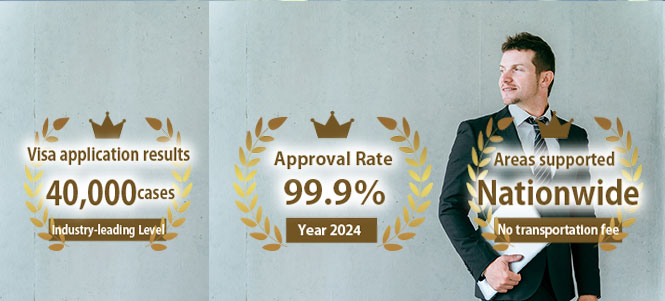
Founded in 1986 — Over 40,000 Visa Cases
We apply long-term screening insight and corporate-level standards to your individual case.
Learn MoreVeteran Immigration Specialists (10+ Years)
Experts who understand screening criteria reduce refusal risks through consulting.
Learn MoreCentralized Headquarters System
No dispersed standards — decisions reflect accumulated experience and current trends.
Learn MoreNationwide Support: Online and email-based management, same quality anywhere in Japan.
Multilingual: Consultations available in English and Chinese.
Clear Progress Tracking: Check application status and required documents online.
Complex Cases Supported: Extensive experience with reapplications after rejection.
Transparent Fees: Clear pricing with minimal additional costs.
Support Even After Rejection: Free reapplication support until approval.
Information Security: Proper data management based on ISO27001 standards.
View All 9 Reasons ACROSEED Is ChosenACROSEED’s Track Record
Client Testimonials
Free Consultation
8. Popular Pages Related to Permanent Residency Applications
Japan Permanent Residency Application Guide
A comprehensive overview of permanent residency applications in Japan: key requirements (income, years of stay, taxes / pension compliance), typical patterns by status of residence, and how to respond to refusals.
Permanent Residency Guide from a Work Visa
An up-to-date guide for those who aim to obtain permanent residency in Japan from a work visa. Includes a self-check tool for work-visa holders on PR requirements.

Obtaining a PR Visa via Highly Skilled Professional Points
A service for those who wish to obtain a Highly Skilled Professional visa or permanent residency in Japan using the Highly Skilled Professional points system.

Permanent Residency Guide for Spouses of Japanese Nationals
For applicants moving from a spouse visa to permanent residency, this guide explains requirements, documents, and common refusal cases, with a PR self-check tool for spouse visa holders.

Permanent Residency Requirements Self-Check Tool
A 30-second self-diagnosis tool to check whether you meet Japan’s permanent residency requirements: Highly Skilled 70/80 points, work visa, spouse visa, and Long-Term Resident.

Reapplication Guide After Permanent Residency Refusal
What to do if your PR application is refused and how to prepare for reapplication.
Tell me more about the detailed conditions for a permanent residency (PR) application in Japan
Naturalization vs. Permanent Residency: A Complete Comparison【2025 Updated Guide】
Is an annual income of 3 million yen really necessary for permanent residency?【Stricter for work visas, more flexible for family-based statuses】
【2025 Edition】Days Abroad and Permanent Residency Application: How many days are acceptable? Criteria, cautions, and countermeasures
Permanent Residency and Unpaid Taxes / Pension / Health Insurance: Impact, required documents, and strategies
Permanent residency applications and traffic violations: Will fines, blue tickets, or red tickets lead to refusal?
The scope of a guarantor’s responsibility in a permanent residency application
【From Dependent to Permanent Residency】2025 Edition: Requirements, simultaneous applications with family, and key cautions
【2025/10 Amendment Ready】Key points for obtaining permanent residency from a Business Manager visa
【2025 Edition】Permanent residency from a Long-Term Resident status: income, years of stay, and settlement

ACROSEED Immigration Lawyer's Office
Representative Administrative Scrivener
Makoto Sano
1998 Graduated from Aoyamagakuin University
2001 Registered as an administrative scrivener
He has Over 20 years of experience as an international administrative scrivener, specializing in foreign employment consulting and residence procedures for foreign residents in Japan.
Click here to see information about his business achievements
Click here to see books he has authored
Google Reviews
Since opening our practice in 1986, we have been involved in consulting on visa applications for foreigners for nearly 40 years as an immigration lawyer.
Telephone consultation, email consultation, online consultation, and consultation at our office are available.