Naturalization for Long-Term Resident Visa Holders | Requirements, Documents, & Case-Specific Considerations
Last updated:
From April 2026 onward, in the screening of naturalization applications, it has been reported in some media coverage and practical administrative information that the verification period for residence history, tax payment status, and social insurance enrollment records may be extended compared to previous practice.
Previously, “continuous residence for at least five years” had generally been considered the basic guideline; however, it is now said that in some cases, immigration authorities may review residence records covering approximately the past 10 years in practice.
Please note that this change is considered a revision of operational screening practices for naturalization applications, not an amendment to the Nationality Act (Article 5).
See detailed changes to naturalization screening practices from April 2026 onwardIf you are considering applying for naturalization, we recommend completing a preliminary eligibility review as early as possible.
Email consultation is available here 03-6905-6371- Relationship Between Long-Term Residency and Naturalization
- Why Long-Term Residents Often Have Higher Naturalization Approval Rates
- General Naturalization Requirements for Long-Term Residents
- Case-Specific Features in Naturalization Screening
- Required Documents & Application Process for Long-Term Residents
- Common Naturalization Rejection Cases Among Long-Term Residents
- FAQ: Naturalization for Long-Term Residents
- Naturalization Support Services by ACROSEED Immigration Lawyer's Office
- Related Pages Frequently Read Together
1. What Is the Relationship Between Long-Term Resident Status and Naturalization?
“Long-Term Resident” is an immigration status intended for individuals who are expected to live in Japan for a mid- to long-term period. It is granted based on various circumstances, such as former spouses of Japanese nationals, foreign nationals raising Japanese children, or Nikkei descendants. In contrast, “naturalization” is not a visa status — it is the legal procedure to acquire Japanese nationality itself.
A common misconception is that “Long-Term Residents can easily become naturalized” or “Once you obtain Long-Term Resident status, you can quickly naturalize.” In reality, this is not the case. Like all other applicants, Long-Term Residents must individually meet the requirements under Japan’s Nationality Act (residence, conduct, financial stability, Japanese language ability, etc.), which are reviewed case-by-case.
However, Long-Term Residents often have a comparative advantage in naturalization applications in the following ways:
- Acknowledged degree of social and family ties to Japan
Since Long-Term Resident status is granted based on family relationships and established living circumstances in Japan, applicants are often already recognized as having a meaningful connection to Japan — a factor that tends to be positively assessed during naturalization review. - Mid- to long-term residence is assumed
Unlike work visas, Long-Term Resident status is inherently based on continuous residence and long-term life in Japan, making it easier to demonstrate an intention to continue living in Japan. - Family circumstances are frequently given weight in screening
Raising Japanese children or having Nikkei family background are often viewed as important indicators of integration into Japanese society. Because many Long-Term Residents are granted status based on family, bloodline, or actual life circumstances, their visa type aligns well with naturalization evaluation criteria.
That said, naturalization is not automatically easy simply because one is a Long-Term Resident. Cases involving tax delinquency, lack of insurance or pension enrollment, unstable income, or repeated traffic violations can still lead to rejection.
In short, while Long-Term Resident status provides a strong starting point toward naturalization, final approval depends on a comprehensive assessment of the applicant’s life circumstances. The first step is to review your current residency situation and evaluate to what extent you meet the naturalization requirements.
2. Why Long-Term Residents Are Often Said to Have Better Prospects for Naturalization
Compared with many other visa categories, Long-Term Resident status is often viewed as a highly compatible status for naturalization. This does not imply automatic favorability, but rather reflects that Long-Term Residents commonly possess factors that tend to be evaluated positively during screening.
Below, we explain the main reasons why Long-Term Residents are considered well-positioned for pursuing naturalization.
1. Strong Family Relationships and Established Living Reality in Japan
Long-Term Resident visas are issued to individuals such as divorced former spouses of Japanese nationals, foreign nationals raising Japanese children, Nikkei descendants, or those supporting step-children — all people with substantial family ties or a living base in Japan.
In naturalization screening, ongoing care for Japanese children or family ties with Japanese nationals are usually regarded as evidence of integration into Japanese society.
2. Residency Premised on Medium- and Long-Term Living
Unlike visas issued for temporary work, the Long-Term Resident visa is granted based on continuity of residence and lifestyle in Japan. This helps applicants satisfy residence-requirement conditions and demonstrate an intention to keep living in Japan.
3. No Work Restrictions, Making It Easier to Secure Stable Income
Most Long-Term Residents are free to work in any industry or occupation, enabling them to secure stable income and meet financial criteria more easily.
Because their visa status is not tied to a specific job, they can maintain residency even after a job change — another factor often viewed as supporting stable living conditions.
4. Ability to Prove Integration Through Concrete Records
Applicants raising Japanese children or supporting blended families can clearly demonstrate integration through residence records, school enrollment documents, and evidence of family support, strengthening the perception of permanence in Japan.
5. Nikkei Residents May Receive Positive Historic-Connection Assessment
For Nikkei residents (2nd/3rd generation and related family), historical and cultural roots with Japan may provide additional support in screening, as they are often perceived as having greater adaptability and connection to Japanese society. However, compliance with taxes, insurance, and conduct rules is assessed just as strictly.
Overall, Long-Term Residents typically have advantages in areas such as family, living foundation, and employment stability, making this visa category generally favorable for naturalization applications.
On the other hand, applicants may still face rejection due to tax and pension non-payment, unstable income, welfare dependence, or repeated traffic violations. The next section will explain general requirements and key screening points for specific Long-Term Resident situations (divorced residents, child custody cases, step-families, and Nikkei residents).
Share your residency history, income status, tax/social insurance records, and family situation. Our experts will assess how fully you meet the 7 key naturalization criteria and identify improvement points.
We will carefully evaluate unique circumstances of Long-Term Residents, including divorce-based residency, custody of Japanese children, step-children, and Nikkei backgrounds. Consultation is available in English and Chinese.
Contact us by email 03-6905-6371
3. General Naturalization Requirements for Long-Term Residents

When a Long-Term Resident applies for naturalization, the application is basically examined under the same “seven general requirements” set out in Japan’s Nationality Act as for other visa holders. Being a Long-Term Resident does not mean that a completely different legal standard applies.
These general requirements for naturalization can broadly be summarized into the following seven points:
- ① Residence requirement (period of residence in Japan)
You must have maintained an address in Japan for a certain period. As a guideline, it is generally required that the applicant has “continuously resided in Japan for at least five years”. Many Long-Term Residents already have a long residence history in Japan, which often works to their advantage on this point. - ② Capacity requirement (age and legal capacity)
In principle, the applicant must be an adult and also have full legal capacity under the laws of their home country. Minors are examined under a different framework, such as “child naturalization.” - ③ Good conduct requirement
The applicant must observe laws and social rules in daily life, and it is important that they have no criminal record, not a large number of traffic violations, and an appropriate record of paying taxes and social insurance.
In recent years, tax payment status (residence tax, income tax) and enrollment in pension and health insurance have been strictly checked. Even Long-Term Residents may be refused if there are deficiencies in these areas. - ④ Livelihood requirement (ability to maintain an independent livelihood)
The applicant themselves, or their household as a unit, must have stable income sufficient to maintain life in Japan. The authorities will assess the overall income balance of the household, including salary income, business income, and the spouse’s income. Many Long-Term Residents have dependent children, so the living expenses of those children are also taken into account when examining household finances. - ⑤ Requirement to prevent dual nationality
As a general rule, the applicant must be able to renounce their previous nationality after acquiring Japanese nationality. That said, in some countries it is extremely difficult to renounce nationality, and in such cases, the authorities may apply flexible operation based on individual circumstances. - ⑥ Constitutional compliance requirement
The applicant must not currently belong to any organization that intends to destroy the Japanese Constitution or government by violent means. If they belonged to such an organization in the past, a certain period must have elapsed and they must no longer be engaged in such activities. - ⑦ Japanese language ability requirement (practically very important)
Although not explicitly stipulated in the Nationality Act, in practice a level of Japanese sufficient for daily life is required. Whether the applicant can prepare the application forms and attend interviews at the Legal Affairs Bureau in Japanese is an important factor in the decision.
These are general frameworks, and the focus of examination and the required documents may differ depending on the background of the Long-Term Resident, such as divorce-based Long-Term Resident, Long-Term Resident raising Japanese children, step-child cases, or Nikkei Long-Term Resident. For example, documents showing the child’s school life and the actual situation of support are often given significant weight.
When Long-Term Residents consider naturalization, it is important first to organize their own residence history, tax payment status, social insurance enrollment, family relationships, and stability of income, and to identify “where the weak points are among the seven requirements.” If there are any concerns, consulting an expert before filing can greatly reduce the risk of rejection.
4. Features of Naturalization Screening by Case Type
Even under the same “Long-Term Resident” status, the points emphasized in naturalization screening differ depending on the reason why Long-Term Resident status was granted. Below we outline the characteristics and key points of examination for four representative Long-Term Resident naturalization cases.
1. Divorce-based Long-Term Residents (former spouses of Japanese nationals)
For those who obtained a Long-Term Resident visa after divorcing a Japanese spouse while continuing to reside in Japan based on their actual life circumstances, marital history and post-divorce stability of life are key points in naturalization screening.
- Background of the divorce and subsequent living situation
It is important how concretely you can explain the necessity of remaining in Japan after the divorce (work, children, family, ties with the local community, etc.). - Stability of income
Since many applicants maintain their livelihood alone after divorce, their employment situation, annual income, and tax payment status will be carefully checked. Extra attention is required if there has been a long period of unemployment or if income consists only of unstable part-time work. - Continuity of residence and living base
Frequent changes of address or short-term job changes may raise doubts about stability. It is important to use residence records, lease contracts, and certificates from employers to demonstrate a continuous and stable living base.
For divorce-based Long-Term Residents, the key to naturalization screening is how concretely you can explain and prove both your “intention to continue living in Japan” and your “financial independence.”
2. Long-Term Residents Raising Japanese Children
For Long-Term Residents whose status is based on raising Japanese children, the relationship with the child and the actual situation of support become extremely important points in naturalization screening.
- Whether you live together with the child
Through residence records and lease agreements, the authorities check whether you live together with the child, or if living separately, whether you regularly bear living expenses or child support. - Documents that demonstrate the actual situation of support
Bank transfer records of child support payments, school enrollment certificates, report cards, and evidence of participation in school events as a guardian serve as proof that you are actually supporting and raising the child. - Willingness to support the child’s future in Japan
If the child is attending school in Japan and is expected to continue life here, it is considered important that the parent acquires Japanese nationality and expresses a clear intention to support the child’s life in Japan as a Japanese national.
Long-Term Residents who raise Japanese children have many factors that can be positively evaluated in naturalization screening; however, if there are doubts regarding the actual support situation or if there are deficiencies in tax or insurance records, the authorities will examine these points very strictly.
3. Step-Children Applying for Naturalization
Where a child (step-child) brought to Japan by a Japanese national or Long-Term Resident spouse is living in Japan and wishes to apply for naturalization, the legal parent-child relationship and the actual situation of financial support and care become central examination points.
- Existence of a legal parent-child relationship
The authorities check whether there has been an adoption and how the relationship with the Japanese or Long-Term Resident parent is recorded in the family register or documents from the home country. It is important to show that the child is treated not merely as a cohabitant, but legally and in practice as a “child”. - Actual situation of financial support and care
The screening focuses on who primarily bears the living and education expenses and who takes responsibility for discipline and education — in other words, how the actual parent-child relationship functions in daily life. - School life and Japanese language ability
Whether the child attends school in Japan and can manage everyday life in Japanese is also an important indicator of adaptation to Japanese society.
For step-children applying for naturalization, it is necessary to thoroughly explain both the legal relationship and the actual living situation, and particular care must be taken to ensure consistency among all documents submitted. The residence status of the parent (Long-Term Resident or Japanese national) and their tax and insurance records will also be reviewed together.
4. Nikkei Long-Term Residents (2nd / 3rd Generation, etc.)
For Nikkei Long-Term Residents (2nd or 3rd generation Japanese descendants and their spouses or children), naturalization screening evaluates both blood ties to Japan and the actual living situation in Japan.
- Blood and cultural ties to Japan
Having parents or grandparents of Japanese origin and similar background as a Nikkei is an important factor in demonstrating connection with Japanese society in naturalization screening. - Employment, tax, and social insurance situation
Many Nikkei Long-Term Residents have stayed in Japan for long periods working in factories and other jobs. If they have consistent employment and tax payment records, this is advantageous in screening. However, lack of pension or insurance enrollment will be treated as a negative, just as it would for other Long-Term Residents. - Residence and support relationships of the entire family
Where spouses or children also reside in Japan as Nikkei Long-Term Residents or under other statuses, the authorities will examine whether the household as a unit is settled in Japan. It is necessary to confirm that there are no inconsistencies in the family’s residence and support relationships.
While Nikkei Long-Term Residents often receive positive consideration due to their historical and blood connections with Japan, they must remember that tax, social insurance, and good conduct are examined under the same strict standards as for all other applicants.
As seen above, in naturalization applications by Long-Term Residents, the points of focus in screening differ greatly depending on the “type of Long-Term Resident”. Identifying which category applies to you and preparing the documents and explanations required in that specific case is the most direct route toward naturalization approval.
Share your residency history, income status, tax and social insurance records, and family situation. Our experts will assess how fully you meet the seven key naturalization requirements and point out areas that need improvement.
We carefully review Long-Term Resident–specific circumstances such as divorce-based residency, raising Japanese children, step-children, and Nikkei backgrounds. Consultations are available in English and Chinese.
Contact us by email 03-6905-6371
5. Required Documents and Preparation Flow for Long-Term Residents Applying for Naturalization
When a Long-Term Resident applies for naturalization, in addition to the standard naturalization documents, it is necessary to prepare documents that prove how you came to hold Long-Term Resident status (such as divorce, custody of Japanese children, Nikkei background, etc.). It is also important to comprehensively organize your overall situation, including family relationships, employment, and income.
5-1 Main Documents Required for Naturalization Applications by Long-Term Residents
- Set of application forms (distributed by the Legal Affairs Bureau/municipal office)
- Résumé and documents relating to your ability to support yourself
- Residence records and family register documents (if you have family members in Japan)
- Documents from your home country (birth certificate, marriage certificate, divorce certificate, etc.)
・Pay attention to the issuing method and validity period in your home country
・In many cases, certified translations are required - Tax certificates (e.g., certificates of full payment of residence tax and income tax)
- Certificates of enrollment in social insurance and pension records
- Documents relating to your employer (withholding tax certificates, employment contracts, tax returns, etc.)
- Documents that show the background of how you became a Long-Term Resident
(Examples: birth certificates of Japanese children, divorce mediation records, Nikkei certification, evidence of actual support, etc.) - School enrollment and report cards for children (if you are supporting them)
- Housing-related documents (rental contract, documents confirming cohabiting family members, etc.)
The types and number of documents required may vary depending on the Legal Affairs Bureau in charge and your individual circumstances. In particular, obtaining and translating documents from your home country often takes time, so it is recommended to start this process early.
5-2 Typical Timeline from Application to Approval
The following is a typical schedule image when a Long-Term Resident applies for naturalization.
-
1
- Pre-application consultation (Month 0)
- You first contact the nearest Legal Affairs Bureau and have a preliminary consultation about your naturalization application. At this stage, the officer will confirm what type of Long-Term Resident you are (divorce-based, raising Japanese children, Nikkei, etc.) and provide guidance on the required documents.
-
2
- Collecting and preparing documents (Months 1–3)
- You obtain residence records, tax certificates, withholding tax certificates, employment certificates, documents from your home country, and materials that show your actual support of family members and the background of how you became a Long-Term Resident. In particular, home-country documents, translations, and school records for children often take time to prepare.
-
3
- Document review and formal filing (Months 3–4)
- The Legal Affairs Bureau checks the consistency of your documents and may request additional materials if needed. Proof of support and explanations of your living situation are points that are especially focused on in screenings of Long-Term Residents.
-
4
- Document examination and submission of additional materials (Months 4–8)
- As the examination progresses, the bureau may ask for further explanations or additional documents regarding your living situation, child support, and income stability. Documents that show your background circumstances can have a major impact on the outcome of the screening.
-
5
- Interview (applicant and, in some cases, family members) (Months 6–10)
- An interview is conducted with the officer, who will confirm the stability of your life, your Japanese language ability, your relationships with supported family members, and the reasons you wish to acquire Japanese nationality. In cases involving child support, your spouse or cohabiting family members may also be interviewed.
-
6
- Notification of result (Months 8–12)
- If naturalization is approved, the decision is published in the Official Gazette and a notice is sent to you. You then complete procedures at your local municipal office to create your new family register, and your acquisition of Japanese nationality is formally completed.
While the above is only one example, even for Long-Term Residents it is generally reasonable to plan on about 1–3 months for document preparation and about 6–12 months from filing to approval. In particular, it is crucial to start early on Long-Term Resident–specific background documents and proof of support.
6. Common Reasons for Rejection When Long-Term Residents Apply for Naturalization

Although Long-Term Resident status is often considered compatible with naturalization screening, there are also rejection risks specific to Long-Term Residents. If proof of your actual living situation or clarity of support relationships is weak, the authorities may actually examine you more strictly precisely because you are a Long-Term Resident.
Below are typical patterns in which Long-Term Residents are likely to be refused in naturalization applications.
Inability to confirm the actual living situation with supported children
If you claim to support Japanese children but the actual situation does not match — for example, living separately, not paying child support, or insufficient school records — the risk of refusal increases significantly.
Unstable income and livelihood
For divorce-based or single-parent Long-Term Residents, if income is unstable, or non-regular employment alone is not sufficient to maintain support, this weakness in the livelihood requirement is a major negative factor.
Deficiencies in tax payment and social insurance enrollment
Delinquent residence tax or lack of pension enrollment are major grounds for refusal. Among Long-Term Residents, Nikkei residents and others sometimes delay joining social insurance, which requires particular attention.
Inconsistencies in documents that support the basis for Long-Term Resident status
If the background for obtaining Long-Term Resident status — such as the process of divorce-based residency or proof of child support — is insufficiently explained or contains contradictions, the naturalization application will be handled very cautiously.
Frequent traffic violations or other administrative problems
Even without serious criminal history, frequent traffic violations or unpaid fines may be considered as failing to meet the “good conduct” requirement and can lead to refusal.
Periods with no income and no explanatory documents
Temporary unemployment or decreased income will not automatically result in refusal, but if you cannot provide documentary evidence to explain how you maintained your livelihood during such periods, it will be evaluated negatively.
Insufficient Japanese language ability at the interview
Some Long-Term Residents can manage everyday conversation but have difficulty clearly explaining their situation at the Legal Affairs Bureau interview. In such cases, insufficient Japanese ability may also be a factor in refusal.
As you can see, being a Long-Term Resident does not automatically make naturalization easy. In particular, proof of support, stability of your living base, tax and pension compliance, and Japanese language ability are the most important points in naturalization screening for Long-Term Residents.
If you have concerns in any of these areas, you can improve your chances of approval by making improvements beforehand and by preparing explanatory documents that address potential issues. In the next section, we will look at frequently asked questions and practical advice.
7. Q&A on Naturalization Applications by Long-Term Residents
As a rule, no. Under Japan’s Nationality Act, dual nationality is not permitted in principle, so after naturalization you are expected to proceed with the procedures to renounce your original nationality. That said, in some countries it is extremely difficult to renounce nationality due to their domestic laws or practical reasons, and in such cases the authorities may apply flexible treatment based on individual circumstances. For details, you should consult the Legal Affairs Bureau or a specialist in advance.
In general, it is said that it takes about 6 months to 1 year from filing to result. However, the timeframe will vary depending on how you became a Long-Term Resident (divorce-based residency, raising Japanese children, Nikkei background, etc.), your family composition, tax and social insurance status, actual support situation, and the time needed to obtain documents from your home country.
In particular, it often takes time to prepare school records and proof of support for children, as well as to obtain home-country documents. Therefore, we recommend that you plan your schedule with at least about one year of leeway when applying as a Long-Term Resident.
Yes, it does. The reason you obtained Long-Term Resident status is itself an important factor in naturalization screening. For example, in divorce-based cases, the authorities will focus on the necessity of continuing to live in Japan after the divorce and the stability of your livelihood; if your status is based on raising Japanese children, they will emphasize the actual situation of support and the parent–child relationship.
It is not the reason itself that is necessarily negative, but rather whether there is a consistent and stable living situation that matches that reason. Rather than hiding or obscuring the background, it is generally better to explain it carefully with supporting documents.
Even if your income is from part-time or casual work, naturalization may be approved as long as your household maintains a stable livelihood. What matters is not the form of employment, but whether your monthly income can cover rent, living expenses, children’s education, and so on.
However, if your income fluctuates greatly or there are long periods with no income, the livelihood requirement will be examined more strictly. Be sure to prepare withholding tax slips, pay slips, and, if applicable, income certificates for family members who support you, so that you can explain your situation using specific financial figures from your day-to-day life.
Even if your application is refused, it does not mean you can never apply again. However, if you simply reapply in a short period of time with the same situation and documents, the result is unlikely to change. For Long-Term Residents, common reasons for refusal include insufficient proof of actual support, problems with tax, pension, or social insurance, and instability of income or living base.
If your application is refused, it is important first to carefully listen to the reasons and points for improvement explained by the Legal Affairs Bureau officer, then take one or several years to improve your living situation and documentation before considering reapplication. Where necessary, it is reassuring to work with a specialist to develop a reapplication strategy that addresses the reasons for refusal.
Share your residency history, income status, tax and social insurance records, and family situation. Our experts will assess how fully you meet the seven key naturalization requirements and point out areas that need improvement.
We carefully review Long-Term Resident–specific circumstances such as divorce-based residency, raising Japanese children, step-children, and Nikkei backgrounds. Consultations are available in English and Chinese.
Contact us by email 03-6905-6371
8. Naturalization Support Services for Long-Term Residents
1. Service Overview

When Long-Term Residents apply for naturalization, it is essential to prepare accurate and consistent documentation, including evidence of actual family support, stability of livelihood, tax compliance, social insurance enrollment, family relationships, and documents from the country of origin — all of which relate closely to the basis for holding Long-Term Resident status.
Although Long-Term Residents typically have an established history of residence in Japan, many face challenges such as:
- Difficulty explaining actual living and support arrangements with children
- Limited financial stability due to divorce-based residency
- Income that is unstable because it is mainly part-time or casual employment
- Periods without tax or social insurance enrollment
- Delays in obtaining or translating home-country documents, especially for Nikkei applicants
For these reasons, application preparation often becomes complex.
The ACROSEED Immigration Lawyer’s Office provides comprehensive support for Long-Term Residents, including document collection assistance, completion of application forms, preparation of the statement of motivation / reason for naturalization, and guidance for Legal Affairs Bureau interviews.
This service is ideal for applicants who feel uncertain about explaining family relationships or living situations, those who do not know how to present Long-Term Resident-specific circumstances, or those who are worried about the questions they may face at the Legal Affairs Bureau.
Who This Service Is For
- Long-Term Resident visa holders who have lived in Japan for many years and are considering acquiring Japanese nationality
- Those who wish to organize or review their tax, pension, social insurance, or support situation before applying
- Those who find it difficult to explain income stability or household finances and want to understand how this affects screening
- Those struggling to obtain or translate documents from their home country (birth certificates, marriage certificates, family records for children, etc.)
- Those seeking full professional support — from document preparation to drafting reasons for naturalization and interview coaching
2. Three Service Plans
ACROSEED Immigration Lawyer's Office offers three types of naturalization support plans, depending on your situation and level of need:
① Document Preparation Support (Documents Only)
This is the simplest plan. We assist with整理 and preparation of the documents required for naturalization, including your statement of reasons. Attendance at the Legal Affairs Bureau and interview accompaniment are not included.
- Preparation of a checklist of required documents and guidance on how to obtain them
- Preparation of application documents
- Support for drafting the statement of reasons for naturalization
- Interview guidance
*You will attend the interview yourself, but we provide advice on possible questions and suggested answers.
② Document Preparation + Accompaniment to the Legal Affairs Bureau
In addition to document preparation, a certified immigration lawyer will accompany you to the Legal Affairs Bureau for the prior consultation and at the time of application, assisting with explanations as needed. This plan is ideal for those who feel uncertain about Japanese communication or the submission procedures.
- All services included in Plan ①
- Accompaniment to prior consultation at the Legal Affairs Bureau
- Accompaniment at application submission to the Legal Affairs Bureau
*You will attend the interview yourself, but we provide advice on possible questions and suggested answers.
③ Simplified Naturalization Support (Documents + Accompaniment)
This plan is designed for so-called “simplified naturalization” cases, where some requirements are relaxed (for example, children of Japanese nationals, children of permanent residents, etc.). In addition to document preparation, an immigration lawyer provides full support for procedures at the Legal Affairs Bureau.
- All services included in Plans ① and ②
- Organization of documents and explanation of requirements specific to simplified naturalization
- Optimization and reinforcement of documents according to your individual circumstances
*You will attend the interview yourself, but we provide advice on possible questions and suggested answers.
Services Not Included
The following services are not included in our plans:
- Attendance at the interview with the Legal Affairs Bureau (interviews are in principle conducted only with the applicant)
- Free re-application after a refusal
- Direct obtaining of documents from your home country (we can, however, advise on how to obtain them)
3. Advantages of Choosing ACROSEED
Applicants with Long-Term Resident status often have diverse residence backgrounds, which require careful explanation of their stay history and living stability in Japan.
ACROSEED Immigration Lawyer's Office reviews your individual circumstances in detail and organizes supporting materials to demonstrate a stable life foundation in Japan, helping ensure a consistent and well-prepared naturalization application.
Founded in 1986 — Over 40,000 Visa Cases
We apply long-term screening insight and corporate-level standards to your individual case.
Learn MoreVeteran Immigration Specialists (10+ Years)
Experts who understand screening criteria reduce refusal risks through consulting.
Learn MoreCentralized Headquarters System
No dispersed standards — decisions reflect accumulated experience and current trends.
Learn MoreMultinational Staff Offering Practical Multilingual Support
Not interpreters — but practitioners who understand visa evaluation points in English/Chinese.
Learn MoreOnline Progress Management System
Real-time status, document tracking, and uploads reduce inquiry stress.
Learn More99.9% Approval Rate (2024)
We decline applications when approval prospects are extremely low — honesty first.
Learn MoreTraining + Compliance (ISO27001)
Quality and information security are systemized for long-term client trust.
Learn MoreFree Consultation to Assess Possibility & Challenges
We clarify approval prospects, risks, and preparation priorities.
Learn MoreFlat Nationwide Pricing — Fully Transparent
Same standards anywhere in Japan. No hidden charges or mid-process fee increases.
Learn More▼Learn more about the 9 reasons ACROSEED is chosen
View ACROSEED’s Track Record
View Client Testimonials and Approved Case Studies
4. Ratings and Reviews on Google
ACROSEED has received high evaluations from many clients regarding the quality of our services, regardless of visa type or nationality.
5. Fees for Naturalization Support (excluding tax)
We also offer accompaniment to prior consultation for 20,000円 per visit (excluding tax). If you subsequently委任 ACROSEED Immigration Lawyer's Office to handle your case, the same amount will be discounted from your contract fee.
・Payment by Visa card and MasterCard is also accepted.

1. Document Preparation Only
| Salaried Employee | 150,000円 |
|---|---|
| Company Owner / Self-employed | 200,000円 |
| Additional Family Member (per person) | 50,000円 |
2. Document Preparation + Accompaniment to the Legal Affairs Bureau
Standard Naturalization
| Salaried Employee | 180,000円 |
|---|---|
| Company Owner / Self-employed | 250,000円 |
| Additional Family Member (per person) | 60,000円 |
Simplified Naturalization
| Salaried Employee | 120,000円 |
|---|---|
| Company Owner / Self-employed | 150,000円 |
| Additional Family Member (per person) | 50,000円 |
9.Related Pages Often Read Together with Naturalization Applications
[2026 Edition] Japan Naturalization Guide | Requirements, Documents & Application Process
A clear and comprehensive guide covering the latest 2026 requirements, required documents, key review points, application flow, and interview preparation. Also explains nationality renunciation considerations, FAQs, and three service plans.

Naturalization Guide for Spouses of Japanese Nationals
Naturalization through marriage generally requires 3+ years of marriage history and 1+ year of residence in Japan (as a rule). Learn key review points such as the “genuineness of marriage,” “financial stability,” and “Japanese language ability,” plus how cases with children are assessed and common refusal patterns.
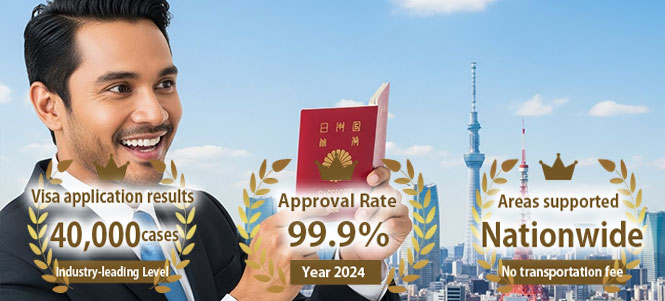
Naturalization from a Work Visa (Engineer/Specialist in Humanities/International Services)
Detailed explanation for foreign employees: requirements, required years, income standards, and how changing jobs affects screening. Covers differences based on employment style and tax status, the latest trends in review timelines, and practical strategies to avoid refusal.
Naturalization Guide for Highly Skilled Professional (HSP) Visa Holders
For applicants considering naturalization from HSP (Type 1 / Type 2). Explains situations where screening may be relatively favorable, and factors that require extra caution (e.g., research-track roles, job stability, and continuity of activities).
Naturalization Guide for Business Manager Visa Holders
Experts explain common stumbling points for business owners: business stability, tax compliance, executive compensation design, and social insurance handling. Includes review tendencies reflected from 2025 onward.
Naturalization Guide for Permanent Residents
The final step for permanent residents to become Japanese nationals. Organizes required documents, review timelines, and how decisions differ by family structure, plus preparation to avoid refusal and a clear comparison of “Permanent Residence vs Naturalization.”
Naturalization Guide for Long-Term Resident Visa Holders
For Long-Term Residents (spouse-based long-term, child of a Japanese national, stepchild, Nikkei-related statuses, etc.). Explains key requirements, documents, what examiners focus on, and Japanese language expectations by typical case type.

Naturalization Guide for Special Permanent Residents
Covers background of the制度, screening characteristics, how to write the reason statement for naturalization, and important notes about nationality choices within the family—tailored for Special Permanent Residents.
More In-Depth Questions About Japan Naturalization
Naturalization vs Permanent Residence in Japan: A Complete Comparison (2026)
Can You Apply for Naturalization with Less Than 3 Years of Work? Latest Standards & Approval Points
Naturalization and Time Outside Japan: Guidelines for “5+ Continuous Years” and Key Cautions
Naturalization Required Documents List: 2026 Latest Checklist by Case Type
Naturalization Requirements (7 Conditions): Expert Guide to Obtaining Japanese Nationality
My child has dual nationality (Japan & the U.S.). Are any procedures required?
Should You Hire an Administrative Scrivener for Naturalization? Benefits, Fees, and How to Choose
Income Requirements for Naturalization: How Much Is Needed and How “Ability to Support a Living” Is Judged
Traffic Violations & Minor Offenses in Naturalization: Do Parking Tickets or Criminal Records Matter?
Required Japanese Level for Naturalization: Speaking, Reading/Writing, and Interview Benchmarks
Are Taxes, Insurance, and Pension Critical for Naturalization? Does Non-Payment Lead to Refusal?
Renunciation of Prior Nationality: Country-by-Country Guidance (China, Korea, U.S., and More)
Residence Years & Time Abroad for Naturalization: 5-Year / 3-Year Rules and Key Judgment Points
Reasons for Naturalization Refusal: Common “Rejected at Intake” Cases and Timing to Reapply

Administrative Scrivener Corporation ACROSEED
Managing Partner: Makoto Sano
Japan Federation of Administrative Scriveners Associations (Reg. No. 01080685)
Tokyo Administrative Scriveners Association (Member No. 4568)
Founded in 1986
Now in our 39th year specializing in foreign nationals’ legal affairs across two generations.
Registered Administrative Scrivener in 2001
23 years as an international administrative scrivener.
Appointed to the Tokyo Association’s International Division in 2023
Contributing to the development and training of administrative scriveners.
[Track record]
ACROSEED’s legal services are chosen by over 1,000 corporations including listed/global companies. We also have many engagements as lecturers/authors on foreign employment.
Since opening our practice in 1986, we have been involved in consulting on visa applications for foreigners for nearly 40 years as an immigration lawyer.
Telephone consultation, email consultation, online consultation, and consultation at our office are available.