Permanent Residency from a Japanese Spouse Visa – Requirements & Documents (2026)
Last Updated:

The government has reportedly approved a bill to revise the upper limits for fees related to change/renewal of status of residence and permanent residence applications. However, this does not mean the permanent residence application fee has been fixed at a flat ¥300,000 immediately. Future legal amendments, Cabinet Orders, and official operational announcements should be monitored.
If you are considering applying for permanent residence, it is important to review your current residence status, income, tax payments, pension record, and years of residence in Japan, and confirm whether you can begin preparing early.
Immigration renewal fees to rise to JPY 30,000–40,000 / Permanent residency above JPY 100,000 — Impact on companies and foreign nationals [2025–2027]If you are considering applying for Permanent Residency, we strongly recommend submitting your application early with professional support.
Contact us by email +81-3-6905-6371- Who is included under “Spouse or Child of Japanese / Permanent Resident”
- Benefits of obtaining permanent residency from a Spouse of Japanese National visa
- Requirements for applying for permanent residency from a Spouse visa
- Required documents for applying from Spouse of Japanese National visa
- Process and examination period
- FAQ: Applying for permanent residency from Spouse of Japanese National visa
- When can I apply for permanent residency?
- What are common reasons for rejection?
- Can overseas marriage years count toward the “three-year” requirement?
- Can I apply if household income is below the standard?
- What happens if there are unpaid taxes or pension premiums?
- As a former Japanese national with a spouse visa, what are the requirements?
- Approved Case Studies for Obtaining Permanent Residence
- Our Permanent Residency Application Support Service for Spouse of Japanese National Visa
- Related pages frequently read with permanent residency applications
This page provides a practical guide for applicants who are married to a Japanese national, a permanent resident, or a special permanent resident—or for their biological children—holding the visa status “Spouse or Child of Japanese National” or “Spouse or Child of Permanent Resident.” It summarizes the key requirements and points to consider when applying for permanent residency in Japan.
1. Who Is Included under “Spouse or Child of Japanese / Permanent Resident”
This section focuses on cases where applicants apply for permanent residency from a Spouse of Japanese National visa. In practice, both statuses—“Spouse or Child of Japanese National” and “Spouse or Child of Permanent Resident”—are reviewed under the same examination criteria and document structure by the Immigration Bureau.
Therefore, throughout this page, we collectively refer to these as “Spouse of Japanese National Visa.”
The following applicants are covered on this page:
Spouse of a Japanese national
Those married to a Japanese citizen. The duration of marriage and the actual cohabitation and living situation in Japan are key points in the permanent residency examination.
Spouse of a permanent resident
Foreign nationals married to a permanent resident. Legally, they fall under the “Spouse or Child of Permanent Resident” status, but the requirements for permanent residency are treated the same as those for a Japanese spouse.
Spouse of a special permanent resident
Foreign nationals married to a special permanent resident. Other than submitting a copy of the “Special Permanent Resident Certificate,” the examination criteria are identical to other spouse visa holders.
Biological child of a Japanese national, permanent resident, or special permanent resident
Children born in Japan as biological children of Japanese nationals, permanent residents, or special permanent residents, who hold the visa status “Spouse or Child of Japanese National” or “Spouse or Child of Permanent Resident.”
Tell us about your current visa status, and we will advise you on the best way to apply for permanent residency.
Support available in English and Chinese.
Contact us by Email +81-3-6905-6371
2. Advantages of Obtaining Permanent Residency for Spouse of Japanese National Visa Holders
The Spouse of Japanese National visa (legally “Spouse or Child of Japanese National / Permanent Resident”) allows unrestricted work and minimal limitations on daily life. Therefore, many people feel they can live comfortably without obtaining permanent residency.
However, if you do not hold permanent residency, you may lose your legal status in Japan if your relationship with your spouse or guardian changes—for example, due to the death or divorce of a Japanese, permanent resident, or special permanent resident spouse, or the death of a parent.
In principle, once a marriage or dependency relationship ends, those with a “Spouse or Child of Japanese / Permanent Resident” visa cannot maintain their current status.
Immigration law requires notification to the Immigration Bureau within 14 days of the death or divorce of a spouse, and at that point, you must consider how to continue your stay in Japan.
In many cases, applicants will need to change their status to “Long-Term Resident,” but if they do not meet the requirements, the application may be denied, forcing them to leave Japan.
Likewise, for those residing in Japan as biological children under parental support, the death of a parent or loss of guardianship may also result in losing the basis for residency. Holding permanent residency protects you from such situations and allows you to continue living in Japan independently.
Therefore, applying for permanent residency as soon as you meet the conditions is the most reliable way to ensure stable residence in Japan, independent of your spouse or guardian’s status. Once granted, permanent residency eliminates renewal requirements and minimizes the impact of changes in family or employment situations.
3. Requirements for Applying for Permanent Residency from a Spouse of Japanese National Visa
1. General Permanent Residency Requirements for All Applicants
Regardless of the type of visa, the Immigration Services Agency of Japan applies common screening standards when examining permanent residency applications. These standards are assessed comprehensively based on three pillars: personal status, economic stability, and social reliability. In other words, your actual daily life in Japan becomes the subject of examination.
- Stable income and living base: The applicant or spouse has a certain and stable level of income, and the household can maintain its livelihood in a sustainable manner.
- Tax and social insurance compliance: Proper payment of residence tax and income tax over the past several years, and confirmed enrollment and payment of pension and health insurance.
- Good conduct: No criminal records or serious traffic violations, and no behavior that harms social trust.
- Actual living situation in Japan: Living together with family members, having a stable place of residence, and having one’s daily life based in Japan.
Stable income and living base
Ordinarily, permanent residency applications require the applicant to have “sufficient assets or skills to make an independent living,” and an annual household income of around 3 million yen is often used as a benchmark.
However, for Spouse of Japanese national / Spouse of permanent resident visas, the income requirement is more relaxed.
Because many spouse visa holders are full-time homemakers, the examination focuses not on the applicant’s individual income but on the household income, taking into account the family structure.
In addition to income, factors such as owning a home or living in a region with relatively low living costs are also considered. If the family is actually living a stable life in Japan, permanent residency may be granted even when the household income is slightly below 3 million yen.
Tax and social insurance compliance
The most important point in a permanent residency application is the proper payment of taxes, pension contributions, and insurance premiums.
For spouse visa holders, residence and income tax payments for the past three years and pension/health insurance payments for the past two years (for biological children, one year for both taxes and insurance) are generally examined. However, in permanent residency examinations, not only unpaid amounts but even a record of past arrears or late payments can often lead to a denial of permission (this applies to both the applicant and the supporting spouse).
We have summarized the details of how unpaid or late payments of taxes, pension, and health insurance premiums affect permanent residency applications on the following page. Please refer to it if needed.

Permanent Residency and Unpaid Taxes, Pension, and Health Insurance Premiums|Impact, Required Documents, and Countermeasures
Specialists explain how unpaid, overdue, or delayed payments of taxes, pension, and health insurance premiums affect permanent residency applications and what countermeasures are available.
Good conduct
“Good conduct” essentially means living in Japan in a lawful manner as a member of the community, without causing trouble to others.
Naturally, if you have serious traffic violations or past legal troubles, your permanent residency application is likely to be denied.
We have summarized details on how traffic violations affect permanent residency applications on the following page. Please refer to it if needed.
Permanent Residency and Traffic Violations|Will Fines, Blue Tickets, or Red Tickets Lead to Rejection?
ACROSEED Immigration Lawyer’s Office clearly explains the differences between red tickets, blue tickets, and fines, and how they affect permanent residency and reapplication.
Actual living situation in Japan
For spouse visa holders, it is common to temporarily stay abroad for childbirth, childcare at the family home, or caregiving for parents in their home country.
In permanent residency examinations, it is important that the applicant’s base of life is in Japan—living together with family, having a stable place of residence, and having one’s daily life centered in Japan. If you spend around 100 days or more abroad in a year, you need to be particularly careful.
Details about the number of days spent outside Japan and its impact on permanent residency applications are summarized on the following page. Please refer to it if needed.
[2026 Edition] Permanent Residency and Number of Days Spent Abroad: How Many Days Are Acceptable? Screening Standards, Key Points, and Countermeasures
Does a large number of days abroad put you at a disadvantage for permanent residency? We explain the practical benchmark (around 100 days per year), work-related trips abroad under work visas, and long stays abroad due to childbirth, etc.
2. Special Permanent Residency Requirements for Spouses of Japanese Nationals and Permanent Residents
For those residing in Japan under a Spouse of Japanese National / Spouse of Permanent Resident visa, there is a special rule based on the marital relationship. Compared to other visa categories, the required period of stay is shorter, and it is characteristic that applicants can apply for permanent residency after “three years of marriage and at least one year of residence in Japan.”
- Duration of marriage: A genuine marital relationship continuing for three years or more (time spent living abroad together can be counted).
- Period of residence in Japan: Continuous residence in Japan for at least one year.
- Substance of the marriage: Evidence that an actual married life is being maintained, such as cohabitation, shared household finances, and ongoing communication.
- Stability of livelihood: Stable income of the spouse and overall financial stability of the household.
Length of stay requirements
For permanent residency applications from work visas, a total of 10 years of residence in Japan is generally required. However, if you are the spouse of a Japanese national or permanent resident and meet both of the conditions below, you may apply for a permanent resident visa:
・Continuous residence in Japan for at least one year
The three-year requirement for genuine marital life does not apply only to years spent living together in Japan. Time spent living together abroad is also counted.
Therefore, it is possible, for example, to apply for a permanent resident visa after living together abroad for more than two years, then moving to Japan and living here for one year.
“Genuine marital life” means that there is no reasonable doubt of a sham marriage.
Needless to say, long-term separation or very frequent returns to the home country without the spouse may make it difficult to obtain permanent residency from a Spouse of Japanese National visa.
Notification obligations under the Immigration Control Act
Holders of a spouse visa must notify the immigration authorities within 14 days if they divorce or are widowed. In addition, if they move to a new address, they must also complete procedures to update the address on their residence card.
As of 2025, we have not seen cases where permanent residency was denied solely due to failure to complete these procedures. However, if such obligations have been neglected, it may have an adverse effect on the examination, so it is an important point to keep in mind.
Residing with the maximum period of stay
Applicants holding a Spouse of Japanese National / Spouse of Permanent Resident status with a period of stay of three or five years are eligible to apply for permanent residency.
Applicants with only a one-year period of stay cannot apply for permanent residency. Therefore, how quickly you can obtain a three-year period of stay through spouse visa renewal becomes a key point when planning for permanent residency.
ACROSEED offers a renewal service aimed at obtaining a three-year spouse visa for those who only received a one-year period of stay at their last renewal, with a view toward future permanent residency from a Spouse of Japanese national visa.
Visa Renewal Service Aimed at a 3-Year Spouse Visa
This service is designed for those who were granted only a one-year spouse visa at their last renewal, helping them obtain a three-year “Spouse or Child of Japanese National” visa with future permanent residency in mind.
3. Special Permanent Residency Requirements for Biological Children of Japanese Nationals and Permanent Residents
For biological children of Japanese nationals, permanent residents, or special permanent residents residing under the status of “Spouse or Child of Japanese National” or “Spouse or Child of Permanent Resident,” the requirements are more relaxed than other categories. Screening is mainly based on the living record over the most recent one year.
- Period of residence: Continuous residence in Japan for at least one year.
- Stability of livelihood: Confirmation that the applicant is leading a stable life supported by themselves or a guardian (such as a parent).
- Tax and insurance compliance: Good payment records for one year of taxes and social insurance for the applicant or their supporter.
- Actual residence: Established life base in Japan, such as continued schooling and participation in local community activities.
Thus, in permanent residency applications for biological children, the most important criterion is whether the applicant’s base of life is in Japan. Required documents tend to be simpler, focusing mainly on taxation and tax payment certificates for the most recent year, records of pension and insurance, residence certificates, and certificates of enrollment at school.
4. Permanent Residency Eligibility Self-Check Tool for “Spouse or Child of Japanese National” / “Spouse or Child of Permanent Resident”

If you are considering applying for permanent residency from a Spouse of Japanese National visa, it is important to first confirm whether you meet the general requirements for permanent residency approval.
In this test, you can easily check whether you, as a spouse of a Japanese national or permanent resident, currently meet the conditions for permanent residency from the perspective of length of residence, conduct, income, tax payment, social insurance, and family composition.
All questions are in a simple “Yes/No” format, and the result page will clearly show which points need improvement, if any.
Please start by taking our Permanent Residency Eligibility Self-Check Test using the button below.
Tell us about your current visa status, and we will advise you on the best way to apply for permanent residency.
Support available in English and Chinese.
Contact us by Email +81-3-6905-6371
4. Required Documents for Permanent Residency Application as a Spouse of a Japanese National
Because the list of required documents for permanent residency may change frequently due to legal revisions, please make sure to check the latest information on the Immigration Services Agency’s official website.
If you entrust your application to ACROSEED Immigration Lawyer’s Office, we will prepare the set of documents that we consider to offer the highest chance of approval for your situation, based on the required documents listed on the Immigration Services Agency website and tailored to your circumstances as a holder of a Spouse of Japanese national / Spouse of permanent resident visa applying for permanent residency.
1. If you are the spouse of a Japanese national
2. If you are the biological child of a Japanese national
3. If you are the spouse of a permanent resident or special permanent resident
4. If you are the biological child of a permanent resident or special permanent resident
Tell us about your current visa and living situation. We will advise you on the best way to apply for permanent residency in Japan.
Support available in English and Chinese.
Contact us by Email +81-3-6905-6371
5. Process and Examination Period for Obtaining Permanent Residency from a Spouse of Japanese National Visa
1. Process: From Spouse of Japanese National Visa to Permanent Residency
For those who hold a Spouse of Japanese National / Spouse of Permanent Resident / Spouse of Special Permanent Resident visa and wish to apply for permanent residency, the general process is as follows. While maintaining your marriage and actual family life, and building a good track record in tax payment and social insurance, you file the application once you meet the requirements for permanent residency from a Spouse of Japanese national visa.
At ACROSEED Immigration Lawyer’s Office, we provide end-to-end support for “Permanent residency applications from a Spouse of Japanese National visa.” We propose an application strategy tailored to each case, taking into account factors such as length of marriage, period of stay in Japan, income, and family/financial dependency.
-
1
- Free consultation
- We check your length of marriage, period of residence in Japan, income, tax payment status, etc., and assess whether you can apply for permanent residency. You can choose to consult by phone, email, online (Zoom, Line, WeChat), or in person at our office.
-
2
- Engagement of our services
- If you meet the requirements, you formally request our permanent residency application support service. After concluding the service agreement and receiving your payment, our immigration lawyers (gyoseishoshi) will begin preparing your documents.
-
3
- Preparation of application forms and supporting documents
- We prepare and organize supporting evidence to fully demonstrate your marital relationship, living base, tax payment, pension and health insurance status, and other factors that are important for screening. We structure the documents in a way that maximizes the approval rate.
-
4
- Filing the application with the Immigration Services Agency
- An immigration lawyer from ACROSEED acts as your representative and submits the application to the Immigration Services Agency on your behalf. You do not need to appear in person at the immigration office.
-
5
- Screening and result notification
- During the screening, the Immigration Bureau may request additional documents. We will respond promptly on your behalf. The result will be sent to ACROSEED, and once your application is approved, we also handle the procedures for having your passport stamped.
-
6
- Returning your passport and residence card
- We return your passport with the permanent residency stamp and your new residence card. From this point on, you will hold a stable status of residence with no need for further renewals.
2. Immigration screening period
The processing time for permanent residency applications is announced by the Immigration Services Agency and updated every month. Please check the latest average processing time using the link below.
6. FAQ: Applying for Permanent Residency from a Spouse of Japanese National Visa
As a general rule, permanent residency in Japan requires that the applicant has continuously resided in Japan for 10 years or more. However, for those holding a Spouse of Japanese National / Spouse of Permanent Resident visa, a special rule called the “spouse exception” applies.
If you have maintained a genuine marital relationship for three years or more and have continuously resided in Japan for at least one year, you may apply for permanent residency from a Spouse of Japanese national visa, provided that you also meet the other requirements (tax payment, pension and health insurance enrollment, good conduct, etc.).
Typical examples of cases where applications are often denied include the following:
・Unpaid or overdue residence tax, pension contributions, or health insurance premiums
・Applying while still holding only a one-year period of stay (short renewal history)
・Repeated traffic violations or minor legal infractions over time
These risks can be reduced by submitting additional supporting documents and by carefully choosing the timing of your application. Having a specialist review your case in advance can significantly improve your chances of approval.
Yes. Periods of marriage spent outside Japan can be counted toward the three-year requirement, as long as you were actually living together and maintaining a genuine marital relationship.
However, at the time of your permanent residency application, you must have resided in Japan for at least one continuous year.
To prove the period of cohabitation overseas, it is helpful to submit evidence such as local residence certificates, lease agreements, or remittance records.
Yes, it is possible. In permanent residency examinations from a Spouse of Japanese national visa, the Immigration Bureau does not look only at your annual income figure, but rather evaluates the overall stability of your household finances.
If you can provide a convincing explanation of your overall situation—such as owning your home, having savings, the way living expenses are shared within the family, and prospects for future employment—your application may be approved even if your household income is slightly below the general standard.
It is important to attach supporting documents that clearly show your household finances, such as household budget records, bank balance certificates, and letters from your employer confirming continued employment.
Unpaid or overdue taxes and pension contributions are among the most common reasons for rejection in permanent residency applications.
The screening will cover not only the applicant but also their spouse. In other words, the tax and social insurance situation of the whole household is reviewed.
Before applying, you should complete any back payments and accumulate a record of regular payments over a certain period. Then, submit tax payment certificates and enrollment/payment certificates for pension and health insurance together with your application.
In particular, the Immigration Bureau focuses on the payment status of the last three years of residence tax and the last two years of pension and health insurance. If there were periods of delayed payment or non-enrollment, it is advisable to submit a written explanation to honestly clarify the reasons.
If you are a former Japanese national (someone who previously had Japanese nationality but now holds foreign nationality) and you hold the status of residence “Spouse or Child of Japanese National” as a “child of a Japanese national”, the criteria for permanent residency differ from those of ordinary spouse visa holders.
In this case, because the applicant themselves holds a status of residence based on being the “child of a Japanese national,” the length of marriage and length of stay in Japan are not strictly required in the same way as for Spouse of Japanese national visa holders. Instead, the Immigration Bureau mainly reviews the actual living record in Japan over the most recent one year to determine whether your life is firmly established in Japan.
- Period of residence: You have continuously resided in Japan for at least one year.
- Stability of livelihood: Your income and the status of tax payment, pension, and health insurance contributions over the most recent year are stable and appropriate.
- Good conduct: No issues such as criminal records, serious traffic violations, or significant delays in tax payments.
- Actual residence: Your base of life is in Japan, and you have been living here continuously (for example, schooling and daily life in Japan).
Thus, for former Japanese nationals residing under the status of “child of a Japanese national,” the conditions for permanent residency are more relaxed than those for general spouse visa holders.
Because the Immigration Bureau focuses on the stability of your life in Japan, the main documents required are taxation and tax payment certificates for the most recent year, certificates of pension and health insurance contributions, and proof of residence such as a certificate of residence (juminhyo).
Tell us about your current visa and living situation. We will advise you on the best way to apply for permanent residency in Japan.
Support available in English and Chinese.
Contact us by Email +81-3-6905-6371
7. Approved Case Studies: Obtaining Permanent Residence from a Spouse of a Japanese National Status
Even if you are the spouse of a Japanese national, Permanent Residence is not granted automatically. Immigration authorities conduct a comprehensive review of factors such as the genuineness of the marriage and cohabitation status to date, stability of daily life, and compliance with public obligations including taxes, pension contributions, and health insurance.
Here, we introduce actual approved cases of individuals who obtained Permanent Residence after holding a Spouse of Japanese National visa. Please review these cases while comparing them with your own residence pathway and family circumstances, and use them as a reference when considering how to proceed with your Permanent Residence application.
 |
Client (from Google Reviews) |
| [Continuous Support Case] Special Landing Permission → Spouse of Japanese National Visa → Permanent Residence |
|
Client (from Google Reviews) |
| [Continuous Support Case] Temporary Visitor Visa → Work Visa → Spouse Visa → Permanent Residence |
|
VOL.125 Mr./Ms. M (Korea) |
| [Continuous Support Case] Comprehensive support through to Permanent Residence after obtaining a Spouse of Japanese National visa |
Click here to see more approved cases for obtaining Permanent Residence
8. Permanent Residency Application Support Service for Spouse of Japanese National / Permanent Resident Visa Holders
1. Service overview

This service is a professional support package designed for those residing in Japan under the statuses “Spouse or Child of Japanese National” and “Spouse or Child of Permanent Resident” who wish to obtain permanent residency in Japan and secure a more stable life beyond the ordinary spouse visa.
ACROSEED Immigration Lawyer’s Office has supported many clients applying for permanent residency from a Spouse of Japanese National or Spouse of Permanent Resident visa. Drawing on this experience, we prepare high-approval-rate application documents and handle communication with the Immigration Services Agency, focusing on key screening points such as the substance of the marital relationship, stability of the living base, and tax and social insurance records.
Our service is ideal for those considering permanent residency from a spouse visa in situations such as the following:
- Those who have continued their marriage as a spouse of a Japanese national or permanent resident for three years or more and have resided in Japan for at least one year
- Those who have resided in Japan for at least one year as a biological child of a Japanese national, permanent resident, or special permanent resident
To help you move smoothly from a Spouse of Japanese national / permanent resident visa to permanent residency, our specialists—who are well versed in immigration screening trends and the evidence required for approval—will support you throughout the process.
2. What is included in the service
- Proposal and preparation of the document set most likely to result in approval
- Representation in filing the application with the Immigration Services Agency and handling passport stamping procedures upon approval
- Application for re-entry permit at the same time (upon request)
- Checking the progress of the examination and responding to requests for additional documents during the screening period
- Free reapplication in the event that the permanent residency application is rejected
3. Advantages of Choosing ACROSEED
When applying for Permanent Residence from a Spouse of Japanese National visa, immigration authorities assess not only the existence of a legal marriage, but also whether the marriage is genuine, cohabitation is ongoing, and living conditions remain stable and continuous.
At ACROSEED Immigration Lawyer's Office, we organize the relationship and marital history chronologically and present a clear and consistent application narrative supported by appropriate evidence. In cases involving borderline income, frequent job changes, or dependent family members, we comprehensively demonstrate that the couple has maintained a stable married life in Japan.
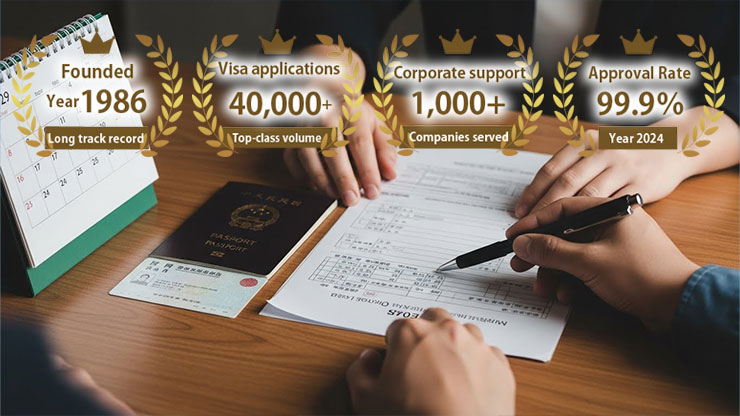
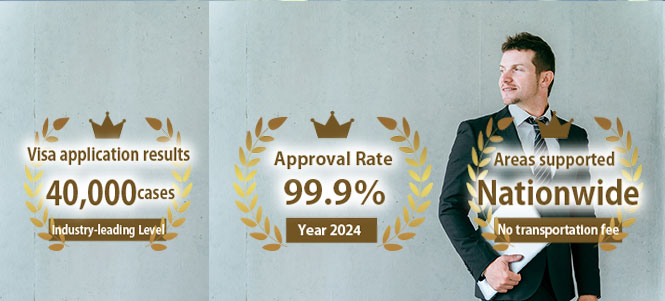
Founded in 1986 — Over 40,000 Visa Cases
We apply long-term screening insight and corporate-level standards to your individual case.
Learn MoreVeteran Immigration Specialists (10+ Years)
Experts who understand screening criteria reduce refusal risks through consulting.
Learn MoreCentralized Headquarters System
No dispersed standards — decisions reflect accumulated experience and current trends.
Learn MoreMultinational Staff Offering Practical Multilingual Support
Not interpreters — but practitioners who understand visa evaluation points in English/Chinese.
Learn MoreOnline Progress Management System
Real-time status, document tracking, and uploads reduce inquiry stress.
Learn More99.9% Approval Rate (2024)
We decline applications when approval prospects are extremely low — honesty first.
Learn MoreTraining + Compliance (ISO27001)
Quality and information security are systemized for long-term client trust.
Learn MoreFree Consultation to Assess Possibility & Challenges
We clarify approval prospects, risks, and preparation priorities.
Learn MoreFlat Nationwide Pricing — Fully Transparent
Same standards anywhere in Japan. No hidden charges or mid-process fee increases.
Learn More▼Learn more about the 9 reasons ACROSEED is chosen
View ACROSEED’s Track Record
View Client Testimonials and Approved Case Studies
4. Ratings and Reviews on Google
ACROSEED has received high evaluations from many clients regarding the quality of our services, regardless of visa type or nationality.
5. Fees (excluding tax) for Permanent Residency Application Support from Spouse of Japanese National / Permanent Resident Visa
・There are absolutely no additional fees based on your personal conditions.
・ACROSEED Immigration Lawyer’s Office serves clients throughout Japan. Even if you live outside the Tokyo area, you can request our services at the fees listed below.
・Payment by Visa and MasterCard is also available.

| Permanent residency from “Spouse or Child of Japanese National” / “Spouse or Child of Permanent Resident” status | 100,000円 |
|---|---|
| Permanent residency application where there is a previous refusal history | 150,000円 |
9. Popular Pages Related to Permanent Residency Applications
Japan Permanent Residency Application Guide
A comprehensive overview of permanent residency applications in Japan: key requirements (income, years of stay, taxes / pension compliance), typical patterns by status of residence, and how to respond to refusals.
Permanent Residency Guide from a Work Visa
An up-to-date guide for those who aim to obtain permanent residency in Japan from a work visa. Includes a self-check tool for work-visa holders on PR requirements.

Obtaining a PR Visa via Highly Skilled Professional Points
A service for those who wish to obtain a Highly Skilled Professional visa or permanent residency in Japan using the Highly Skilled Professional points system.
Permanent Residency Guide for Spouses of Japanese Nationals
For applicants moving from a spouse visa to permanent residency, this guide explains requirements, documents, and common refusal cases, with a PR self-check tool for spouse visa holders.

Permanent Residency Requirements Self-Check Tool
A 30-second self-diagnosis tool to check whether you meet Japan’s permanent residency requirements: Highly Skilled 70/80 points, work visa, spouse visa, and Long-Term Resident.
Reapplication Guide After Permanent Residency Refusal
What to do if your PR application is refused and how to prepare for reapplication.
Tell me more about the detailed conditions for a permanent residency (PR) application in Japan
Naturalization vs. Permanent Residency: A Complete Comparison【2026 Updated Guide】
Is an annual income of 3 million yen really necessary for permanent residency?【Stricter for work visas, more flexible for family-based statuses】
【2026 Edition】Days Abroad and Permanent Residency Application: How many days are acceptable? Criteria, cautions, and countermeasures
Permanent Residency and Unpaid Taxes / Pension / Health Insurance: Impact, required documents, and strategies
Permanent residency applications and traffic violations: Will fines, blue tickets, or red tickets lead to refusal?
The scope of a guarantor’s responsibility in a permanent residency application
【From Dependent to Permanent Residency】2026 Edition: Requirements, simultaneous applications with family, and key cautions
【2025/10 Amendment Ready】Key points for obtaining permanent residency from a Business Manager visa
【2026 Edition】Permanent residency from a Long-Term Resident status: income, years of stay, and settlement

ACROSEED Immigration Lawyer's Office
Representative Administrative Scrivener
Makoto Sano
1998 Graduated from Aoyamagakuin University
2001 Registered as an administrative scrivener
He has Over 20 years of experience as an international administrative scrivener, specializing in foreign employment consulting and residence procedures for foreign residents in Japan.
Click here to see information about his business achievements
Click here to see books he has authored
Google Reviews
Since opening our practice in 1986, we have been involved in consulting on visa applications for foreigners for nearly 40 years as an immigration lawyer.
Telephone consultation, email consultation, online consultation, and consultation at our office are available.