Naturalization Guide for Special Permanent Residents in Japan|Examination Features and Keys to Success
Last updated:

The government is currently reviewing its overall immigration and nationality policies, ahead of the “Comprehensive Policy Measures for Foreign Nationals” expected in January 2026. One key focus being discussed is the revision of the naturalization residence requirement. Experts indicate that the current “5 years or more” rule may be tightened, potentially requiring 10 years or more—closer to requirements applied for Permanent Residency.
What does stricter naturalization screening mean? Latest developments & expert commentaryIf you are considering naturalization, early application with professional support is strongly recommended.
Contact us by email 03-6905-6371- Who are Special Permanent Residents? System background and link with naturalization
- Features of naturalization for Special Permanent Residents (differences from other permanent residents)
- Key proof and explanation points required from Special Permanent Residents
- Application flow (consultation, document preparation, interview, approval and renunciation of former nationality)
- Practical tips to avoid refusal in naturalization applications
- Frequently Asked Questions (FAQ)
- Is it a problem if I remain a Special Permanent Resident? Do I really need to naturalize?
- Is it better for the whole family to apply for naturalization together?
- Can I apply for naturalization if I cannot obtain documents such as a birth certificate?
- Does being a Special Permanent Resident make the examination more favorable?
- Google reviews
- Naturalization services by ACROSEED Immigration Lawyer's Office
- Related pages often read together with naturalization applications
Special Permanent Residents hold a unique residence status in Japan that is based on historical circumstances and is different from the status of ordinary mid- to long-term residents. At the same time, when thinking about their future life in Japan and their children’s choice of nationality, many people are unsure whether they should apply for naturalization and acquire Japanese nationality or continue to live as Special Permanent Residents.
This page explains, in line with the actual application process, the system background, examination features, key points to prove and practical tips for avoiding refusal when a Special Permanent Resident files a naturalization application in Japan.
1. Who are Special Permanent Residents? System background and relationship with naturalization
“Special Permanent Resident” is a residence status granted mainly to those who have been residing in Japan due to historical circumstances dating back to before World War II, and to their descendants. Unlike ordinary “Permanent Residents”, Special Permanent Residents are subject to certain preferential measures, for example regarding renewal of their residence card and re-entry permits.
1. Differences between Special Permanent Residents and ordinary Permanent Residents
- How the status is obtained: Special Permanent Resident status is granted on the basis of historical circumstances, while ordinary Permanent Resident status is obtained through individual permission by the immigration authorities.
- Residence management: Special rules apply in some respects, such as the permitted period of re-entry and the validity period of the residence card.
- Burden of renewal procedures: Certain procedures are still required, but in some situations the burden is lighter than that of ordinary Permanent Residents.
However, in both cases the status is still a “residence status” under Japanese immigration law, and unless you acquire Japanese nationality, there will continue to be restrictions on political rights such as the right to vote and eligibility for some national public service positions.
2. Main reasons why Special Permanent Residents consider naturalization
- To clarify the nationality and long-term life plan of their children and future generations
- To obtain voting rights in Japan and broaden the range of public-sector jobs they can choose
- To organize their legal status in light of future life plans such as international marriage or living abroad
Once you acquire Japanese nationality through naturalization, you will lose your status as a Special Permanent Resident, but instead you will fully obtain “the rights and obligations of a Japanese national”. Which is better depends on your family situation and future plans, so if you are unsure whether to remain a Special Permanent Resident or apply for naturalization, we recommend consulting a professional at least once.
The necessity, advantages and timing of naturalization differ depending on your family composition and future life plan.
A professional will provide a free assessment of whether it is better for you to remain a Special Permanent Resident or apply for naturalization in Japan.
Please briefly share items such as your residence history in Japan, household income and your children’s education plans.
Consultations are also available in English and Chinese.
Click here for e-mail consultation +81-3-6905-6371
2. Features of naturalization applications by Special Permanent Residents (differences from ordinary Permanent Residents)
Naturalization applications filed by Special Permanent Residents share many elements with those filed by ordinary Permanent Residents, but the examination background and the focus of explanations in the naturalization process are not exactly the same.
1. “Integration into Japanese society” is emphasized more than the length of stay
In many cases, Special Permanent Residents have already lived in Japan for a long period, so the length of their stay itself is rarely an issue. Therefore, in the naturalization examination, the following points tend to be emphasized more than the simple number of years of residence.
- Whether your daily life is centered in Japan
- Whether you can conduct everyday life and communication in Japanese without serious difficulty
- Whether you have ongoing ties with the local community, schools and your workplace
2. Confirming the intention to naturalize against the backdrop of historical circumstances
The current status of Special Permanent Residents is recognized on the basis of historical circumstances. For that reason, when a Special Permanent Resident applies for naturalization, the authorities will not be satisfied with reasons such as “naturalization is more convenient than permanent residence” or “the procedures seem easier”. Instead, they will focus on points such as:
- Why you are now considering acquiring Japanese nationality
- What kind of relationship you have built with Japanese society so far
- How you view the future of your family, including your children and later generations
These motives and intentions for naturalization will be carefully checked through your written statement of reasons and during the interview.
3. Common points with ordinary Permanent Residents (good conduct, livelihood and public obligations)
On the other hand, the basic way of thinking is the same for Special Permanent Residents and ordinary Permanent Residents when it comes to requirements such as good conduct, stable livelihood, tax payment and enrollment in social insurance — that is, the so-called “good conduct requirement”, “livelihood requirement” and “public obligations requirement”. Serious traffic violations, unpaid taxes or unpaid pension contributions may negatively affect the examination even for Special Permanent Residents.
3. Key points to prove when a Special Permanent Resident applies for naturalization
When a Special Permanent Resident files a naturalization application in Japan, it is important to prepare with the following three points in mind.
1. Stability of your life foundation (income, housing and dependents)
A stable life foundation is one of the most important elements in the naturalization examination. Specifically, the authorities will look at whether:
- You have continuous employment income or business income
- Your housing situation is stable (whether you own or rent is not decisive, but long-term prospects are important)
- You have sufficient income and living conditions to support your dependents appropriately
Even if your main work is part-time or a temporary job, it does not automatically become a disadvantage as long as you can explain the overall balance of household income and expenses.
3-2. Explaining your ties with Japanese society
For Special Permanent Residents, it is important not only that you have lived in Japan for a long time, but also that you can explain how you have been living within Japanese society. For example:
- Your children’s school life and participation in local activities
- Your involvement in local neighborhood associations and volunteer activities
- Your long-term employment record at your workplace and external evaluations of your work
Organizing this kind of information in your statement of reasons for naturalization and, where appropriate, in supplementary documents will make it easier for the examiner to understand your situation.
3-3. Record of conduct and fulfillment of public obligations
Criminal records, serious traffic violations and non-payment of taxes or social insurance premiums can significantly affect the naturalization examination, even for Special Permanent Residents. If there have been problems in the past, you should:
- Clarify when and under what circumstances they occurred
- Explain how the situation has been rectified and improved
- Describe what you are doing to prevent recurrence in the future
Based on this, you will need to carefully consider the timing of your application and how to explain these issues.
4. Naturalization process for Special Permanent Residents
The overall procedure is broadly the same as a standard naturalization application in Japan. However, for Special Permanent Residents, confirmation of residence status often proceeds relatively smoothly, while more time may be spent on explanations in the written statement of reasons and during the interview.
-
1
- Pre-application consultation and confirmation of required documents (Month 0)
-
First, you make a reservation for a naturalization consultation at the competent Legal Affairs Bureau and have an initial meeting with the officer in charge, where you will be informed of the basic requirements and required documents.
Be sure to tell them that you are a Special Permanent Resident, and have them check your family composition, residence history and tax payment status.
-
2
- Collecting and preparing documents (Months 1–3)
-
While gathering various documents such as resident records, tax certificates, family register documents and employment certificates, you will prepare your written statement of reasons for naturalization.
As a Special Permanent Resident, it is important to carefully explain, in light of the historical background, how you connect your current life and future life plan with Japanese society.
-
3
- Checking application documents and formal submission (Months 3–4)
-
The Legal Affairs Bureau will check the consistency of the contents of your documents, and if there are any insufficient explanations, you may be asked to correct them or submit additional materials.
There may also be opportunities to explain your situation as a Special Permanent Resident, including your life foundation and ties with Japanese society.
-
4
- Document examination and submission of additional materials (Months 4–8)
-
As the examination by the Legal Affairs Bureau proceeds, you may be asked to provide more detailed explanations or additional documents regarding your living situation, dependents and involvement in the local community.
These materials are important for assessing how firmly you are settled in Japanese society.
-
5
- Interview (applicant and spouse) (Months 6–10)
-
An interview will be held with the officer in charge, during which your Japanese language ability, reasons for wishing to naturalize and ties with Japanese society will be confirmed.
If you have a spouse, questions may also be asked about your married life and the actual circumstances within the household.
-
6
- Notification of examination result (Months 8–12)
-
If your naturalization application is approved, it will be officially announced in the government gazette, and you will receive a notice of approval.
After that, you will complete the procedures for creating a family register at your city or ward office, and acquisition of Japanese nationality will be formally completed.
As a result, your Special Permanent Resident status will cease to exist, and your legal status as a Japanese national will be established.
5. Practical tips to avoid refusal of your naturalization application
For naturalization applications by Special Permanent Residents, the outcome is often influenced less by the residence history itself and more by the consistency of the documents and how you explain your situation. Below are key points to help avoid refusal.
1. Organize records of income, tax payment and social insurance
Even if there are fluctuations in your income or tax payment status, it is important to be able to explain why. For example, if job changes, illness, childbirth or caregiving have affected your situation, summarizing these circumstances in chronological order will make your explanation more persuasive.
2. Clearly state in your reason statement why you are choosing Japanese nationality “now”
Because Special Permanent Residents already have deep ties with Japan, the authorities will focus on the question of “why you are now deciding to acquire Japanese nationality”. It is important to describe concrete, positive reasons related to your children’s education and future, as well as the life plan of the entire family.
3. If there have been past issues, be cautious about timing and how you explain them
Even if there have been traffic violations or unpaid taxes, in some cases it may still be possible to apply for naturalization depending on how much time has passed and how the situation has been corrected. However, if you choose the wrong timing or way of explaining these issues, the risk of refusal will increase. We therefore recommend consulting a professional in advance.
6. Frequently Asked Questions about Naturalization for Special Permanent Residents
There is no requirement that you must naturalize. The status of a Special Permanent Resident provides a certain level of stability and preferential treatment, and it is possible to continue living in Japan under that status. When considering naturalization, it is important to evaluate and compare the expansion of rights (such as voting rights and job opportunities) with the impact of changing nationality (such as relations with your country of origin).
The ideal timing varies depending on your family members’ ages, education or employment plans, and preferences regarding ties with the home country. Some families apply together, while in other cases parents naturalize first and children choose later. It is necessary to consider each family’s circumstances individually.
Depending on nationality and individual circumstances, it may not be possible to obtain birth certificates or family relationship documents from the country of origin.
In the case of Special Permanent Residents, because long-term residence and actual living conditions in Japan can be confirmed, the examination may proceed using substitute documents or written statements from the applicant.
However, simply stating that documents “cannot be obtained” is not sufficient. You must explain why they cannot be obtained and what inquiries you made.
Organizing documents that can be proven in Japan — such as resident records issued by local authorities, school or employment history, and family relationship documents in Japan — is crucial for supporting your application.
In practice, the Legal Affairs Bureau will review your situation and may request additional explanations or supplementary documents. Therefore, it is advisable to consult a professional regarding how to assess document availability and present explanations effectively.
Since this residence status is based on historical circumstances, there may be greater understanding regarding length of stay and ties to Japan. However, the basic examination criteria — such as conduct, livelihood and fulfillment of public obligations — are the same as for ordinary naturalization cases. Therefore, being a Special Permanent Resident does not automatically give you a favorable advantage.
The necessity, benefits and timing of naturalization vary depending on your family structure and future plans.
A professional will provide a free assessment of whether it is better for you to remain a Special Permanent Resident or apply for naturalization.
Please provide simple information such as your residence history, household income and your children’s education.
Consultations are available in English and Chinese.
Click here for email consultation +81-3-6905-6371
8. Naturalization Application Support Services for Special Permanent Residents
1. Service Overview

When a Special Permanent Resident applies for naturalization, they already have long-term residence in Japan and strong ties to the community. However, key points examined in the screening include the motives for naturalization, future life plans and family situation — in short, “integration and intention to naturalize.”
In particular, Special Permanent Residents often face the following questions:
- Unsure whether to naturalize and do not know how to compare the options
- Uncertain how to organize and present the differences between Special Permanent Resident status and naturalization
- Unsure how to explain future choices of nationality and life plans for children and family members
- Uncertain how to prove ties with Japanese society and community participation
- Do not know what to write in the statement of reasons for naturalization and are worried about the interview
ACROSEED Immigration Lawyer's Office provides comprehensive support for Special Permanent Residents, including assessment of eligibility for naturalization, document organization, application preparation, assistance in drafting the statement of reasons and interview preparation with the Legal Affairs Bureau.
This service is ideal for those who wish to determine whether naturalization is necessary, learn how to write a statement of reasons or receive tailored guidance based on their family’s future plans.
Who this service is for
- Special Permanent Residents who are unsure whether to naturalize
- Those who wish to clarify the necessity of naturalization based on family composition or future life plans
- Those who feel uncertain about how to explain their situation in the application forms or statement of reasons
- Those who want to know how to present their community involvement, life stability, income or tax status
- Those who seek full professional support from preparation to drafting reasons and interview practice
2. Three Service Plans
ACROSEED Immigration Lawyer's Office offers three types of naturalization support plans, depending on your situation and level of need:
① Document Preparation Support (Documents Only)
This is the simplest plan. We assist with整理 and preparation of the documents required for naturalization, including your statement of reasons. Attendance at the Legal Affairs Bureau and interview accompaniment are not included.
- Preparation of a checklist of required documents and guidance on how to obtain them
- Preparation of application documents
- Support for drafting the statement of reasons for naturalization
- Interview guidance
*You will attend the interview yourself, but we provide advice on possible questions and suggested answers.
② Document Preparation + Accompaniment to the Legal Affairs Bureau
In addition to document preparation, a certified immigration lawyer will accompany you to the Legal Affairs Bureau for the prior consultation and at the time of application, assisting with explanations as needed. This plan is ideal for those who feel uncertain about Japanese communication or the submission procedures.
- All services included in Plan ①
- Accompaniment to prior consultation at the Legal Affairs Bureau
- Accompaniment at application submission to the Legal Affairs Bureau
*You will attend the interview yourself, but we provide advice on possible questions and suggested answers.
③ Simplified Naturalization Support (Documents + Accompaniment)
This plan is designed for so-called “simplified naturalization” cases, where some requirements are relaxed (for example, children of Japanese nationals, children of permanent residents, etc.). In addition to document preparation, an immigration lawyer provides full support for procedures at the Legal Affairs Bureau.
- All services included in Plans ① and ②
- Organization of documents and explanation of requirements specific to simplified naturalization
- Optimization and reinforcement of documents according to your individual circumstances
*You will attend the interview yourself, but we provide advice on possible questions and suggested answers.
Services Not Included
The following services are not included in our plans:
- Attendance at the interview with the Legal Affairs Bureau (interviews are in principle conducted only with the applicant)
- Free re-application after a refusal
- Direct obtaining of documents from your home country (we can, however, advise on how to obtain them)
3. Why choose ACROSEED
- Why clients choose ACROSEED
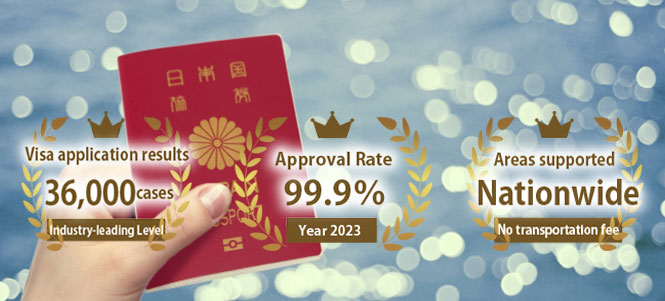
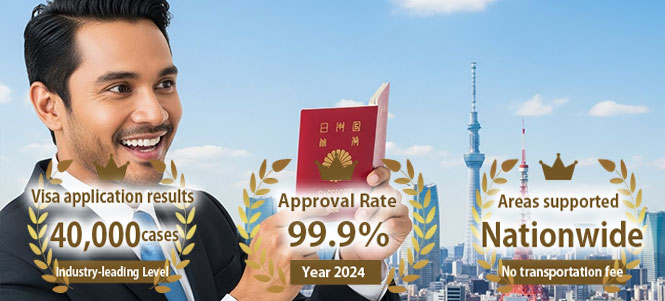
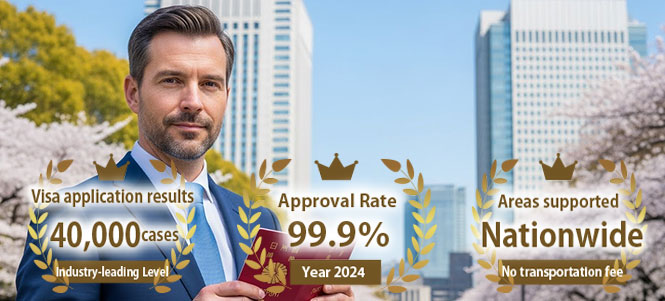
- Founded in 1986; industry-leading 40,000+ visa filings
- 99.9% approval rate; trusted by many clients
- No travel expenses; flat fees nationwide
- Extensive track record in complex/re-application after refusal cases
- No add-on fees; transparent pricing
- Free re-application until approval if refused
- Support available in Japanese, English, and Chinese
Founded in 1986, with 40,000+ visa applications

ACROSEED was founded in 1986. Since 1990—the first year administrative scriveners were allowed to handle immigration under the law—we have specialized in immigration work. Our total filings exceed 40,000 (as of March 2025).
We currently handle 3,000–4,000 visa filings annually, visiting immigration twice a week to stay current on examinations and legal changes.
By choosing ACROSEED, you get services based on the latest examination trends and the industry’s deepest practical experience.
99.9% approval rate—peace of mind backed by clients’ trust
Since opening in 1986, ACROSEED has always prioritized trustworthy services. At the free consultation stage, if approval seems unlikely, we explain this and decline the engagement.
As a result, we have maintained an approval rate of 99%+ (including re-applications) since opening.
However, for cases with a viable chance where clients wish to proceed, we will make a maximum effort together.
Our attentive, tailored service has earned broad support from clients.
No travel fees—flat rates nationwide

Our office is in Nagatacho, Chiyoda-ku, Tokyo, but we handle immigration cases nationwide at flat rates with no travel expenses.
For distant clients, we offer online consultations via Skype or Zoom so you can speak face-to-face with your consultant just like an in-person visit.
Strong results in difficult and re-application cases
We have many approvals for cases repeatedly refused by clients on their own or by other law firms.
ACROSEED’s track record is unparalleled, and we are often referred the most difficult cases from around the country—operating like a “general hospital” for the industry.
Don’t give up—consult us even for seemingly difficult cases.
No add-on fees—transparent pricing

Our service fees are only those listed on our website.
We do not add fees due to client circumstances such as frequent travel or prior refusals.
We provide a transparent pricing system for your peace of mind.
Free re-application until approval if refused

If a case filed by ACROSEED is unfortunately refused, we will re-apply free of charge as long as there remains a possibility of approval.
While some competitors offer “full refunds if refused,” we believe refunds do not solve the client’s problem
.
Accepting a case casually and leaving a refusal record in your filing history can make approval much harder later.
Clients who choose ACROSEED from among many firms deserve our stance of “getting the fastest approval possible—and if refused, supporting relentlessly until approval.”
4. Fees for Naturalization Support (excluding tax)
We also offer accompaniment to prior consultation for 20,000円 per visit (excluding tax). If you subsequently委任 ACROSEED Immigration Lawyer's Office to handle your case, the same amount will be discounted from your contract fee.
・Payment by Visa card and MasterCard is also accepted.

1. Document Preparation Only
| Salaried Employee | 150,000円 |
|---|---|
| Company Owner / Self-employed | 200,000円 |
| Additional Family Member (per person) | 50,000円 |
2. Document Preparation + Accompaniment to the Legal Affairs Bureau
Standard Naturalization
| Salaried Employee | 180,000円 |
|---|---|
| Company Owner / Self-employed | 250,000円 |
| Additional Family Member (per person) | 60,000円 |
Simplified Naturalization
| Salaried Employee | 120,000円 |
|---|---|
| Company Owner / Self-employed | 150,000円 |
| Additional Family Member (per person) | 50,000円 |
9.Related Pages Often Read Together with Naturalization Applications
[2025 Edition] Japan Naturalization Guide | Requirements, Documents & Application Process
A clear and comprehensive guide covering the latest 2025 requirements, required documents, key review points, application flow, and interview preparation. Also explains nationality renunciation considerations, FAQs, and three service plans.

Naturalization Guide for Spouses of Japanese Nationals
Naturalization through marriage generally requires 3+ years of marriage history and 1+ year of residence in Japan (as a rule). Learn key review points such as the “genuineness of marriage,” “financial stability,” and “Japanese language ability,” plus how cases with children are assessed and common refusal patterns.
Naturalization from a Work Visa (Engineer/Specialist in Humanities/International Services)
Detailed explanation for foreign employees: requirements, required years, income standards, and how changing jobs affects screening. Covers differences based on employment style and tax status, the latest trends in review timelines, and practical strategies to avoid refusal.
Naturalization Guide for Highly Skilled Professional (HSP) Visa Holders
For applicants considering naturalization from HSP (Type 1 / Type 2). Explains situations where screening may be relatively favorable, and factors that require extra caution (e.g., research-track roles, job stability, and continuity of activities).

Naturalization Guide for Business Manager Visa Holders
Experts explain common stumbling points for business owners: business stability, tax compliance, executive compensation design, and social insurance handling. Includes review tendencies reflected from 2025 onward.
Naturalization Guide for Permanent Residents
The final step for permanent residents to become Japanese nationals. Organizes required documents, review timelines, and how decisions differ by family structure, plus preparation to avoid refusal and a clear comparison of “Permanent Residence vs Naturalization.”
Naturalization Guide for Long-Term Resident Visa Holders
For Long-Term Residents (spouse-based long-term, child of a Japanese national, stepchild, Nikkei-related statuses, etc.). Explains key requirements, documents, what examiners focus on, and Japanese language expectations by typical case type.
Naturalization Guide for Special Permanent Residents
Covers background of the制度, screening characteristics, how to write the reason statement for naturalization, and important notes about nationality choices within the family—tailored for Special Permanent Residents.
More In-Depth Questions About Japan Naturalization
Naturalization vs Permanent Residence in Japan: A Complete Comparison (2025)
Can You Apply for Naturalization with Less Than 3 Years of Work? Latest Standards & Approval Points
Naturalization and Time Outside Japan: Guidelines for “5+ Continuous Years” and Key Cautions
Naturalization Required Documents List: 2025 Latest Checklist by Case Type
Naturalization Requirements (7 Conditions): Expert Guide to Obtaining Japanese Nationality
My child has dual nationality (Japan & the U.S.). Are any procedures required?
Should You Hire an Administrative Scrivener for Naturalization? Benefits, Fees, and How to Choose
Income Requirements for Naturalization: How Much Is Needed and How “Ability to Support a Living” Is Judged
Traffic Violations & Minor Offenses in Naturalization: Do Parking Tickets or Criminal Records Matter?
Required Japanese Level for Naturalization: Speaking, Reading/Writing, and Interview Benchmarks
Are Taxes, Insurance, and Pension Critical for Naturalization? Does Non-Payment Lead to Refusal?
Renunciation of Prior Nationality: Country-by-Country Guidance (China, Korea, U.S., and More)
Residence Years & Time Abroad for Naturalization: 5-Year / 3-Year Rules and Key Judgment Points
Reasons for Naturalization Refusal: Common “Rejected at Intake” Cases and Timing to Reapply

Administrative Scrivener Corporation ACROSEED
Managing Partner: Makoto Sano
Japan Federation of Administrative Scriveners Associations (Reg. No. 01080685)
Tokyo Administrative Scriveners Association (Member No. 4568)
Founded in 1986
Now in our 39th year specializing in foreign nationals’ legal affairs across two generations.
Registered Administrative Scrivener in 2001
23 years as an international administrative scrivener.
Appointed to the Tokyo Association’s International Division in 2023
Contributing to the development and training of administrative scriveners.
[Track record]
ACROSEED’s legal services are chosen by over 1,000 corporations including listed/global companies. We also have many engagements as lecturers/authors on foreign employment.
Since opening our practice in 1986, we have been involved in consulting on visa applications for foreigners for nearly 40 years as an immigration lawyer.
Telephone consultation, email consultation, online consultation, and consultation at our office are available.