Naturalization Guide for Work Visa Holders (Engineer/Specialist in Humanities/International Services)
Last updated:
From April 2026 onward, in the screening of naturalization applications, it has been reported in some media coverage and practical administrative information that the verification period for residence history, tax payment status, and social insurance enrollment records may be extended compared to previous practice.
Previously, “continuous residence for at least five years” had generally been considered the basic guideline; however, it is now said that in some cases, immigration authorities may review residence records covering approximately the past 10 years in practice.
Please note that this change is considered a revision of operational screening practices for naturalization applications, not an amendment to the Nationality Act (Article 5).
See detailed changes to naturalization screening practices from April 2026 onwardIf you are considering applying for naturalization, we recommend completing a preliminary eligibility review as early as possible.
Email consultation is available here 03-6905-6371- Benefits of Naturalization for Work Visa Holders
- Naturalization Requirements for Work Visa Holders
- Common Rejection Cases & Pitfalls Specific to Work Visas
- Required Documents for Naturalization (Work Visa Applicants)
- Application Process for Naturalization from a Work Visa
- Naturalization Q&A for Work Visa Holders
- Naturalization Support Services by ACROSEED Immigration Lawyer's Office
- Related Pages Often Viewed Together
1. Benefits of Naturalization for Work Visa Holders

For foreign residents in Japan under a work visa (Engineer/Specialist in Humanities/International Services), acquisition of Japanese nationality (naturalization) is often considered alongside permanent residency. Although both assume long-term residence, they differ significantly in terms of legal stability and impact on family members.
This section summarizes the main advantages of naturalization for work visa holders, including differences from permanent residency / stronger stability for transfers or job changes / no need for re-entry permits / potential nationality benefits for family members.
1. Difference from Permanent Residency — Complete Freedom from Visa Renewals and Status Restrictions
While permanent residents do not require renewal of their status, it remains “a status allowing a foreign national to live in Japan.” Therefore, risks of cancellation or loss of status due to prolonged absence technically remain. Certain public-sector positions and professional qualifications also have nationality requirements that can only be met by Japanese citizens.
Through naturalization, you acquire Japanese nationality, making the residence card and immigration status unnecessary. You are no longer subject to monitoring by Immigration Services Agency and concepts such as “permission for other activities” or “status change” disappear. This greatly increases flexibility and career freedom.
2. Stronger Position for Overseas Transfers and Job Mobility — Broader Career Options
Under a work visa, your activities are defined by conditions such as having a contract with a Japanese employer or working at a domestic office. Thus, frequent job changes or long overseas assignments can negatively affect visa renewal.
Once you obtain Japanese nationality, your immigration status will no longer depend on your employment pattern or job change history. Long-term postings to overseas subsidiaries or even international career moves become easier, as you no longer need to worry about securing a visa upon returning to Japan.
3. No Re-Entry Permit Required — Free International Travel
For medium- to long-term residents including work visa holders, a foreign national holding a residence card risks losing their status if they stay outside Japan for more than one year. Re-entry permits may be necessary and travel decisions must consider their effect on immigration status.
Once naturalized, your passport becomes a Japanese passport, exempt from re-entry permit rules. Business trips, family visits, study abroad, or expatriate assignments no longer require immigration-related considerations, providing significant lifestyle and work flexibility.
4. Family Benefits — Potential Acquisition of Japanese Nationality for Future Generations
A work visa applies only to the primary holder; spouses and children require their own visa type, such as “Dependent,” “Spouse of Japanese National,” or “Spouse of Permanent Resident.” In such cases, changes in your employment status (resignation, job change, income decrease) may affect your family’s visa status.
After naturalization, your spouse or children may be eligible to apply for “spouse of Japanese national” or “child of Japanese national” status, making nationality acquisition or status change easier. For children educated in Japan, acquiring Japanese nationality may expand educational and employment opportunities.
Naturalization from a work visa not only stabilizes your own life but also becomes a strategic choice influencing your entire family’s future.
Share your residency history, employment type (full-time, contract, dispatched), job change frequency, annual income, and tax records. Experts will assess whether you meet naturalization requirements under a work visa.
We also provide advice on work visa–specific issues such as taxation, insurance status, employment contracts, and length of service. Support available in English and Chinese.
Contact us by email 03-6905-6371
2. Requirements for Naturalization from a Work Visa

1. The Seven Common Requirements for All Naturalization Applicants
Regardless of residence status, applicants must meet Japan’s seven naturalization requirements: residence, capacity, behavior, livelihood, nationality, ideology, and Japanese language ability. For work visa holders, these elements are evaluated based on employment history and immigration records.
- Residence: Continuous residence in Japan for a certain period
- Capacity: Legal adulthood (typically 20 years or older / majority age per home country)
- Behavior: Criminal history, traffic violation frequency, compliance with social norms
- Livelihood: Stable income individually or at household level
- Nationality: Ability or expectation to renounce current nationality
- Ideology: No anti-constitutional or violent political activities
- Japanese Language Ability: Communication and literacy sufficient for daily life
For work visa holders, residence, livelihood, behavior, and language are closely linked to employment and tax history, making prior preparation important.
2. Required Years of Stay and Work History
Generally, work visa holders seeking naturalization must have five years or more of continuous residence in Japan, with part of that period under a work-authorized status.
- Target benchmark: at least five years total stay
- A period of stable employment in recent years is preferred
- Short-term or tourist stays generally do not count
Where a stay transitions from “student” to “Engineer/Specialist in Humanities/International Services,” continuity of residence and life foundation may satisfy the five-year requirement.
However, frequent long absences abroad or borderline visa renewals may require individual review.
3. Stable Income and Livelihood Requirements
Evaluation focuses on whether applicants can maintain stable life in Japan with their current income. High salary is not required, but income trend, employment type, and dependents are considered.
- Full-time employees: Long service, bonuses, and raises are positive
- Contract or dispatched workers: Renewal records, continuity, and employer stability matter
- Side jobs / freelance: If applicable, filing accuracy and recordkeeping are reviewed
Households with dependents must show that family life is financially sustainable, including savings, rent or mortgage obligations.
4. Behavior Requirements: Taxes, Insurance, and Compliance
Naturalization issues for work visa holders often arise from taxes, social insurance, and traffic violations.
- Resident tax: No delays or unpaid amounts
- Income tax / filing: Proper filing where side income exists
- Health / pension: Proper enrollment in social systems
- Traffic violations: Frequent fines may warrant delaying application
A minor past violation will not automatically lead to refusal, but demonstrating corrective action and compliance intent is important.
5. Japanese Language and Stability in Daily Life
Even though many work visa holders use Japanese in workplaces, naturalization requires proof of reading and writing ability.
- Understanding official documents
- Writing basic sentences using kana and simple kanji
- Explaining personal matters in Japanese during interviews
Those working in English-based environments should assess their Japanese usage in daily life. With preparation and practice, most applicants can handle interviews successfully.
Thus, work visa naturalization applicants must align immigration history, employment records, tax payments, and language ability. If uncertain, seeking a professional assessment is recommended.
3. Common Reasons for Refusal and Pitfalls Specific to Work Visa Holders
When foreign nationals under a work visa (such as Engineer/Specialist in Humanities/International Services) apply for naturalization, immigration authorities carefully review how their residence history and employment status affect the assessment of “stable life” and “good conduct”. Below are typical refusal cases specific to work visa holders and the points that often become problematic.
1. Frequent Job Changes and Residence Status Not Viewed as “Stable”
Among IT engineers and other professionals, there has been an increase in cases involving frequent job changes or repeated changes of dispatch agencies within short periods. Changing jobs itself is not illegal, but if:
- You change employers every one to two years
- You have long periods of unemployment or repeated gaps before re-employment
- Your residence status is renewed at the very last minute each time
these factors combined may raise concerns about whether you have established a stable life base in Japan.
If you have many job changes, it is important to be able to clearly explain why you changed jobs and whether you intend to stay long-term at your current company.
2. Contract or Dispatch Workers with Concerns about Income Stability and Continued Employment
In recent years, more foreign nationals work not only as regular employees, but also as contract or dispatch workers. Naturalization is possible under these employment types; however, if:
- Your employment contract is renewed every six months or one year with uncertain prospects of renewal
- Your employer or dispatch client has unstable business performance or financial conditions
- Your annual income is low and, despite supporting family members, you have little room for living expenses or savings
then the authorities will carefully examine the livelihood requirement and future stability of your life in Japan.
For application purposes, you should organize information on your past contract renewals, your company’s expectation of continued employment, and your household income, expenses, and savings, so that you can demonstrate you can continue to live stably in Japan.
3. Unreported Side Jobs, Part-Time Work, or Self-Employment
Many work visa holders engage in side jobs such as part-time work, freelance activities, or online business. Side jobs are not necessarily illegal; however, if you:
- Engage in activities outside the permitted scope of your work visa without authorization
- Fail to file a tax return despite having side income
- Do not declare rewards, cryptocurrency gains, or overseas remittances for tax purposes
these issues may seriously undermine your application as potential violations of status of residence (unauthorized activities) or violations of tax obligations.
If you receive income from side jobs or self-employment, you must properly file tax returns and, if there is any past non-filing, submit amended returns and wait a certain period before applying to show that the issue has been rectified.
4. Non-Payment or Non-Enrollment in Resident Tax, Social Insurance, or Pension
One of the most frequent reasons for refusal among work visa holders is failure to pay or enroll in resident tax, social insurance, or pension.
- Despite being an employee, you have remained under National Health Insurance and National Pension for a long time
- Your resident tax is not deducted from salary and is often paid late because you must pay it yourself
- You have many gaps in pension coverage due to periods spent overseas or other reasons
Such situations may be viewed as not properly complying with Japan’s public systems. Before applying, you should:
- Obtain tax payment and taxation certificates to confirm your resident tax status and pay any outstanding amounts in full
- Check your social insurance and pension enrollment and, if necessary, visit the pension office to整理 and confirm your records
In short, restoring your current status to a “normal and compliant condition” is essential before submitting your naturalization application.
5. Inconsistencies and Lack of Coherence in Documents
Naturalization applications for work visa holders require a large number of official documents, including company-issued documents and tax-related certificates. If, for example:
- The employer’s name or address differs between your certificate of employment and your withholding tax slip
- Your resident record (juminhyo) lists a household composition that does not match the family members you actually live with
- Your salary details do not match the taxable income shown on your resident tax records or tax return
these contradictions between documents can be difficult to explain, even if unintentional, and may result in refusal or requests for additional documents.
Before applying, carefully check consistency between documents issued by your employer and public records from the tax office, city/ward office, and pension office, and be prepared to explain any discrepancies.
6. Multiple Traffic Violations or Repeated Minor Offenses in a Short Period
A single minor speeding ticket or parking violation will not usually cause immediate refusal. However, if:
- You have repeated traffic violations multiple times in recent years
- You have paid fines late
- You have a record of serious offenses such as drunk driving
these may affect the assessment of good conduct. If you have many violations, it may be necessary to wait for a period without new violations before applying and to carefully choose the timing of your application.
To avoid the above work visa–specific risks, it is important to prepare naturalization documents with the following points in mind:
- Organize your job change and employment history, and be ready to explain the prospect of continued employment at your current company
- Confirm enrollment and payment status for resident tax, social insurance, and pension, and correct any deficiencies before applying
- If you have side-job or self-employment income,整理 all past tax returns, including amended filings where necessary
- Check consistency between company-issued documents and official certificates before submission
- If you have many traffic violations, consider waiting for a violation-free period before deciding when to apply
If it is difficult to judge on your own, you can significantly reduce the risk of refusal by summarizing your residence history, employment status, tax and side-business situation, and having them reviewed by a professional.
Please share your period of stay in Japan, employment type (full-time, contract, dispatch), number of job changes, annual income, and tax situation. Our experts will assess how far you meet the seven naturalization requirements as a holder of a work visa (Engineer/Specialist in Humanities/International Services).
We also provide individual advice on issues specific to work visas, such as tax certificates, social insurance, contents of employment contracts, and length of service. Consultations are available in English and Chinese.
Contact us by email 03-6905-6371
4. Required Documents for Naturalization (Work Visa Holders)
When foreign residents in Japan under a work visa (such as Engineer/Specialist in Humanities/International Services) apply for naturalization, the scope of required documents differs slightly between cases where only the applicant applies alone and cases where the applicant applies together with a spouse and/or children. Below, we summarize the documents that are commonly requested in practice for:
・Applications filed together with a spouse
・Applications filed by the whole family including children
in three separate categories. The actual documents required may vary depending on the preliminary consultation at the Legal Affairs Bureau, as well as the applicant’s nationality and family structure, so you must follow the specific instructions given by the Legal Affairs Bureau in charge of your case.
1. Documents Required in All Cases (for the Applicant)
First are the documents generally required for work visa holders applying for naturalization, regardless of whether they apply alone or together with family members.
- Set of naturalization application forms: Application forms, résumé, family relationship summary, and related forms
- Passport: The currently valid passport and, in some cases, previous passports
- Residence card: Copies of both front and back sides
- Resident record (juminhyo): For all household members, including relationship and nationality information
- Civil status documents from the country of nationality: Birth certificate, marriage certificate, and other documents proving family relationships (issued by government authorities of the home country)
- Certificate of employment: Issued by the employer, stating date of hire, position, and job description
- Salary and withholding tax documents: Withholding tax slips (gensen-choshu-hyo) for recent years and, where necessary, copies of pay slips
- Taxation and tax payment certificates: Resident tax taxation (income) certificate and tax payment certificate issued by the city/ward office (often required for the past 3–5 years)
- Copies of bank passbooks: Pages showing savings balance and household financial状況 (in some cases, transaction history may also be required)
- Health insurance and pension documents: Health insurance card, pension book, and records showing enrollment status
- Housing-related documents: Copy of lease agreement, or for homeowners, property registry certificate and mortgage repayment schedule
These documents are required to confirm the stability of your life in Japan (residence, employment, income, and housing). In particular, for tax and pension records, whether there are any unpaid amounts is a critical point in the examination.
2. Documents When Applying Alone
Even if your spouse or children of foreign nationality are living in Japan, it is not uncommon to first apply for naturalization only for yourself. In such cases, some documents concerning family members may still be required, but the focus will be primarily on documents relating to the applicant.
- Documents showing educational and employment history: Diplomas, academic transcripts, and documents showing employment history
- Documents relating to traffic violations or criminal cases: If applicable, records of violations and payment of fines
- Documents related to Japanese language ability: Certificates from the Japanese-Language Proficiency Test (JLPT) or Japanese language schools, if available, may work in your favor
Even when you apply alone, the situation of family members living with you (income, tax, insurance status, etc.) may be examined. Therefore, you may be asked to submit documents showing household resident tax and dependent relationships.
3. Documents When Applying Together with a Spouse
If your spouse also wishes to obtain Japanese nationality at the same time, you will need to prepare additional documents such as application forms, identity documents, income and tax-related documents for your spouse.
- Spouse’s passport and residence card: Required to confirm identity and residence status, just as for the main applicant
- Civil status documents from the spouse’s country of nationality: Birth certificate, certificate of single status, marriage certificate, etc.
- Spouse’s resident record: If you are in the same household, a single resident record for all household members may suffice
- Spouse’s certificate of employment and withholding tax slips: Required if the spouse is also working, to understand total household income
- Marriage-related documents: Marriage registration acceptance certificate if married in Japan, and marriage certificate from the home country, if applicable
When applying together with a spouse, the key point of the examination is “how you live together as a married couple in Japan”. You should be prepared to explain the household’s income, expenses, and housing situation, and gather documents that accurately reflect the actual household finances.
4. Documents When Applying Together with Children
If your children also wish to apply for naturalization at the same time, you will need documents proving each child’s identity, residence status, and school life.
- Children’s passports and residence cards: For children residing in Japan
- Birth certificates: Issued by government authorities in the home country; if born in Japan, a birth registration acceptance certificate, etc.
- Family registration or family relation records from the home country: Documents confirming parent-child relationships
- School enrollment certificates and report cards: For children attending kindergarten, elementary school, junior high school, etc. in Japan
- Records of vaccinations and health checkups: In some municipalities, these may be requested to confirm the child’s生活状況
Where children have lived in Japan for a long time, the authorities will focus on whether a stable life base has been established in Japan, including school performance and Japanese language ability. For family applications, it is helpful to prepare documents that explain the living conditions and educational environment of the children.
5. Points to Note When Preparing Documents
- Documents from your home country are often required to be issued within a certain recent period and may take time to obtain.
- Foreign-language documents generally require a Japanese translation (either self-translated or prepared by a professional; follow the instructions of the Legal Affairs Bureau).
- For documents issued by your employer, carefully check that company name, address, period of employment, and job description are all accurate.
- Records for household taxes and social insurance may need to be obtained from multiple offices, such as the city/ward office, pension office, and tax office.
For work visa holders applying for naturalization, a large number of documents are required to confirm the overall stability of life in Japan, including the workplace. The exact documents required vary according to individual circumstances, so it is extremely important to consult with the Legal Affairs Bureau and a professional in advance and prepare documents carefully without omissions or deficiencies to reduce the risk of refusal.
5. Naturalization Process for Work Visa Holders

When aiming for naturalization from a work visa (such as Engineer/Specialist in Humanities/International Services), the process generally follows the steps of “organizing your residence status → preliminary consultation at the Legal Affairs Bureau → collecting documents → filing the application → interview → examination → approval”. Below is an easy-to-follow overview of the standard steps, especially for work visa holders applying for naturalization for the first time.
1. Organizing Your Current Residence and Employment Status
First,organize and review your residence history, employer, income, taxes, and family composition to check whether you meet the basic naturalization requirements.
- Period of residence in Japan (date of entry, changes of status of residence, and renewal history)
- Current employment status (employer, type of employment, years of service, annual income, etc.)
- Payment status of resident tax, income tax, social insurance, and pension
- Residence and income status of family members (spouse and children)
If at this stage you discover issues such as frequent job changes, unpaid taxes, or unreported side jobs, it is crucial to correct and improve these issues before filing your application.
2. Preliminary Consultation and Appointment with the Legal Affairs Bureau
The naturalization process begins with a preliminary consultation at the nationality section of the competent Legal Affairs Bureau or District Legal Affairs Bureau. You make an appointment by phone or at the counter and visit the office at the scheduled date and time to explain:
- Your current status of residence and period of stay
- Your employer, annual income, and family structure
- Your reasons for wishing to naturalize
At this preliminary consultation, the officer will indicate whether you appear eligible to apply and provide a list of documents to prepare. For work visa holders, company documents, tax records, and family-related documents are often required in large volume, so we strongly recommend taking thorough notes at this stage.
3. Collecting Required Documents and Preparing Japanese-Language Forms
Based on the instructions from the Legal Affairs Bureau, you will collect documents from three main sources: your home country, Japan, and your employer.
- Home country: Civil status documents such as birth certificates, marriage certificates, and family registration records
- Japan: Resident records, taxation and tax payment certificates, school enrollment certificates, property registry certificates, etc.
- Employer: Certificate of employment, withholding tax slips, salary certificates, etc.
At the same time, you will prepare the following documents in Japanese:
- Résumé and family relationship summary
- Statement of reasons for naturalization (motivation letter)
- Supplementary explanations of relevant facts (reasons for job changes, presence or absence of side jobs, etc.)
Documents issued in foreign languages from your home country require a Japanese translation. In some cases you may translate these yourself, but where the content is complex, it is safer to ask a professional translator or specialist.
4. Filing the Naturalization Application
Once all required documents are ready, you schedule a date with the Legal Affairs Bureau and submit a complete set of naturalization application forms. At the time of submission, the case officer will review your documents and may ask questions if anything is missing or unclear.
- In principle, the applicant must personally visit the Legal Affairs Bureau to submit the application.
- If your spouse or children are applying together with you, the officer may also ask questions about your family.
Once your application is formally accepted, the naturalization examination officially starts from that date.
5. Interview (Hearing) at the Legal Affairs Bureau
After your application has been accepted, and some time has passed, the Legal Affairs Bureau will conduct an interview (hearing). The content varies depending on the bureau and the case, but in general the officer will confirm the following points in Japanese:
- The background of your coming to Japan, your current residence status, and your future life plans
- Your employer, job description, working hours, and income
- Your daily family life and how household expenses are shared
- Your understanding of Japanese rules of daily life, tax systems, and social insurance
- Your Japanese language ability (level of basic conversation, reading, and writing)
For work visa holders, you may be asked detailed questions about reasons for job changes, type of employment, presence or absence of side jobs, and your tax and pension status. Before the interview, it is important to review your application forms and submitted documents to ensure consistency in all information provided.
6. Submitting Additional Documents and Following Up on Residence Status
During the examination, the Legal Affairs Bureau may request additional documents.
- Latest withholding tax slips and pay slips
- Copy of your new residence card (if you renewed your status of residence)
- Company financial statements or supplementary documents regarding your employment status
If there are any changes during the examination period—such as a job change, marriage, childbirth, or change of address—you must promptly inform the Legal Affairs Bureau and submit any additional required documents.
For work visa holders, it is common for the timing of status renewal and the naturalization examination period to overlap. Please note that you must not assume that “because I am applying for naturalization, I do not need to renew my visa.” Until naturalization is approved, you must continue to renew your current status of residence as usual.
7. Examination, Minister of Justice’s Approval, and Publication in the Official Gazette
After the Legal Affairs Bureau has finished its examination, your case is forwarded to the Ministry of Justice, where the final decision on approval is made by the Minister of Justice. If your application is approved, a naturalization approval notice is published in the Official Gazette, and you officially acquire Japanese nationality on that date.
In most cases, the Legal Affairs Bureau will inform the applicant directly by phone or other means once approval is granted. Even if your application is refused, you will receive a notification; however, the detailed reasons are not necessarily explained in writing, so it is advisable to review the case and identify improvement points together with a professional before considering a future application.
8. Procedures After Acquiring Japanese Nationality
Once naturalization is approved, you must complete various procedures as a Japanese national.
- Preparation of a new family register (koseki) at the city/ward office
- Application for a Japanese passport
- Return of your residence card and termination of foreign resident registration procedures
- Notifying your employer (for changes to social insurance, tax withholding name/status, etc.)
- Procedures to renounce your original nationality (requirements and deadlines vary by country)
Unlike when you were on a work visa, after naturalization you will no longer need to renew your status of residence or obtain re-entry permits. However, you may have to take steps based on the nationality laws of your original country. Since many countries do not allow dual nationality, it is important to check in advance with your embassy or consulate regarding whether and how you must renounce your original nationality and by what deadline.
As you can see, the naturalization process from a work visa is a long procedure from preparation to approval, but by carefully proceeding through each step, you can build a stable future in Japan. If you feel uncertain at any point, it is important to consult a professional early and ensure that your residence status and the progress of the examination remain properly aligned.
6. Naturalization Q&A for Work Visa Holders
Yes. Regardless of the specific type of work visa, naturalization is possible if certain requirements are met. Generally, work-based residence statuses such as “Engineer/Specialist in Humanities/International Services,” “Intra-Company Transferee,” “Highly Skilled Professional,” and “Business Manager” can qualify if employment and income are stable.
However, required stay periods, evaluation criteria, and stability expectations may differ depending on the visa type. If your employment situation involves dispatch work, subcontracting, or freelance-like arrangements, you should consult a professional before applying.
Changing jobs is not prohibited; however, frequent job changes within short periods or long periods of unemployment may raise concerns about whether your life in Japan is stable.
What matters is:
- Whether you can explain the reasons for changing jobs logically
- Whether you are expected to maintain stable employment at your current workplace
- Whether income has remained stable despite job changes and taxes are fully paid
For applicants with multiple job changes, organizing employment history and demonstrating “future employment stability” is especially important.
Yes. Contract, dispatch, and part-time workers can still apply if they meet residency and financial requirements. Being a full-time permanent employee is not mandatory.
However, immigration officers will closely review:
- Contract renewal history and likelihood of continued work
- Whether the household has sufficient income to sustain life
- Whether residency tax and social insurance premiums are paid properly
Thus, employment and household financial stability are key factors. Applicants with relatively low income or many dependents may need to demonstrate savings or a spouse’s income.
Side business or freelance income does not automatically harm your application if properly managed. The issues arise when:
- You perform work beyond your visa’s permitted activities without approval
- You earn side income but do not declare it in tax filings
- Income involving overseas transfers or cryptocurrency is not reported correctly
These may result in violations of activity restrictions or tax obligations and can seriously damage your case.
If you have side income, it is crucial to review your tax filings, correct omissions through amended tax returns, and wait for a suitable period before applying.
Many work visa holders first come to Japan with a Student Visa and later change to Engineer/Humanities/International Services. In such cases, if you have resided continuously in Japan for more than five years, including your student period, the residency requirement may be considered satisfied.
However:
- If you left Japan for long periods, or there are gaps in your status
- If your life base in Japan is judged insufficient
Then your student period may be counted differently. As treatment of residence history may vary among Legal Affairs Bureaus, organizing your entry dates, visa history, and renewal records and confirming individually is recommended.
7. Naturalization Support Services for Work Visa Holders
1. Service Overview

When applying for naturalization from a work visa (Engineer/Humanities/International Services, Intra-Company Transferee, Highly Skilled Professional, etc.), applicants must accurately and consistently organize extensive records including residence history, job changes, employment type, income, taxes, social insurance, pension status, and home country documents.
For work visa holders, application preparation often becomes complex due to:
- Multiple job changes
- Dispatch or contract-based employment structures
- Side business or foreign income
- Concerns regarding tax or resident tax payment records
- Different residence statuses among family members
At ACROSEED Immigration Lawyer's Office, we provide comprehensive support for work visa holders — including document collection, preparation of application forms, support for motivation letters, and interview preparation.
This service is ideal for applicants who say, “I cannot organize the documents,” “I changed jobs many times,” or “I am nervous about the Legal Affairs Bureau interview.”
Who This Service Is For
- Work visa holders (Engineer/Humanities/International Services, Highly Skilled Professional, Intra-Company Transferee, etc.) with over 5 years residence in Japan
- Applicants concerned about job history, employment style (dispatch/contract), or side income
- Applicants anxious about taxes, pension, or social insurance compliance
- Those having difficulties obtaining or translating home country documents
- Those seeking full expert support through documentation, reason letters, and interviews
2. Three Service Plans
ACROSEED Immigration Lawyer's Office offers three types of naturalization support plans based on the applicant’s situation and level of assistance required.
① Application Document Support (Preparation Only)
A simple plan providing document organization, preparation, and support for writing the motivation statement. Legal Affairs Bureau submission and attendance are not included.
- Document list preparation and collection guidance
- Preparation of application documents
- Support for motivation letter drafting
- Interview guidance
* Applicants attend interviews themselves, but we provide sample questions and response guidance.
② Document Preparation + Attorney Attendance at Legal Affairs Bureau
In addition to document preparation, an immigration lawyer attends the pre-consultation and submission appointments at the Legal Affairs Bureau, supporting communication and explanation. Suitable for applicants who are not comfortable with Japanese-language processes.
- All services included in Plan ①
- Accompaniment at the preliminary consultation
- Accompaniment at the filing appointment
* Applicants attend interviews themselves, but we provide sample questions and response guidance.
③ Simplified Naturalization Support (Document + Attorney Attendance)
A specialized plan for “simplified naturalization” applicants (e.g., children of Japanese citizens, children of permanent residents). Includes full documentation support plus Legal Affairs Bureau assistance.
- All services in Plans ① and ②
- Document organization and requirement explanation specific to simplified naturalization
- Optimization and reinforcement of documents tailored to individual circumstances
* Applicants attend interviews themselves, but we provide sample questions and response guidance.
Services Not Included
The following are not included:
- Attendance at the Legal Affairs Bureau interview (interviews are conducted only with applicants)
- Free resubmission in case of refusal
- Obtaining home country documents (guidance on how to obtain them is included)
3. Advantages of Choosing ACROSEED
Applicants with work visas are generally required to demonstrate stable employment, income continuity, and proper tax and social insurance compliance.
ACROSEED Immigration Lawyer's Office reviews employment history and income records carefully, and prepares supporting documentation that clearly shows a stable working foundation in Japan.
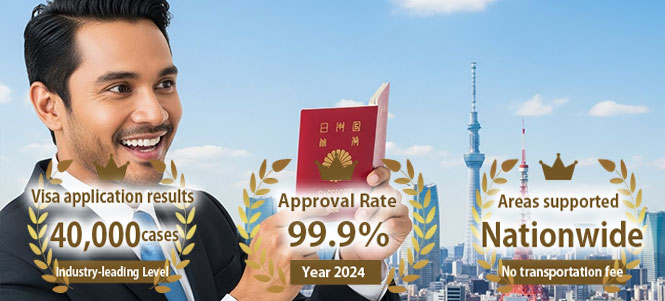
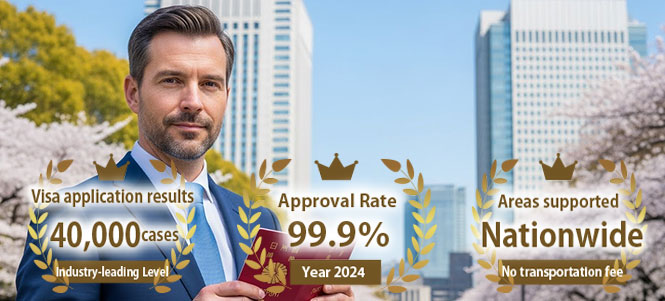
Founded in 1986 — Over 40,000 Visa Cases
We apply long-term screening insight and corporate-level standards to your individual case.
Learn MoreVeteran Immigration Specialists (10+ Years)
Experts who understand screening criteria reduce refusal risks through consulting.
Learn MoreCentralized Headquarters System
No dispersed standards — decisions reflect accumulated experience and current trends.
Learn MoreMultinational Staff Offering Practical Multilingual Support
Not interpreters — but practitioners who understand visa evaluation points in English/Chinese.
Learn MoreOnline Progress Management System
Real-time status, document tracking, and uploads reduce inquiry stress.
Learn More99.9% Approval Rate (2024)
We decline applications when approval prospects are extremely low — honesty first.
Learn MoreTraining + Compliance (ISO27001)
Quality and information security are systemized for long-term client trust.
Learn MoreFree Consultation to Assess Possibility & Challenges
We clarify approval prospects, risks, and preparation priorities.
Learn MoreFlat Nationwide Pricing — Fully Transparent
Same standards anywhere in Japan. No hidden charges or mid-process fee increases.
Learn More▼Learn more about the 9 reasons ACROSEED is chosen
View ACROSEED’s Track Record
View Client Testimonials and Approved Case Studies
4. Ratings and Reviews on Google
ACROSEED has received high evaluations from many clients regarding the quality of our services, regardless of visa type or nationality.
5. Naturalization Support Fees (Excluding Tax)
We can accompany the preliminary consultation at 20,000 yen per appointment (plus tax). This fee will be discounted at the time of contract if ACROSEED Immigration Lawyer's Office is retained for the case.
• Visa and MasterCard payments are available.

1. Document Preparation Only
| Salaried Applicants | 150,000 yen |
|---|---|
| Business Owners | 200,000 yen |
| Additional Family Member (per person) | 50,000 yen |
2. Document Preparation + Legal Affairs Bureau Assistance
Standard Naturalization
| Salaried Applicants | 180,000 yen |
|---|---|
| Business Owners | 250,000 yen |
| Additional Family Member (per person) | 60,000 yen |
Simplified Naturalization
| Salaried Applicants | 120,000 yen |
|---|---|
| Business Owners | 150,000 yen |
| Additional Family Member (per person) | 50,000 yen |
8.Related Pages Often Read Together with Naturalization Applications
[2026 Edition] Japan Naturalization Guide | Requirements, Documents & Application Process
A clear and comprehensive guide covering the latest 2026 requirements, required documents, key review points, application flow, and interview preparation. Also explains nationality renunciation considerations, FAQs, and three service plans.

Naturalization Guide for Spouses of Japanese Nationals
Naturalization through marriage generally requires 3+ years of marriage history and 1+ year of residence in Japan (as a rule). Learn key review points such as the “genuineness of marriage,” “financial stability,” and “Japanese language ability,” plus how cases with children are assessed and common refusal patterns.
Naturalization from a Work Visa (Engineer/Specialist in Humanities/International Services)
Detailed explanation for foreign employees: requirements, required years, income standards, and how changing jobs affects screening. Covers differences based on employment style and tax status, the latest trends in review timelines, and practical strategies to avoid refusal.
Naturalization Guide for Highly Skilled Professional (HSP) Visa Holders
For applicants considering naturalization from HSP (Type 1 / Type 2). Explains situations where screening may be relatively favorable, and factors that require extra caution (e.g., research-track roles, job stability, and continuity of activities).
Naturalization Guide for Business Manager Visa Holders
Experts explain common stumbling points for business owners: business stability, tax compliance, executive compensation design, and social insurance handling. Includes review tendencies reflected from 2025 onward.
Naturalization Guide for Permanent Residents
The final step for permanent residents to become Japanese nationals. Organizes required documents, review timelines, and how decisions differ by family structure, plus preparation to avoid refusal and a clear comparison of “Permanent Residence vs Naturalization.”
Naturalization Guide for Long-Term Resident Visa Holders
For Long-Term Residents (spouse-based long-term, child of a Japanese national, stepchild, Nikkei-related statuses, etc.). Explains key requirements, documents, what examiners focus on, and Japanese language expectations by typical case type.

Naturalization Guide for Special Permanent Residents
Covers background of the制度, screening characteristics, how to write the reason statement for naturalization, and important notes about nationality choices within the family—tailored for Special Permanent Residents.
More In-Depth Questions About Japan Naturalization
Naturalization vs Permanent Residence in Japan: A Complete Comparison (2026)
Can You Apply for Naturalization with Less Than 3 Years of Work? Latest Standards & Approval Points
Naturalization and Time Outside Japan: Guidelines for “5+ Continuous Years” and Key Cautions
Naturalization Required Documents List: 2026 Latest Checklist by Case Type
Naturalization Requirements (7 Conditions): Expert Guide to Obtaining Japanese Nationality
My child has dual nationality (Japan & the U.S.). Are any procedures required?
Should You Hire an Administrative Scrivener for Naturalization? Benefits, Fees, and How to Choose
Income Requirements for Naturalization: How Much Is Needed and How “Ability to Support a Living” Is Judged
Traffic Violations & Minor Offenses in Naturalization: Do Parking Tickets or Criminal Records Matter?
Required Japanese Level for Naturalization: Speaking, Reading/Writing, and Interview Benchmarks
Are Taxes, Insurance, and Pension Critical for Naturalization? Does Non-Payment Lead to Refusal?
Renunciation of Prior Nationality: Country-by-Country Guidance (China, Korea, U.S., and More)
Residence Years & Time Abroad for Naturalization: 5-Year / 3-Year Rules and Key Judgment Points
Reasons for Naturalization Refusal: Common “Rejected at Intake” Cases and Timing to Reapply

Administrative Scrivener Corporation ACROSEED
Managing Partner: Makoto Sano
Japan Federation of Administrative Scriveners Associations (Reg. No. 01080685)
Tokyo Administrative Scriveners Association (Member No. 4568)
Founded in 1986
Now in our 39th year specializing in foreign nationals’ legal affairs across two generations.
Registered Administrative Scrivener in 2001
23 years as an international administrative scrivener.
Appointed to the Tokyo Association’s International Division in 2023
Contributing to the development and training of administrative scriveners.
[Track record]
ACROSEED’s legal services are chosen by over 1,000 corporations including listed/global companies. We also have many engagements as lecturers/authors on foreign employment.
Since opening our practice in 1986, we have been involved in consulting on visa applications for foreigners for nearly 40 years as an immigration lawyer.
Telephone consultation, email consultation, online consultation, and consultation at our office are available.