Guide to Obtaining a Spouse or Child of a Japanese National Visa for Former Japanese Nationals
Last Updated:
Guide to Obtaining a Spouse or Child of a Japanese National Visa for Former Japanese Nationals
- Visas for Former Japanese Nationals (Those Who Renounced Citizenship)
- Permanent Residence for Former Japanese Nationals
- Naturalization for Former Japanese Nationals
- Spouse Visa Application Process and Immigration Examination Period
- Applying from Outside Japan
- Applying After Entering Japan
- Examination Period for Spouse or Child of a Japanese National Visa
- Required Documents for Former Japanese Nationals Applying for a Spouse Visa
- Q&A for Former Japanese Nationals
- I have lived overseas for many years after acquiring foreign nationality, but I would like to live in Japan in my later years. What visa options are available?
- If I obtain a Spouse or Child of a Japanese National Visa as a biological child of a Japanese national, how long must I reside in Japan before applying for permanent residence or naturalization?
- If my entire family returns to Japan, what residence statuses will apply to me as a former Japanese national and to my spouse and children?
- Approved Cases of Former Japanese Nationals Obtaining the Status of Spouse or Child of a Japanese National
- Introduction to Spouse or Child of a Japanese National Visa Application Support Services for Former Japanese Nationals
- Pages Frequently Read by Former Japanese Nationals
1. Visas for Former Japanese Nationals

We are seeing an increasing number of inquiries from former Japanese nationals who have lived overseas for long periods and wish to return to Japan with their families to reside there.
When a former Japanese national returns to Japan, they cannot immediately reacquire Japanese nationality.
Although there are various preferential treatments, the process begins with obtaining a new status of residence as a foreign national.
In such cases, the applicable status of residence is 'Spouse or Child of a Japanese National.'
This status has no employment restrictions, allowing the holder to engage freely in any occupation; however, renewal procedures are required for each period of stay.
Those who fall under the status of residence 'Spouse or Child of a Japanese National' are defined as the spouse of a Japanese national, a special adopted child, or a person born as a child of a Japanese national.
What Does "A Person Born as a Child of a Japanese National" Mean?
"A person born as a child" refers to a biological child and includes both legitimate children and children recognized by acknowledgment.
However, at the time of the person's birth, either the father or the mother must have held Japanese nationality, or the father must have died before the child's birth and held Japanese nationality at the time of death.
If the father or mother renounced Japanese nationality after the person's birth, this does not present a problem.
Furthermore, being "born as a child of a Japanese national" does not require that the person was born in Japan; those born overseas are also included.
Second-generation Nikkei (biological children of first-generation Nikkei who held Japanese nationality)
Second-generation Nikkei (biological children born before their first-generation Nikkei parent renounced Japanese nationality)
The following individuals fall under the status of Long-Term Resident:
Third-generation Nikkei (biological children of second-generation Nikkei)
Fourth-generation Nikkei (unmarried minor biological children who live under the support of third-generation Nikkei)
2. Permanent Residence for Former Japanese Nationals (Those Who Renounced Citizenship)

In principle, permanent residence applications require more than 10 years of residence in Japan and at least 5 years under a work or residence-based status. However, these requirements are relaxed for holders of the Spouse or Child of a Japanese National status.
(1) In the case of spouses of Japanese nationals, permanent residents, or special permanent residents, the marriage must have continued for at least three years with genuine substance, and the applicant must have continuously resided in Japan for at least one year. In the case of their biological children, continuous residence in Japan for at least one year is required.
Source: Guidelines for Permanent Residence Permission (Revised April 21, 2023)
Former Japanese nationals fall under the category of biological children; therefore, if they have continuously resided in Japan for at least one year, they satisfy the residence requirement for permanent residence.
In addition, other requirements apply, including holding a status of residence with a period of stay of three or five years.
Ordinarily, foreign nationals newly obtaining a status of residence in Japan are typically granted a one-year period of stay.
However, former Japanese nationals who newly obtain the status of Spouse or Child of a Japanese National are often granted a three-year or five-year period of stay from the outset.
Accordingly, if a status with a period of stay of three years or more is obtained at the initial application, a permanent residence application may be filed after one year.
If the initial period of stay is one year, a renewal application must be filed after one year; once a period of stay of three years or more is granted, a permanent residence application becomes possible.
Permanent residence applications also involve strict examination of tax payments, public pension contributions, and public health insurance premiums.
For further details regarding permanent residence applications for holders of the Spouse or Child of a Japanese National status, please refer to the following page.

Permanent Residence Application Guide for Spouse or Child of a Japanese National
The latest guide for those considering permanent residence after holding a spouse visa. Applicable to spouses of Japanese nationals, spouses of permanent residents, and biological children.
3. Naturalization for Former Japanese Nationals (Those Who Renounced Citizenship)

In a standard naturalization application, the following requirements are generally required.
Article 5 The Minister of Justice may not grant permission for naturalization unless the foreign national satisfies the following conditions:
(i) Having a domicile in Japan continuously for five years or more.
Source: Nationality Act, Article 5
(ii) Being 18 years of age or older and having legal capacity under the law of the person’s home country.
(iii) Having good conduct.
(iv) Being able to make a living through one’s own assets or skills, or through the assets or skills of a spouse or other relatives who share the same livelihood.
(v) Having no nationality, or losing that nationality by acquiring Japanese nationality.
(vi) Not having attempted or advocated the violent overthrow of the Constitution of Japan or any government established thereunder since the date of enforcement of the Constitution of Japan, and not having formed or joined any political party or other organization that has attempted or advocated such actions.
In principle, a naturalization application requires, among other things, at least five years of residence in Japan. However, for former Japanese nationals, the requirements are relaxed as follows.
Article 8 With respect to a foreign national who falls under any of the following items, the Minister of Justice may grant permission for naturalization even if the person does not satisfy the conditions set forth in Article 5, paragraph (1), items (i), (ii), and (iv).
(i) A child of a Japanese national (excluding an adopted child) who has a domicile in Japan
Source: Nationality Act, Article 8
(ii) An adopted child of a Japanese national who has had a domicile in Japan continuously for one year or more and who was a minor under the law of the person’s home country at the time of adoption
(iii) A person who has lost Japanese nationality (excluding a person who lost Japanese nationality after having naturalized in Japan) and who has a domicile in Japan
(iv) A person who was born in Japan, who has had no nationality since birth, and who has had a domicile in Japan continuously for three years or more since that time
As shown above, former Japanese nationals may be eligible for naturalization if they have a domicile in Japan, and the residency requirement of “living in Japan for a certain number of years” is not required. Another advantage is that the livelihood requirement is also relaxed compared with standard naturalization applications.
However, an application for naturalization can only be filed after obtaining a status of residence that presupposes long-term stay in Japan, and after a certain period has passed. (Although the residency requirement is relaxed, in practice the Legal Affairs Bureau requires a certain record of residence based on its operational practice.)
Please note that you cannot enter Japan on a short-term visa (tourist visa) and apply for naturalization.
For details on naturalization applications for holders of a Spouse or Child of a Japanese National visa, please refer to the following page.
Guide to Naturalization Application from a Spouse of a Japanese National (Permanent Resident)
We provide an easy-to-understand explanation of the latest requirements, required documents, key examination points, procedural flow, and interview preparation for those seeking to obtain Japanese nationality through naturalization after holding a spouse visa.
4. Process for Former Japanese Nationals to Apply for a Visa as a “Biological Child of a Japanese National”
(1) Applying from Outside Japan
This procedure can be carried out while you are overseas, and the central part of the application is the “Application for Certificate of Eligibility (COE Application)”.
The application must be filed not by the applicant, but by a relative residing in Japan who acts as the proxy.
■ Scope of Relatives Who Can Serve as the Proxy Applicant
The eligible proxy is limited to “the applicant’s relatives residing in Japan” as prescribed by the Immigration Control Act.
Under the Civil Code, the scope of relatives is defined as blood relatives within the sixth degree, relatives by marriage within the third degree, and a spouse. In practice, the following persons often serve as the proxy.
- Parents or siblings living in Japan
- The Japanese spouse’s uncle/aunt, nephew/niece (relatives by marriage within the third degree)
- Your own uncle/aunt/cousin (blood relatives within the sixth degree)
However, among former Japanese nationals who have lived overseas for many years, there are not a few who have circumstances such as being estranged from relatives in Japan and finding it difficult to ask for help.
Even in such cases, by using our services, it is possible to proceed with the application while minimizing the burden on your relatives in Japan.
-
1
- Free Consultation
-
We confirm whether a former Japanese national can obtain a status of residence as a “biological child of a Japanese national” or as a “Long-Term Resident.”
Consultations are available via (1) phone, (2) email, (3) online (Zoom, Skype, LINE, WeChat), or (4) in-person at our office.
-
2
- Engagement of Services
- After you retain us, we conclude an agreement, and we begin work once payment is confirmed.
-
3
- Preparation of Application Documents
- We arrange former family register records (koseki) / removed family register records, certificate of renunciation of nationality, kinship documents, etc., and prepare the documents for immigration filing.
-
4
- File the Application with Immigration
-
ACROSEED Immigration Lawyer's Office files the application on your behalf through the Immigration Services Agency’s online system.
(Examination period: approximately 1–3 months)
-
5
- Issuance of the Certificate
- After the examination is completed, the “Certificate of Eligibility (COE)” is issued as electronic data or in paper form.
-
6
- Send to the Applicant Living Overseas
- The COE is sent to the applicant overseas by email or international mail.
-
7
- Apply for a Visa at a Japanese Embassy/Consulate
- The applicant brings the COE and applies for a visa at the nearest Japanese embassy or consulate-general. Typically, the visa is issued in 1–2 weeks.
-
8
- Enter Japan
- By presenting the issued visa, the applicant is granted the status of residence “Spouse or Child of a Japanese National” upon entry.
2. Applying for a Visa After Entering Japan
This is a method to change to the status of Spouse or Child of a Japanese National after entering Japan on a short-term visa (tourist visa).
Under the current immigration system, this method involves various restrictions, so it is necessary to have a detailed discussion in advance.
-
1
- Free Consultation
We confirm whether it is possible to obtain a spouse visa and, if there are any issues, how much they can be corrected.
Consultations are available via (1) phone, (2) email, (3) online (Skype, Zoom, Line, WeChat), or (4) in-person at our office. Please contact us first by phone or email.
-
2
- Engagement of Services
- If you wish to retain us for obtaining a spouse visa, we will exchange an agreement and begin work once payment is received.
-
3
- Preparation of Application Documents
- Based on our past experience, we prepare and draft the documents that we believe will maximize the likelihood of approval. After you review the documents prepared by us, we will ask you to sign them.
-
4
- Filing with the Immigration Bureau on Your Behalf
- On your behalf, an administrative scrivener at ACROSEED Immigration Lawyer's Office files the application with the Immigration Bureau. (Examination period: approximately 1–2 months)
-
5
- Obtaining the Permission on Your Behalf
- The notice of permission will be delivered to ACROSEED Immigration Lawyer's Office. On your behalf, the administrative scrivener completes the endorsement procedure at the Immigration Bureau.
-
6
- Return of Residence Card and Passport
- We return your residence card and passport after endorsement, completing the service.
As a result, you will obtain the official eligibility to reside in Japan as a “biological child of a Japanese national”.
3. Examination Period for Spouse or Child of a Japanese National Visa Applications
The examination period is published monthly. Please check the latest average processing days via the following link.
5. Required Documents for Former Japanese Nationals / Nikkei Persons
Because required documents may change frequently due to legal revisions and other factors, please confirm the latest information on the Immigration Services Agency’s website.
If you retain us, based on the required documents listed on the Immigration Services Agency’s website, we will propose the documents that we believe will maximize the likelihood of approval according to your circumstances.
1. Required Documents When Applying for “Spouse or Child of a Japanese National” via an Application for Certificate of Eligibility
2. Required Documents When Applying for “Spouse or Child of a Japanese National” via an Application for Change of Status of Residence
3. Required Documents When Applying for “Spouse or Child of a Japanese National” via an Application for Extension of Period of Stay
6. Q&A for Former Japanese Nationals
If you are a former Japanese national and qualify as a biological child of a Japanese national, the most common route is to first secure entry to and residence in Japan under the status of “Spouse or Child of a Japanese National (Biological Child of a Japanese National)”.
Specifically, based on your family members or supporters in Japan, you apply for a “Certificate of Eligibility,” use it to obtain a visa at a Japanese overseas diplomatic mission, and then enter Japan.
For returning to Japan in your later years,
- Evidence of living expenses such as pension and savings
- Housing in Japan (owned home, rental, etc.)
- Your relationship with relatives or supporters in Japan
are key points of examination. Once you begin residing in Japan as a biological child of a Japanese national, if conditions are met, you can proceed to permanent residence or naturalization in a relatively short period of time. This is therefore a suitable option for those who wish to spend their later years in Japan with peace of mind.
For permanent residence applications from typical work visas or spouse visas, around 10 years of residence history is often used as a guideline. However, in practice, biological children of Japanese nationals are treated quite favorably, and in some cases permanent residence has been accepted after about one year of residence.
In addition, for naturalization, former Japanese nationals may naturalize as long as they have a domicile in Japan, so there is no requirement to have lived in Japan for a certain number of years.
That said, both permanent residence and naturalization are premised on long-term residence in Japan, so we recommend applying after you are in a position to demonstrate a stable record of residence in Japan for a certain period.
At our office, we propose mid- to long-term visa strategies that also take into account the future plans of former Japanese nationals, so please feel free to consult us.
For the person who is a former Japanese national and qualifies as a biological child of a Japanese national, the basic approach is to first obtain a status of residence as “Spouse or Child of a Japanese National (Child of a Japanese National)” (depending on the case, residence as “Long-Term Resident (Second-Generation Nikkei)” may also be considered).
The residence statuses of family members returning together are generally as follows.
- Spouse (foreign nationality)
The spouse status is typically based on the Nikkei principal applicant as “Long-Term Resident (Spouse of a Nikkei Person)” - Child has Japanese nationality
Not a status of residence, but procedures for family register and resident registration as a Japanese national - Child has only foreign nationality
Depending on the parents’ nationality at the time of birth, “Spouse or Child of a Japanese National” or “Long-Term Resident,” etc.
The optimal combination of statuses varies depending on each family member’s nationality, age, prior residence history, and ties to Japan. Therefore, at our office, we provide individualized residence status planning based on the future plan for the entire family of “former Japanese national + spouse + children.”
7. Approved Cases of Former Japanese Nationals Obtaining the Status of Spouse or Child of a Japanese National
In cases where former Japanese nationals choose “Spouse or Child of a Japanese National” when returning to Japan, organizing the background and maintaining consistency in explanations are crucial. In this section, we introduce examples of former Japanese nationals who obtained a spouse visa.
 |
VOL.114 Mr./Ms. M (U.S. nationality / Former Japanese national) |
| [Approved Case] Former Japanese national (U.S. nationality): From obtaining a spouse visa to filing a naturalization application |
|
Customer (from Google Reviews) |
| [Approved Case] Former Japanese national (Canadian nationality)|Obtained a 5-year period of stay on the first application |
Click here for the full list of approved cases for obtaining a Japanese spouse visa
8. Application Support Service for Obtaining a Spouse or Child of a Japanese National Visa (For Former Japanese Nationals)
1. Service Overview
This service is intended for those who, among the status of residence “Spouse or Child of a Japanese National,” are former Japanese nationals who have renounced their nationality, those born as a child of a Japanese national, and those who are special adopted children of a Japanese national.
We support you so that your likelihood of approval is maximized and you can smoothly obtain the status of residence “Spouse or Child of a Japanese National.”
We can handle the following cases.
・Obtaining a spouse visa while staying in Japan on a short-term visa
In addition, former Japanese nationals often face issues such as inheritance matters within Japan. Therefore, at ACROSEED Immigration Lawyer's Office, we have built a one-stop support environment together with allied professionals in various fields to address clients’ concerns.
Please feel free to consult us about matters beyond visa issues as well.
If you are obtaining the status of residence “Spouse or Child of a Japanese National” through marriage to a Japanese national, please refer to the following page.
Spouse Visa Acquisition Service (Marriage Visa)
We have a strong track record of obtaining approvals in a wide range of cases, including first-time spouse visa applications, cases where applicants filed on their own and were repeatedly denied, and cases involving past legal violations or a history of overstaying.
The following persons fall under the status of Long-Term Resident, so please refer to the Long-Term Resident page.
Third-generation Nikkei (biological children of second-generation Nikkei)
Fourth-generation Nikkei (unmarried minor biological children who live under the support of third-generation Nikkei)
Long-Term Resident Visa Application Support Service
We support Long-Term Resident visa applications for Nikkei persons, and for unmarried minor biological children who are supported by Japanese nationals, permanent residents, special permanent residents, long-term residents, etc.
2. Services Included
- Proposing and preparing the submission documents that will maximize the likelihood of approval
- Filing with the Immigration Services Agency and handling endorsement procedures upon permission
- Simultaneous acquisition of re-entry permission (for those who request it)
- Checking progress during the examination period and responding to requests for additional documents
- Free re-application in the event of a denial
- Advice on how to apply for permanent residence and naturalization in the shortest possible time
3. Advantages of Choosing ACROSEED
Applications by former Japanese nationals as a “biological child of a Japanese national” often involve obtaining family register and civil status materials from overseas and organizing the timeline from birth to renunciation of nationality, and the examiner’s impression can change significantly depending on how the facts are connected. ACROSEED Immigration Lawyer's Office designs in advance which materials to rely on, in what order, and how far to explain, and then builds a story that is easy for the examiner to assess. For returns to Japan in later years, proving a stable living foundation—such as pensions, savings, dependency relationships, and secured housing—becomes the key, so we propose “residence status planning for the entire family,” including supporters in Japan and your family structure. In addition, we proceed with procedures under a realistic mid- to long-term plan, taking into account permanent residence and naturalization after you begin residing in Japan.
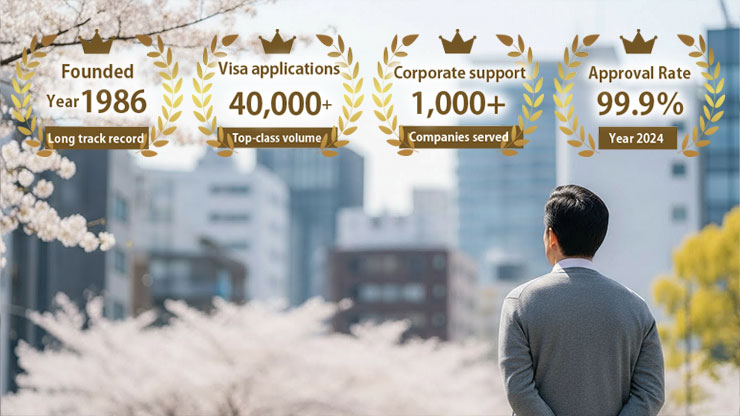
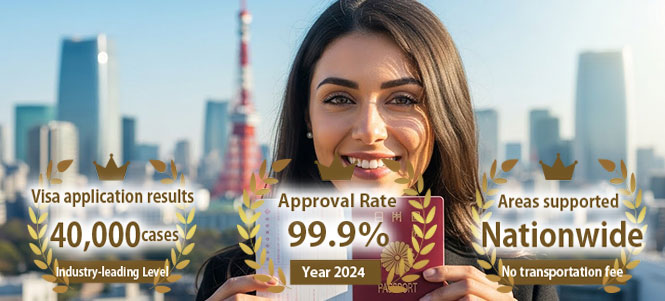
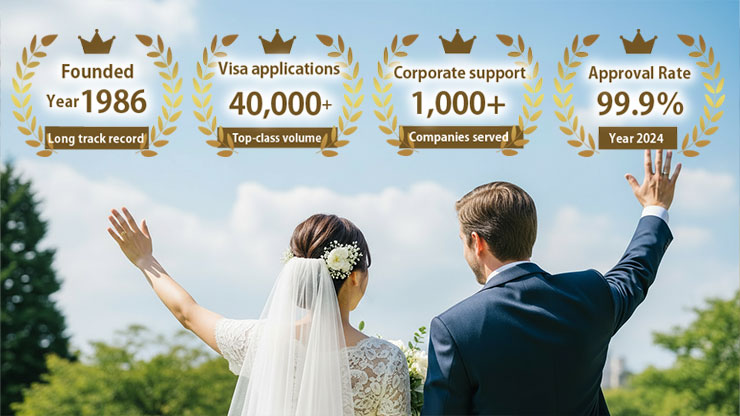
Founded in 1986 — Over 40,000 Visa Cases
We apply long-term screening insight and corporate-level standards to your individual case.
Learn MoreVeteran Immigration Specialists (10+ Years)
Experts who understand screening criteria reduce refusal risks through consulting.
Learn MoreCentralized Headquarters System
No dispersed standards — decisions reflect accumulated experience and current trends.
Learn MoreMultinational Staff Offering Practical Multilingual Support
Not interpreters — but practitioners who understand visa evaluation points in English/Chinese.
Learn MoreOnline Progress Management System
Real-time status, document tracking, and uploads reduce inquiry stress.
Learn More99.9% Approval Rate (2024)
We decline applications when approval prospects are extremely low — honesty first.
Learn MoreTraining + Compliance (ISO27001)
Quality and information security are systemized for long-term client trust.
Learn MoreFree Consultation to Assess Possibility & Challenges
We clarify approval prospects, risks, and preparation priorities.
Learn MoreFlat Nationwide Pricing — Fully Transparent
Same standards anywhere in Japan. No hidden charges or mid-process fee increases.
Learn More▼See the 9 Reasons ACROSEED Is Chosen for More Details
View ACROSEED’s Track Record
View Customer Testimonials & Approved Case Collection
4. Ratings in Google Reviews
ACROSEED Immigration Lawyer's Office is highly rated by many customers for service quality, regardless of visa type or nationality.
5. Service Fees for Application Support for Former Japanese Nationals (Renounced Citizenship) to Obtain a Spouse or Child of a Japanese National Visa
・There are absolutely no additional fees depending on your circumstances.
・ACROSEED Immigration Lawyer's Office provides nationwide support. Even clients living far away can retain us at the fees below.
・Payment by Visa and MasterCard is also available.

| Invitation from Overseas Application for Certificate of Eligibility |
JPY 150,000 |
|---|---|
| Application for Change of Status of Residence | JPY 150,000 |

ACROSEED Immigration Lawyer's Office
Representative Administrative Scrivener
Makoto Sano
1998 Graduated from Aoyamagakuin University
2001 Registered as an administrative scrivener
He has Over 20 years of experience as an international administrative scrivener, specializing in foreign employment consulting and residence procedures for foreign residents in Japan.
Click here to see information about his business achievements
Click here to see books he has authored
Pages Often Read Together When Applying for a Spouse Visa of a Japanese National
![[FY2025 Edition] Spouse Visa of a Japanese National (Marriage Visa) Application Guide](https://english.visajapan.jp/images/haigusha_title.jpg)
[FY2025 Edition] Spouse Visa of a Japanese National (Marriage Visa) Application Guide
An administrative scrivener explains the requirements for obtaining a spouse visa (marriage), working under a spouse visa, applying for permanent residency from a spouse visa, what happens in the event of divorce under a spouse visa, required documents, and more.
![[FY2025 Edition] Spouse Visa of a Japanese National Renewal Procedures Guide](https://english.visajapan.jp/images/spouse_renewal_title.jpg)
[FY2025 Edition] Spouse Visa of a Japanese National Renewal Procedures Guide
Renewal procedures for a Spouse Visa of a Japanese National (Marriage Visa). An administrative scrivener explains the required document checklist, how to avoid denial cases, and key points to prove eligibility for obtaining a 3-year or 5-year period of stay.
Applying for Permanent Residency from a Spouse Visa of a Japanese National
At ACROSEED, we have a proven track record not only with first-time spouse visa applications, but also with cases that were denied multiple times when filed by the applicant alone, as well as procedures for those with past legal violations or a history of overstaying—across a wide variety of situations.
For More Detailed Questions About the Spouse Visa System
Please explain the requirements for obtaining a Spouse Visa of a Japanese National in detail
Periods of stay for a Spouse Visa of a Japanese National: Differences between 1 year, 3 years, and 5 years
Required documents & Statement of Reasons for a Spouse Visa of a Japanese National: Key examination points and preparation tips (Latest Edition)
How to invite a foreign spouse living overseas to Japan with a COE
Can we apply for a Certificate of Eligibility while both spouses remain overseas?
Changing from a short-term visa to a Spouse Visa of a Japanese National: General rules and exceptions
How to change from a student/work visa to a spouse visa
My spouse visa application was denied (COE not issued). Can I re-apply?
Since opening our practice in 1986, we have been involved in consulting on visa applications for foreigners for nearly 40 years as an immigration lawyer.
Telephone consultation, email consultation, online consultation, and consultation at our office are available.